 Follow Us on Google News
 Follow Us on Google Discover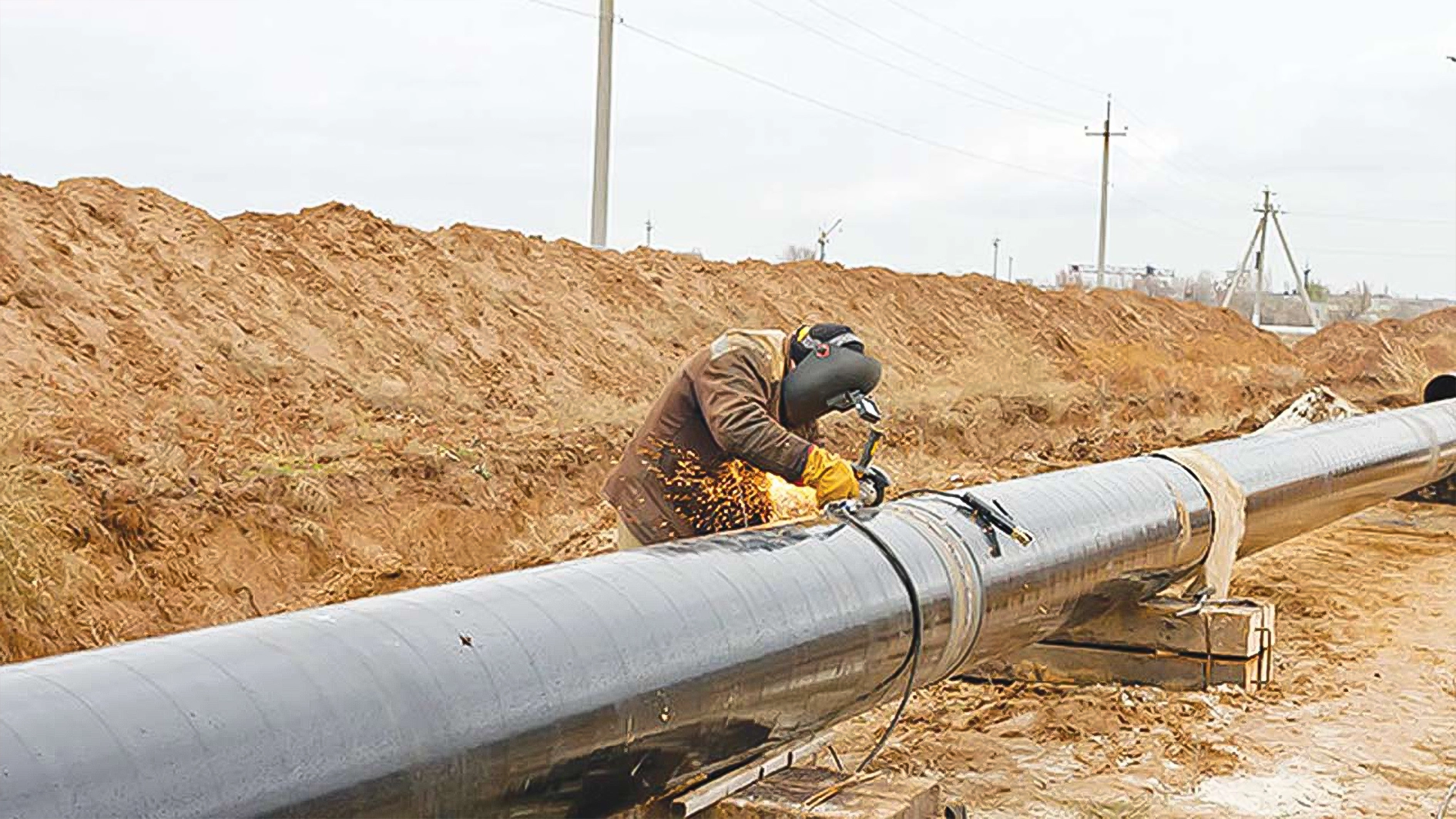
By Dan D. Kunle
What happens when one country cannot meet its contribution, and who pays the shortfall? Who guarantees the transportation charges, gas purchases and other long-term obligations?
These matters must not be hidden behind diplomatic language. The economic weakness or political instability of one part of the pipeline can damage the entire chain.
Industrialisation before raw gas exports
Before Nigerian gas is transported across the Atlantic coastline, it must first generate power in Nigeria. It must supply Nigerian industries and support fertiliser plants, petrochemical complexes, methanol production, steel mills, aluminium production, glass manufacturing and other productive enterprises.
Gas can create far more economic value when it is converted into electricity and industrial products than when it is exported merely as another raw material. Gas itself is not the ultimate product.
Industrialisation is the product. The value chain of gas is in the advance polymerisation derivatives materials

U.S., China, Germany and now India have made more fortunes in gas advance polymerisation than raw gas export sales.
Nigeria has already spent decades exporting crude oil while importing refined petroleum products and other goods that could have been produced locally. Fortunately in the last three years Dangote refinery and petrochemicals plus his fertilizer plant has put a stop to that old era.
We must not repeat that error by exporting gas as a raw material while importing fertiliser, petrochemicals, steel, aluminium, glass and manufactured products that could have been produced with that gas at home.
What is the wisdom in creating jobs and industrial capacity elsewhere with Nigerian gas while Nigerian industries operate below capacity and Nigerian young people remain unemployed?
Mr President, the greatest value of Nigeria’s gas does not lie in transporting raw molecules through numerous countries. It lies in converting those molecules into electricity, food security, industrial products, export earnings and millions of productive jobs inside Nigeria.
Is a fixed pipeline the best option?
There is also a legitimate question about whether a fixed pipeline is the best use of such an enormous amount of capital.
A pipeline of almost 7,000 kilometres ties producers and consumers to one physical route passing through numerous jurisdictions. It is exposed to political, security, technical and commercial risks in every country through which it passes.
We are all witnesses to the consequences of the Russia–Ukraine crisis for gas supplies and energy security in Europe. International pipelines are vulnerable not only to engineering failures but also to geopolitical disputes beyond the control of producers, consumers and investors.
Liquefied Natural Gas offers greater flexibility. LNG can be transported by ship to different destinations, while cargoes can be redirected according to demand, contractual obligations and market conditions.
Nigeria could expand LNG production, invest in new LNG and modular gas projects, and participate in the construction and ownership of LNG and LPG vessels.
Morocco, for its part, can develop receiving and regasification facilities along its coastline. It has already pursued plans for an LNG terminal and related infrastructure as part of its effort to diversify gas supply.
Such an arrangement could begin delivering gas without waiting for the completion of one continuous pipeline through multiple countries.
This does not mean that an international pipeline can never work. But in this case, it may never work.
Nigeria must compare the pipeline honestly with all available alternatives and the opportunity cost of its natural gas endowment.
What will the complete pipeline cost? How long will construction take? What will the transportation tariff be? How much gas must flow annually for the project to break even? Who will absorb the losses if the volumes are lower than projected? How does the cost compare with LNG shipping, and how does it compare with investing the same resources in domestic gas infrastructure?
Until the supporting commercial studies are published, no responsible person can claim that the pipeline is automatically Nigeria’s best option.
In my opinion, I do not think Nigeria has the financial resources to waste at this critical period of our political economic development.
Mr President, please intervene
Nigeria must therefore be extremely careful. Mr President, you may wish to direct the Presidential Petroleum Reform and Value Optimisation Taskforce chaired by Mr Fola Adeola to undertake an independent commercial, financial and strategic review of this project before Nigeria makes any irreversible commitment.
The taskforce was established to develop execution-ready reforms and strengthen investment and value creation within the petroleum sector. That review should compare the proposed pipeline with LNG, domestic pipeline expansion, power-sector gas supply and investment in gas-based industries.The recently signed agreements must not be mistaken for a final investment decision.
An agreement between governments does not automatically produce bankable gas, create investors, secure customers or make economic justification.We have seen this movie many times before.A Memorandum of Understanding is signed, the public is told that billions of dollars are coming, the government celebrates future jobs and, several years later, another administration signs another document for the same project.
This is why I describe many of these documents as Memoranda of “Misunderstanding”.
The government appears to understand one thing, the promoters and investors understand another, and the participating countries understand something different. Meanwhile, Nigerians are not told who is producing and supplying the gas, who is buying it, who is financing the infrastructure or who carries the risk.
That must not happen again, Mr. President.
The Federal Government should first publish an independent national gas plan showing how Nigeria will supply its power stations, industries, LNG projects, AKK customers and other national obligations over the coming decades.Only gas that is genuinely surplus, developed and commercially available should be considered for new long-term exports.
The African Atlantic Gas Pipeline may eventually be declared viable by its promoters, but that claim must be proven.It must not be built on diplomatic excitement, rivalry between countries or the desire of officials to announce Africa’s largest pipeline.It should proceed only if the gas exists, the customers are creditworthy, the financing is predominantly private and bankable, the treaty obligations are enforceable, and the economic return to Nigeria is demonstrably superior to the alternatives.
Until those conditions are satisfied, Nigeria must not put public money into this project.
Mr President, I respectfully urge you to arrest the aggressive pursuit of this project and redirect the energy of the Minister in charge and NNPC Limited towards the domestic commercialisation and utilisation of Nigeria’s gas assets.Let us use our gas to empower our citizens, industrialise our country and produce goods for the world market.We have too many unfinished projects, too many unfunded budgets, too many power stations waiting for gas. Nigeria cannot continue financing grand international visions while its domestic foundations remain weak.
Let Morocco pursue Morocco’s energy security.Let Europe pursue Europe’s energy security.Let every participating country pursue its own national interest.But let Nigeria, for once, put Nigeria first.
History rarely remembers the ceremonies at which projects are announced. It remembers whether those projects generated prosperity or became monuments to misplaced priorities.
The African Atlantic Gas Pipeline should therefore proceed only if it demonstrably serves Nigeria’s long-term economic interest—not because it is Africa’s longest pipeline, nor because it is politically attractive, but because it is commercially indispensable. If that case cannot be made convincingly, then the most patriotic decision may not be to build it at all.
Kunle wrote from Abuja.

