 Follow Us on Google News


 Follow Us on Google Discover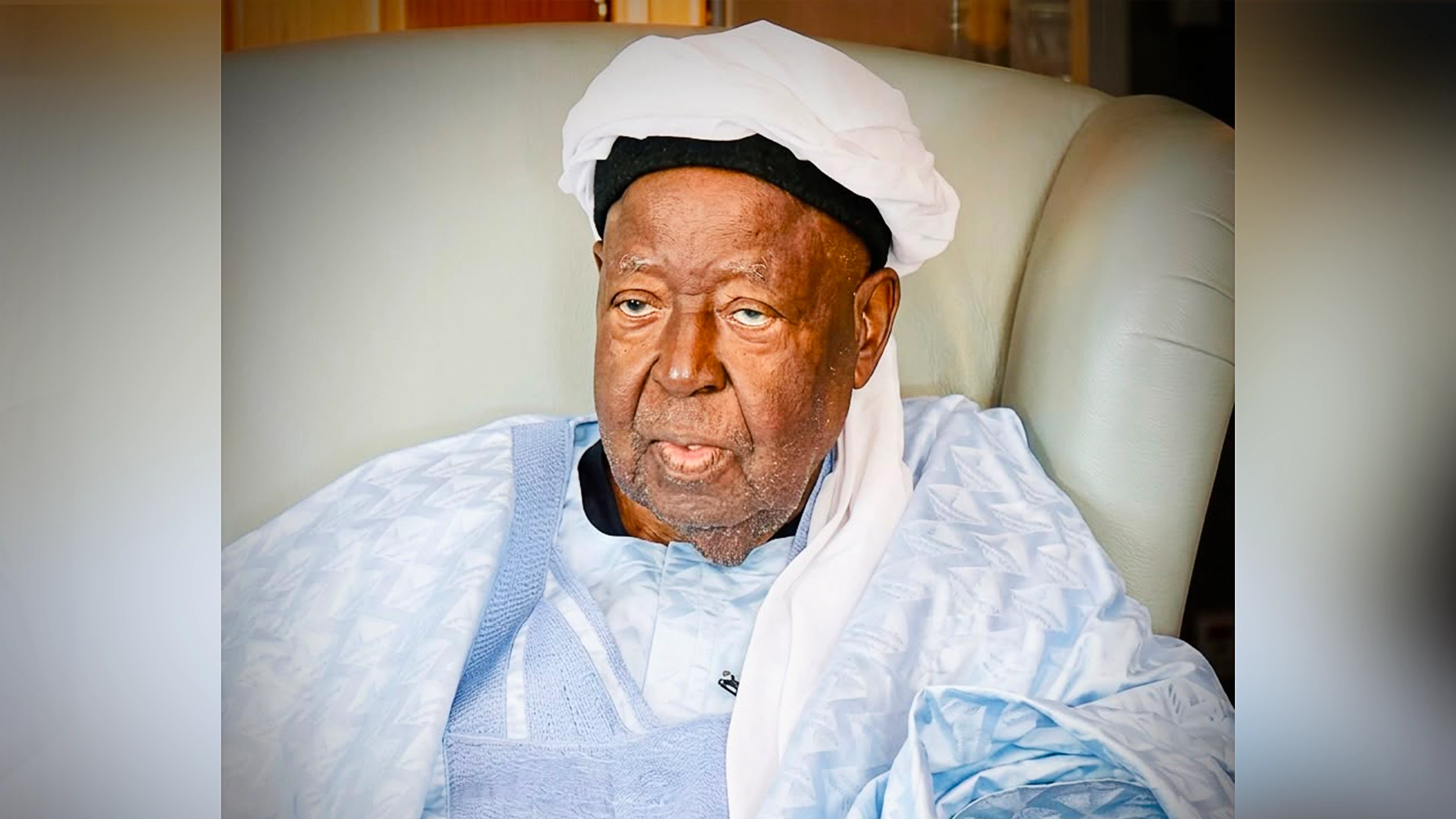
The death of former Minister of Finance, diplomat and elder statesman, Alhaji Abubakar Alhaji, has deprived Nigeria of one of the last representatives of a generation of public servants whose careers were defined by integrity, competence, patriotism and unwavering fidelity to the institutions of the state. At a time when the country continues to grapple with a crisis of governance, declining public confidence in institutions and the erosion of ethical standards in public life, his passing should serve not only as an occasion for mourning but also for deep national introspection.
Tributes from across the country have highlighted his remarkable contributions to public administration, economic management, diplomacy and traditional leadership. Yet the offices he held, Permanent Secretary, Minister of State for Budget and Planning, Minister of Finance, High Commissioner to the United Kingdom and adviser to several governments, tell only part of the story. His greatest legacy lay in the values he represented and the example he set for generations of public officials.
Alhaji Alhaji, as he was fondly called, belonged to that distinguished cadre of Nigeria’s celebrated “super permanent secretaries”, the accomplished technocrats who helped sustain the machinery of government during periods of political uncertainty and economic transition. They understood that governments might change, but the institutions of the state must endure. Their loyalty was to Nigeria and to the principles of public administration, not to transient political interests or personal ambitions.
Those who knew him closely describe him as outspoken, courageous and principled. He was never known to compromise professional standards for political expediency. He expressed his convictions frankly, regardless of whose interests they challenged, and was respected for offering honest advice rather than convenient opinions. Such qualities are increasingly scarce in today’s public service, where political patronage and personal loyalty too often overshadow professionalism and objective policy advice.
Born on November 1938 in Sokoto, Abubakar Alhaji grew up in a family with deep roots in the Sokoto Caliphate. His unusual name became a subject of public curiosity. He once explained that “Alhaji” was inherited from his father’s name rather than from pilgrimage.
He attended secondary school in Kano and Katsina before studying political economy in the United Kingdom. His subsequent training at international institutions, including the IMF Institute and in The Hague, exposed him to modern public finance and development planning.

It is particularly noteworthy that despite his distinguished northern heritage and his revered traditional title as Sardaunan Sokoto, Alhaji never allowed ethnicity or regional identity to define his public service. He firmly believed that competence, not ethnic affiliation, should determine national leadership. He neither exploited sectional identity for political advantage nor accepted the notion that public office should be distributed solely on the basis of regional entitlement. His outlook reflected an unwavering commitment to the Nigerian project and confidence in the country’s diversity.
That philosophy deserves renewed attention. More than six decades after independence, Nigeria continues to struggle with ethnic mistrust, religious divisions and sectional competition for political appointments. Merit is frequently subordinated to considerations of geography, political patronage and identity. The consequences are evident in weakened institutions, declining public trust and persistent questions about the quality of governance.
The late elder statesman demonstrated that patriotism is not measured by rhetoric but by conduct. Throughout his career, he worked harmoniously with colleagues from every part of the federation, earning respect across political, regional and religious divides. His life reaffirmed the principle that national unity is strengthened when appointments are based on competence, integrity and commitment to service rather than narrow considerations of origin.
His public service journey itself reflected the meritocratic ideals upon which Nigeria’s civil service was originally founded. Beginning as an Assistant Secretary in the Federal Ministry of Finance in 1964, he rose steadily through the ranks to become Permanent Secretary in strategic ministries, including Finance, Trade, Industry and National Planning. During this period, Nigeria’s civil service enjoyed international recognition as one of Africa’s strongest administrative institutions, producing technocrats whose expertise shaped national development and earned global respect.
His appointment as Minister of State for Budget and Planning and later Minister of Finance came during a particularly challenging period in Nigeria’s economic history. The country was confronting declining oil revenues, mounting external debt and difficult economic reforms. While opinions may differ regarding some policy directions of that era, there is little dispute that Alhaji approached public office with diligence, discipline and an unwavering commitment to national interest. His participation in negotiations with international creditors and multilateral institutions reflected his deep understanding of economic policy and public finance.
His subsequent appointment as Nigeria’s High Commissioner to the United Kingdom further demonstrated the confidence successive administrations placed in his judgment and diplomatic ability. Even after leaving active public office, presidents, governors and senior public officials continued to seek his counsel.
He became an unofficial repository of institutional memory whose experience transcended partisan politics. Vice President Kashim Shettima aptly described him as “a behemoth of institutional memory”, an acknowledgement of the immense value of his knowledge and experience.
Sadly, Nigeria has not done enough to preserve or replenish such institutional capacity. As members of that generation gradually depart, the nation loses invaluable experience accumulated over decades of public administration. The decline of the civil service from its once enviable status remains one of the country’s most significant governance challenges. Political interference, inconsistent reforms, weak succession planning and the erosion of merit have combined to diminish its effectiveness.
The lesson from Abubakar Alhaji’s life is therefore clear. Nigeria cannot build enduring institutions without men and women of integrity, competence and independence. Public servants must once again be encouraged to provide objective professional advice without fear or favour. Recruitment, promotion and appointments should be guided by merit, while ethical conduct should attract recognition rather than punishment.
The Federal Government’s indication that the late elder statesman may be immortalised is commendable. However, the most meaningful tribute would be to restore the values he embodied. Monuments, buildings and posthumous honours have symbolic importance, but they cannot substitute for reforms that rebuild professionalism within the public service. His legacy should inspire renewed efforts to strengthen institutions, uphold ethical standards and promote excellence in governance.
Nigeria is undoubtedly poorer for the passing of Alhaji Alhaji. Yet his life offers an enduring reminder that national development ultimately depends not only on policies and political leaders but also on principled public servants who place the national interest above personal gain, defend institutions against arbitrary interference and dedicate their talents to the service of all citizens. If the country succeeds in producing a new generation inspired by those ideals, Alhaji’s greatest legacy will continue to shape Nigeria long after his departure.
May his soul rest in peace.

