 Follow Us on Google News
 Follow Us on Google Discover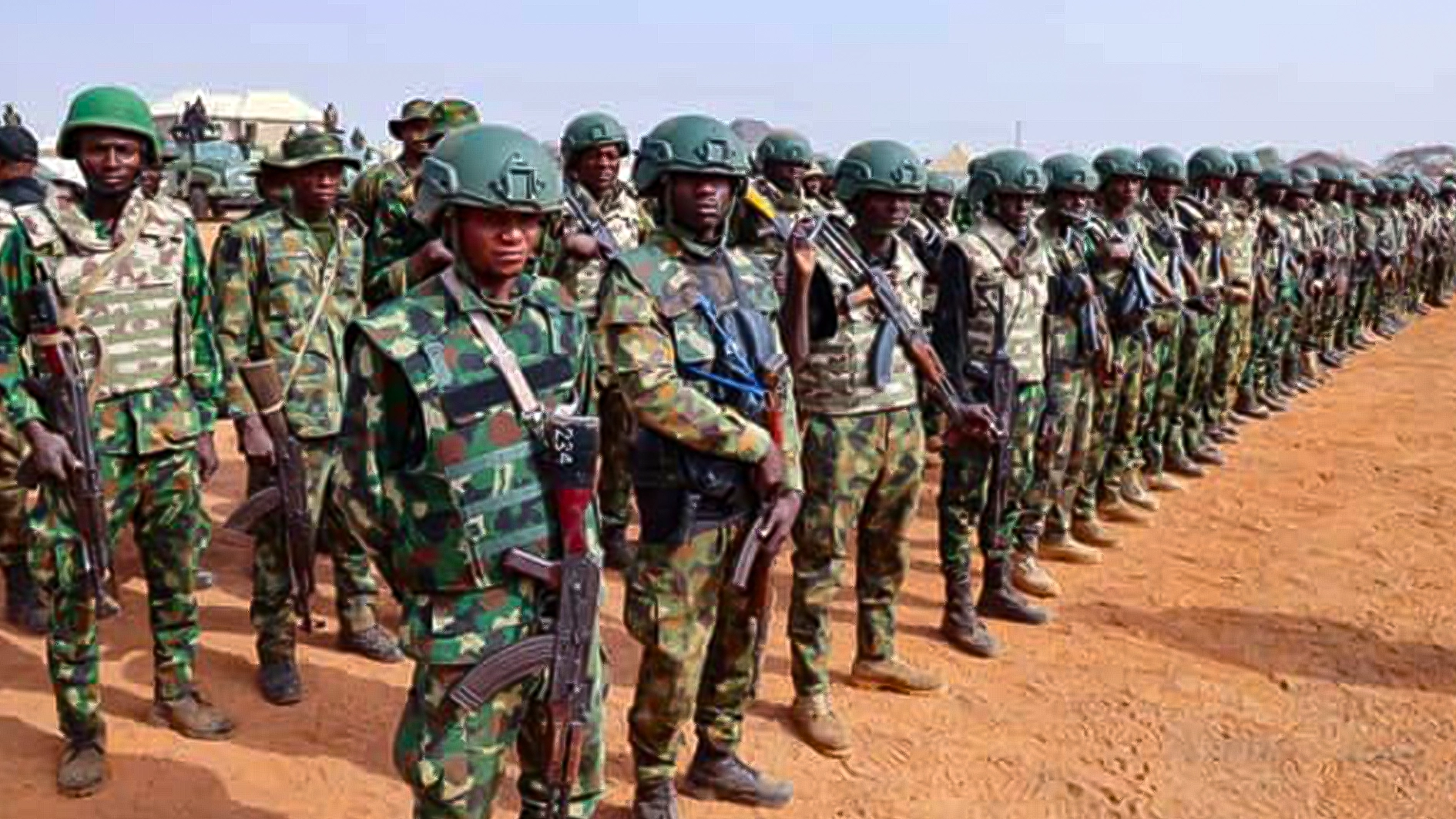
Against pervasive insecurity threatening the country from all sides, the Federal Government’s decision to create four additional army divisions is courageous and should be seen as a potential game-changer in the war against terrorism and insurgency. It is fitting that the Army has, appropriately, wasted no time in appointing General Officers Commanding (GOC) for the new formations. This is how an efficient system should function. President Bola Ahmed Tinubu has acted not only in fulfilment of his constitutional power towards the security and welfare of citizens.
In an increasingly unstable world, only eight divisions for a country the size of Nigeria is far from adequate. Four new ones so established are headquartered in Makurdi (5Div.), Ilorin (9Div.), Jalingo (10 Div.) and Benin City (83 Div.). Three new brigades have also been reportedly ‘activated’ to ‘reinforce the new command structure’ of the army. Ongoing also is the recruitment of 28,000 personnel.
There can be no denying the urgent need for a larger military to cope with the increasingly bold acts of terrorism across Nigeria. Not only are terrorists often better armed than some branches of the security force, but they have taken over control and even administration of territories of local governments in the northern part of the country. Terrorists invade at will, schools and communities, such unexpected places as the Nigeria Defence Academy (NDA) and lately, the Nigeria Institute for Policy and Strategic Studies (NIPSS). Not a few have argued that given the scale of insecurity in the land, Nigeria is at war, with many of the terrorists being foreigners controlled largely by non-local interests and in pursuit of religious, economic, and political agendas that are manifestly against the corporate existence of Nigeria.
But even the existing military personnel were subjected to duties generally not suited to their professional training and constitutional purposes. For too long, the Nigerian military has been assigned roles officially –or sometimes unofficially taken on duties – not appropriate to their profession. The result is that it has become overstretched with the burden of duties and functions that non-military security outfits should perform. Notwithstanding the powers of the president to ‘determine the operational use of the armed forces of the Federation’ as provided for in section 218(1) of the constitution, there is absolutely no good reason that the army should, for example, be drafted to secure the conduct of elections, and fight such acts of criminality as kidnapping. These are, in the words of Maj-Gen. Ishola Williams (rtd.), public safety as distinct from national security duties that can and should be handled by the Police Force and other paramilitary security bodies.
Indeed, Section 217 (a-c) clearly states that the armed forces should be employed for ‘defending Nigeria from external aggression, maintaining its territorial integrity and securing its borders from violation on land, sea, or air, suppressing insurrection and acting in aid of civil authorities [as need be]’. The consequence has been that an army already inadequate in personnel and materiel is distracted from its core professional concerns, as well as stretched beyond its effectiveness and efficiency capacities. For both the security of Nigeria and the professional focus of the military, this is not good at all.
As the most populous black country in the world, Nigeria is widely expected to play a leading role in Africa. In addition to other indices of power commensurate to this role and expectation, military power is critical. Yet, in Africa, figures available in the public space show this country playing third fiddle to other countries on the continent behind Egypt and Algeria.

Statistics put the total active military personnel of Nigeria at about 230,000, of which about 180,000 are in the army. These officers and men are expected to secure a Nigerian land mass of 923,768 sq. km and protect a population of more than 242 million as stipulated in the constitution. This is quite a tall order.
Egypt, Algeria, and Nigeria are ranked 19th, 26th, and 31st on the global military power scale. All these do not at all make this country look good.
The president has taken a step in the right direction to raise the size of the army. As former Chief of Defence Staff, Gen. Lucky Irabor (rtd) has suggested, commensurate measures need to be taken for the Navy and the Air Force. Importantly, this expanded army requires large investment in personnel, equipment, logistics and infrastructure to deliver the desired results. These include barracks, training institutions, instructors, healthcare services and welfare packages to ensure the new personnel are properly integrated into the Armed Forces. Nigeria must be prepared to transparently meet these requirements. According to Irabor, each division must be supported with adequate personnel, combat platforms, communications systems, transportation assets, accommodation, and medical facilities and logistics infrastructure.
The equipment to defend Nigeria must be upgraded with the appropriate technological input. But beyond this, if it is to be free from the blackmail of foreign interests, Nigeria must begin now to develop, in collaboration with the private sector, its own military-industrial complex. The morale of the men and women in the military must be boosted with remuneration and incentives respectable enough to attract quality citizens into the army. For obvious reasons, military personnel should be some of the best paid, best equipped, and best prepared for duty among employees of Government. In sum, Nigeria must treat its military according to global best practice to be able to demand and deserve unalloyed patriotism.
Granted though that, in exceptional cases, the military may be used ‘in aid of civil authorities to restore order when called upon to do so’, nonetheless, this clause in Section 21(1) (c) of the constitution, together with that of Section 218(1) on the powers of the President, must not be abused for personal and non-military purposes.
The Training and Doctrine Department has a lot of work to do to purge the military of internal saboteurs of its gallant efforts against enemies of the country,
Gen. Irabor opines that recruitment alone would not solve the military’s manpower challenge unless it is accompanied by continuous training, improved welfare and retention policies that would keep experienced personnel in service. This is not disputable.
President Tinubu has taken a good step in the right direction. Government should sustain this momentum in line with the copious promises on security in his Renewed Hope 2023 manifesto. First, it sends the right signals to terrorists and other criminals about the commitment of the government to move decisively against them. Second, this should be the beginning of Nigeria rising to its appropriate stature as a leading military power in Africa.

