 Follow Us on Google News


 Follow Us on Google Discover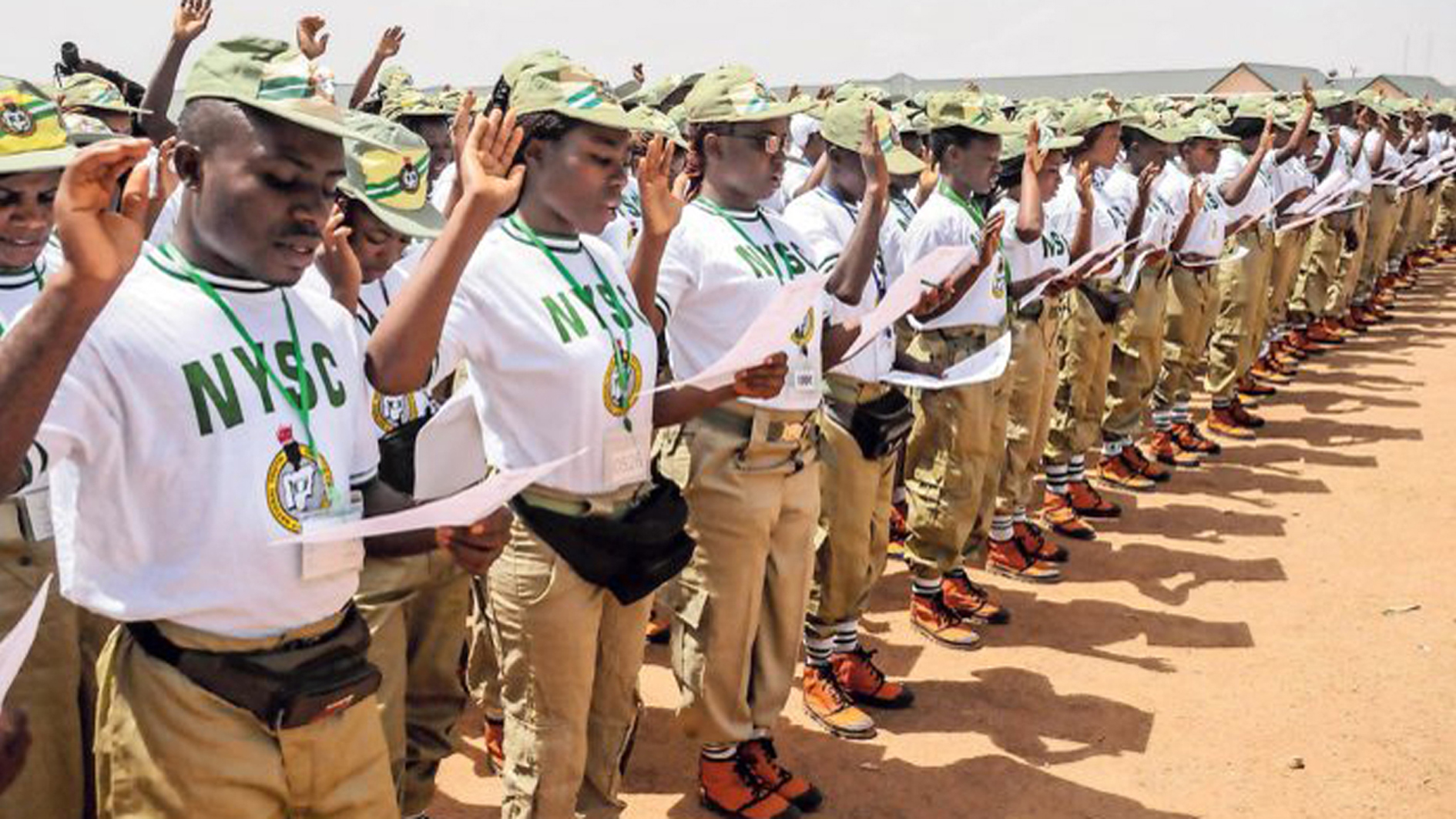
After 53 years, the National Youth Service Corps (NYSC) scheme deserves a lot more than the tinkering that the Federal Government initiated in the name of reform. The necessity to overhaul the NYSC cannot be overemphasised, for a scheme that has gone through thick and thin has played a crucial role in uplifting the country and now faces an existential threat from institutional weakness, poor logistics, and a hostile environment.
The military regime of General Yakubu Gowon established the NYSC on May 22, 1973, under Decree No. 24, about three years after the Nigerian Civil War.
While feelers from different quarters of the country indicate that the planned overhauling is overdue, it is widely considered that the reform should take off from the corps’ deviation over the years from its core objectives of promoting national unity and cohesion.
By failing to address the scheme’s fundamental crises, including deteriorating security, crumbling camp infrastructure, and the suffocating unemployment that awaits graduates after service, the government’s chosen action is no more than tinkering with symbolism.
The Minister of Youth Development, Ayodele Olawande, said the reforms are intended to reposition the NYSC as a more responsive youth development institution capable of preparing graduates for both employment and entrepreneurship.
Under the new framework, the Director-General of the NYSC will no longer be drawn from the military. Instead, the scheme will be headed by a civilian, while the Armed Forces will continue to provide security for corps members across the country.

Olawande said the reforms would also create specialised service streams, including a proposed Digital Corps, under which participants may undergo additional professional training before deployment to their places of primary assignment.
According to him, the extended training period will enable corps members to earn globally recognised professional certifications, improving their competitiveness in the labour market and expanding opportunities for self-employment.
“The one-year service will remain, but it will now incorporate flexible, skills-based training. Graduates enrolled in specialised streams, such as the proposed Digital Corps, may spend additional time in training before deployment in order to obtain professional certifications that enhance employability and support entrepreneurship,” the minister said.
The decision to replace military leadership with a civilian Director-General is being sold as modernisation. Many pundits, however, see this move as a gamble, the objective of which is unclear, given that for five decades the NYSC has remained one of the few threads holding Nigeria together.
Under the new arrangement, a civilian Director-General will assume operational leadership, while the military will remain responsible for the security of corps members nationwide. The workability of this looks confusing. As one lawmaker has rightly warned, appointing a civilian Director-General while still relying on military structures for nationwide security “creates dangerous fragmentation in the command chain.” For decades, the appointment of a serving senior military officer as Director-General provided the NYSC with command authority, logistical muscle, and the ability to summon immediate security responses across Nigeria’s volatile landscape. The military Director-General was not merely an administrator; he was a General who could pick up a phone and mobilise troops, helicopters, and intelligence assets within hours.
An Abuja-based opinion writer, Moses Obe, recently noted that a civilian Director-General, no matter how competent, lacks the “innate tactical authority and direct structural leverage within the national security apparatus” to command such responses. In a country where entire local government areas remain outside state control, this is not an abstract concern; it is a matter of life and death for every corps member.
Indeed, beyond the security calamity confronting the country, the reform betrays a fundamental misunderstanding of what the NYSC represents. The scheme was not intended to be a glorified job placement agency or a skills acquisition centre. It was conceived in the aftermath of the civil war as an instrument of national healing, a mechanism to compel young Nigerians out of their ethnic and regional silos and bring them together in the service of a common nation. The military leadership, the khaki uniform, and the paramilitary discipline were not accidents. They were deliberate choices designed to instill a sense of national purpose, equality, and shared sacrifice.
The FG’s reforms systematically dismantle each of these pillars. The iconic uniform, which for generations has symbolised equality by erasing differences in socioeconomic background, is to be replaced with Adire fabric. How fit is a fabric with strong ethnic and regional associations for a scheme supposedly dedicated to national unity? The orientation camp, once an intensive three-week (formerly four-week) immersion in discipline and camaraderie, will now stretch to six weeks of fragmented training across 11 specialised career streams.
This instrumentalisation of national service is troubling. Yes, the NYSC needs reform. Yes, corps members deserve skills that make them employable. But these objectives should enhance the scheme’s core mission, not replace it. By seemingly prioritising economic productivity over national integration, the government risks transforming the NYSC from a symbol of unity into yet another stratified administrative programme, one where graduates are sorted into career streams, posted according to their academic disciplines, and never forced to confront the uncomfortable reality of Nigeria’s diversity.
Curiously, this overhaul was conceived in the sterile confines of the Federal Executive Council, not through the vibrant, democratic process that such a fundamental transformation demands.
Checks showed that the reform process began in 2025 through consultations involving a handful of ministries and presidential advisers. Where were the corps members? Where were the parents who have buried children killed in the line of service? Where were the state governments that host these camps and bear the brunt of security failures? As one governance advocate has observed, the process “lacks inclusiveness and fails to address the country’s pressing challenges”. This is reform by fiat, not by consensus.
The FEC would have Nigerians believe that a new uniform, a longer camp, and a civilian Director-General constitute progress. But in the absence of clear definitions, they may end up as a distraction, a shiny object dangled before a public desperate for meaningful change. The real challenges facing the NYSC are not symbolic; they are existential. Inadequate camp facilities, allowances that have not kept pace with inflation, and security threats have terrified parents from sending their children to many parts of the country. The core challenges also include employers, who reject corps members as a burden rather than an asset. These are the problems that demand urgent attention, not the identity of the Director-General or the fabric of the uniform.
Nigeria needs a safe NYSC. It needs a well-funded NYSC. It needs an NYSC that honours its original promise of national unity while equipping graduates for the future. The FEC’s reforms fall short of these. Instead, they offer the illusion of change while deepening the scheme’s vulnerabilities. This is not modernisation. It is a serious gamble that the government and the scheme can ill-afford. The government will do well to revisit the reform with a view to making it more pragmatic.

