 Get Guardian on Google
For more than two decades, Nigerians have approached the ballot box with a single, straightforward expectation: that their votes will determine who governs them, and that once the ballots are counted, the contest will conclude. Yet, far too often, the declaration of results has served merely as the opening salvo in another protracted war—one waged through petitions, election tribunals, and exhaustive legal battles over whether the announced outcome genuinely reflected the popular will. Repeatedly, the ballot box has produced a winner, only for the courts to be summoned to decide whether that victory should stand.
Since the restoration of democratic governance in 1999, Nigeria has navigated seven general electoral cycles. Throughout this period, persistent concerns regarding credibility, administrative fairness, vote-buying, violence, logistical bottlenecks, and the conduct of officials have remained stubborn fixtures of the political landscape. The 2007 general elections, in particular, inflicted a deep wound on public confidence amid widespread allegations of irregularities and premature declarations.
This troubled trajectory makes the recent performance of the Independent National Electoral Commission (INEC) in off-cycle governorship polls especially noteworthy. The contests in Anambra in November 2025, Ekiti in June 2026, and Osun in August 2026 have afforded the Commission a vital proving ground—demonstrating that meticulous planning, purposeful deployment of technology, genuine stakeholder engagement, stronger logistics, and disciplined election management can begin to rebuild public trust.
It is against this backdrop of measurable progress that Thursday’s viral footage from London appears all the more discordant. In the circulating video, the INEC Chairman, Professor Joash Amupitan, SAN, was confronted and harassed by a small group of demonstrators outside Chatham House in the United Kingdom. Professor Amupitan had taken the commendable step of appearing at the renowned international policy institute to continue the Commission’s stakeholder engagement—fielding candid questions and detailing INEC’s operational readiness to deliver free, fair, and credible elections in 2027.
During the session, the Chairman addressed critical technical and legal matters, including strategies for mitigating network failures, the proper deployment of the Bimodal Voter Accreditation System (BVAS), artificial intelligence safeguards for cleaning the voter register, and funding logistics. Responding to pointed enquiries regarding political parties embroiled in leadership disputes and the disqualification of candidates, Professor Amupitan maintained a clear, constitutional posture: INEC is an administrative umpire, not a court of law, and can act in such disputes only upon binding pronouncements from the judiciary, ultimately up to the Supreme Court. In a political climate where over 300 pre-election suits are already clogging the dockets across party lines, the Chairman’s adherence to strict legal neutrality was entirely appropriate.
Just last week, INEC disclosed that 54 of its staff were facing disciplinary action for voter register manipulation offences; this shows credibility and that the question of having bad eggs in the system who could compromise the electoral process has been removed.
Attendees inside Chatham House rightly commended the electoral chief for initiating transparent institutional reforms and for engaging Nigerians abroad on the road to 2027. Conversely, the rowdy spectacle outside the venue, which bears the familiar hallmarks of an opposition-sponsored protest designed for social media consumption, represents a needless distraction from the serious work of democratic consolidation.
Rather than allowing themselves to be recruited as paid agitators or partisan megaphones against an umpire actively overhauling the electoral architecture, Nigerians in the diaspora should channel their global exposure, resources, and civic influence constructively. Living in mature democracies ought to inspire diaspora groups to champion voter education, support civic sensitisation campaigns back home, and encourage peaceful, issue-based participation among the electorate. Hired protests at international venues do nothing to strengthen polling-unit transparency in rural Nigeria; constructive civic advocacy does.
Indeed, when evaluated objectively against the recent off-cycle polls in Anambra, Ekiti, and Osun—alongside 16 legislative bye-elections and the Federal Capital Territory Area Council polls—INEC under Professor Amupitan’s stewardship merits fair recognition. This is not to suggest that every systemic flaw has vanished overnight, but rather that the Commission has shown a capacity to learn from past missteps and apply those lessons operationally.
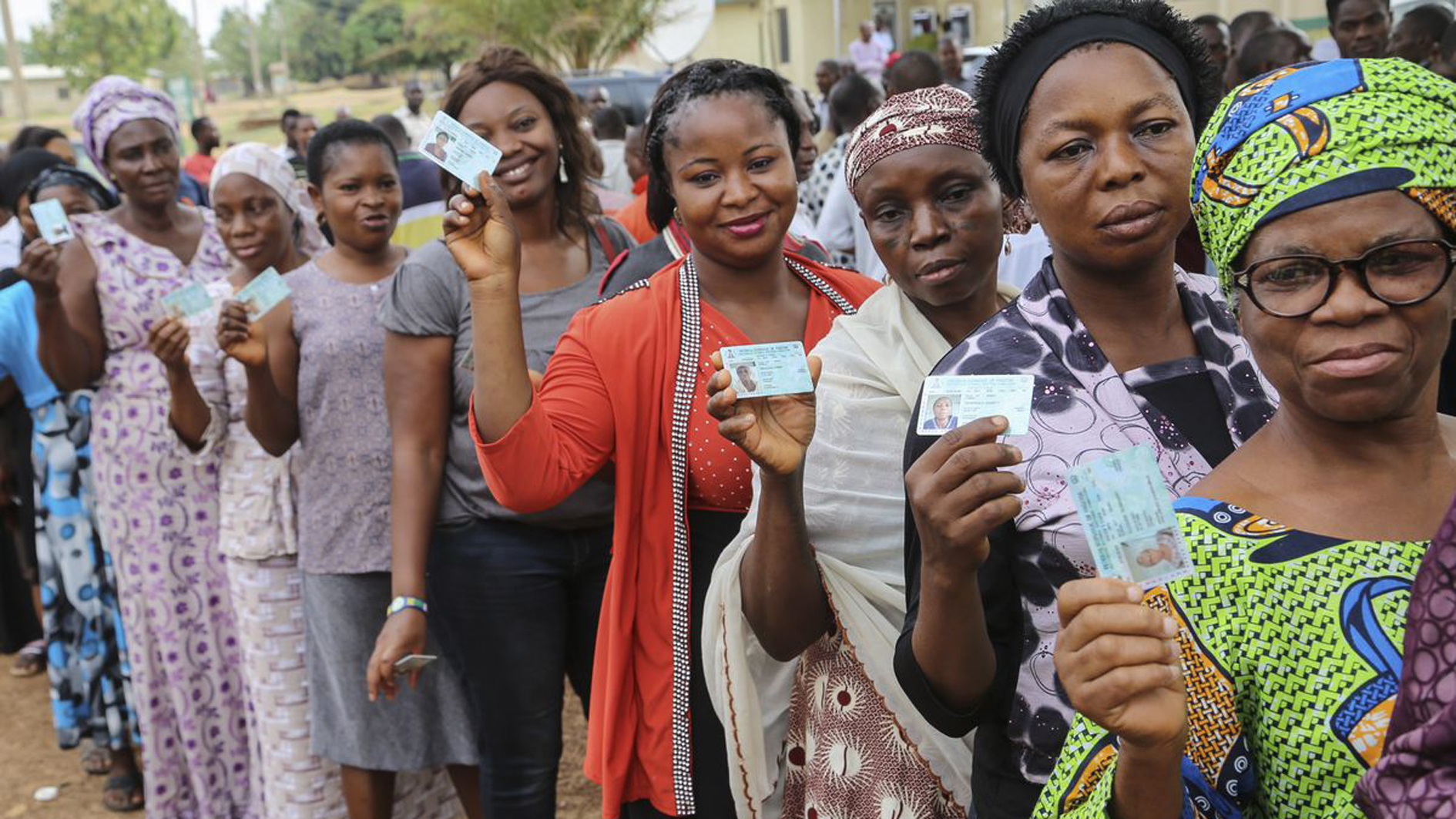
The Anambra governorship election of November 2025 served as Professor Amupitan’s baptism of fire, arriving mere weeks after he assumed office. INEC met the challenge with rigorous preparation, conducting early consultations, auditing technology, and tightening logistics. The deployment was substantial: 5,718 polling units, over 24,000 ad hoc staff, 6,879 BVAS machines, 3,000 vehicles, and 83 boats for riverine terrain, all monitored from an Abuja Situation Room alongside four National Commissioners and ten Resident Electoral Commissioners. Extending Permanent Voter Card (PVC) collection pushed rates to 98.80 per cent, while sign-language interpreters improved access for voters with disabilities—proving credibility begins by removing barriers to participation.
The June 2026 Ekiti poll reinforced the value of early groundwork. Working from a verified register of 1,059,360 voters, INEC engaged political parties, civil society, security agencies, and traditional rulers ahead of election day. A signed Peace Accord and integrated security planning yielded a largely peaceful exercise, though observers rightly flagged vote-buying and isolated operational hiccups. An electoral body earns lasting legitimacy not by claiming perfection, but by diagnosing weaknesses openly and correcting them.
Perhaps the most telling milestone occurred in Osun State following the 15 August 2026 governorship election. When the statutory 21-day window closed, tribunal records confirmed that not a single defeated candidate or party had filed a petition. In a political culture where courtroom battles are routine, an uncontested outcome speaks volumes about broad acceptance.
Encouraging as these off-cycle gains are, the 2027 general elections will test Professor Amupitan on a vastly greater scale, requiring simultaneous coordination for the Presidency, National Assembly, and State Houses of Assembly. To bridge that gap, INEC must consolidate its reforms. Logistics must remain paramount so delayed materials never breed suspicion. Electoral technology must be bulletproof, avoiding the network failures that marred the 2023 presidential poll through rigorous stress-testing, reliable contingency protocols, and well-trained staff. Equally vital is purifying the voter register via continuous registration and revalidation to eliminate duplicate or ineligible entries.
Recent evidence justifies cautious optimism: Anambra proved the power of preparation, Ekiti underscored security coordination, and Osun showed that credible polls spare the nation endless litigation. Professor Joash Amupitan, SAN, deserves commendation for steadying the Commission, yet the truest tribute to this progress is holding INEC to even higher standards.
Delivering credible elections in 2027 demands unwavering independence, seamless logistics, and the courage to protect the voter’s will—ensuring winners govern with legitimacy, losers concede with grace, and Nigeria’s leaders are chosen decisively at the polling booth rather than in the courtroom.
By Onogwu Muhammed, LLB, BL, LLM, MIAD, ANIPR