 Follow Us on Google News



 Follow Us on Google Discover
By Chiedu Uche Okoye
Sir The mere mention of the name, Obosi, evokes these memories, namely its globally recognized indigenes and its legendary war with Onitsha over land disputes. But Obosi is an ancient town, the provenance of which dates back to many centuries ago. Myths, legends, and stories regarding the origin of the town abound. But the commonalities in the stories about the town’s origin are aggregated and weaved together as the history of Obosi.
However, it is an indisputable fact that Obosi is a well-known and important town in Nigeria and beyond because some of its indigenes have achieved global renown. And they had contributed in no small ways to the development of Nigeria.
Chief Emeka Anyaoku, the former Commonwealth secretary general; the late Chief Chimezie Ikeazor, the founder of the free legal aid in Nigeria; Chief Osita Chidoka, a former Nigerian aviation minister; and Chief Philip Ikeazor, CBN deputy governor are natives of Obosi, who did their best to leapfrog Nigeria to the acme of national development.
In addition to producing people, who are contributing to our country’s development, Obosi town, which is bounded by Onitsha, Nkpor, and Oba, is known for its unique and colourful cultural festivals, which include Agwu festival, Idemili, Ito Ogbo festival, Obiora/Iwaji festival, and others.The Obiora/Iwaji Obosi festival, which is among the most widely celebrated Obosi cultural festivals, is celebrated annually. Obiora Obosi and Iwaji Obosi festival are used interchangeably by Obosi people for they are intertwined. As Iwaji Obosi is celebrated in Obosi so is it celebrated in other towns in the southeast of Nigeria. Iwaji festival is the occasion when the people of a town led by their traditional ruler gather to thank God for giving them bountiful agricultural harvests. In most towns in the southeast of Nigeria, a traditional ruler’s celebration of Iwaji festival will precede and herald his subjects’ celebration of theirs.
In Obosi, an ancient kingdom, the Iwaji festival is intertwined with Obiora Obosi. Both had blended to become one cultural festival. But Obiora Obosi festival makes us remember the week of peace in Chinua Achebe’s anthropological novel, “Things Fall Apart”.

During the period of Obiora, Obosi people are expected and enjoined to live peacefully with one another. Everybody is barred by the dictates of the town’s culture and traditions from engaging in fights. Those who desecrate the sacredness of the period will cleanse the land by carrying out atonement rituals, as directed by the custodians of the Obosi culture.
The significance and importance of Obiora Obosi, which is an integral part of Iwaji Obosi, are not unknown to us. The observance of the Obiora Obosi festival reminds us of the fact that any society whose indigenes are not living peaceably with one another cannot achieve meaningful and sustainable development. Our celebration of the festival enjoins us to sink our differences with our relatives and neighbours so as to live in peace with them. In a nutshell, our observance as well as celebration of Obiora Obosi promotes good neighborliness and unity among the Obosi people.
Again, Obiora/Iwaji Obosi is evolving and assuming a modern hue. For example, during the annual Obiora/Iwaji Obosi festival, personages, who are from different parts of Nigeria, will attend the event to give gifts to the traditional ruler of Obosi. And when the festival takes place during electioneering period, political candidates vying for elective posts will convert the arena of the Obiora/Iwaji festival to campaign ground. The electioneering will be done, covertly.
More so, on the day of the festival, members of the traditional ruler’s cabinet, who will be dressed in their traditional regalia, will take turns to dance to the traditional drumbeats or music produced by the local drummers. Their entrance into the arena of the festival will elicit loud cheers from the people. As the people call them by their traditional title-names, they will dance, regally, and wave at them to acknowledge their greetings. It is a beautiful and riveting spectacle to behold.
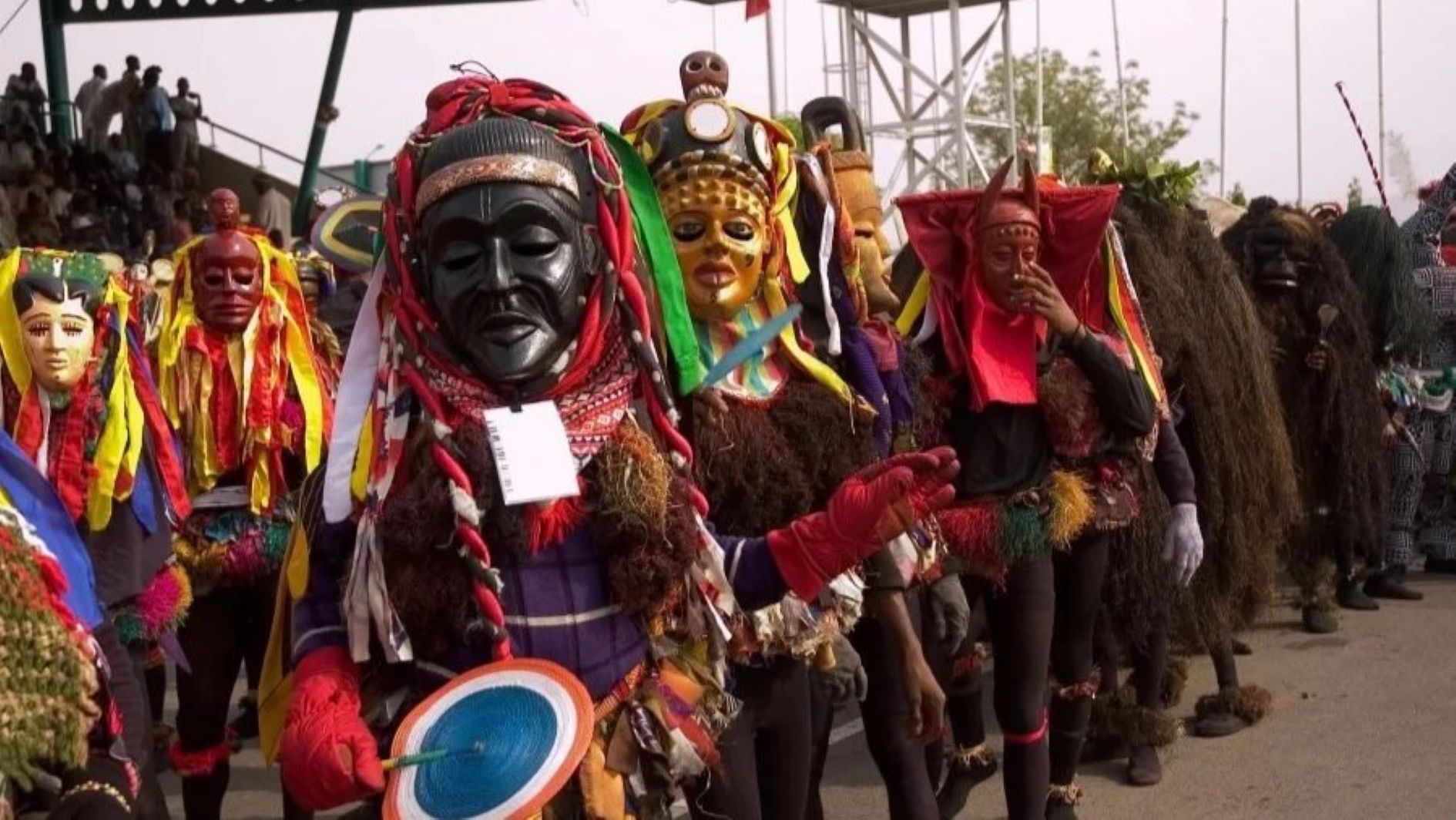
Aside the titled men, who are members of the traditional ruler’s ruling cabinet, and personages, who will grace the occasion, masquerades from different villages that make up the town will perform for the people during the festival. And members of different age grades clad in their uniforms will dance round the event’s arena, singing laudatory songs about Obosi people, Obosi town, and the town’s traditional ruler, who is Igwe Chidubem Iweka (Eze Iweka III).
The event will reach its climax when the traditional ruler of Obosi will dip slices of roast(ed) yam in vegetable sauce and give to children. The feeding of the children with slices of roast(ed) yam sauce by the traditional ruler of Obosi is symbolic of the important place, which children hold in the festival.
Nowadays, the Iwaji/Obiora festival offers the traditional ruler of Obosi an opportunity to make pronouncements regarding matters, which have cropped up in the town.
The 2026 Obiora/Iwaji Obosi festival will take place at the Obosi township stadium on October 24, 2026. And the ceremony will be performed by Igwe Chidubem Iweka(Eze Iweka III)
• Chiedu Uche Okoye, a poet, wrote from Uruowulu-Obosi in Anambra State

