 Follow Us on Google News


 Follow Us on Google Discover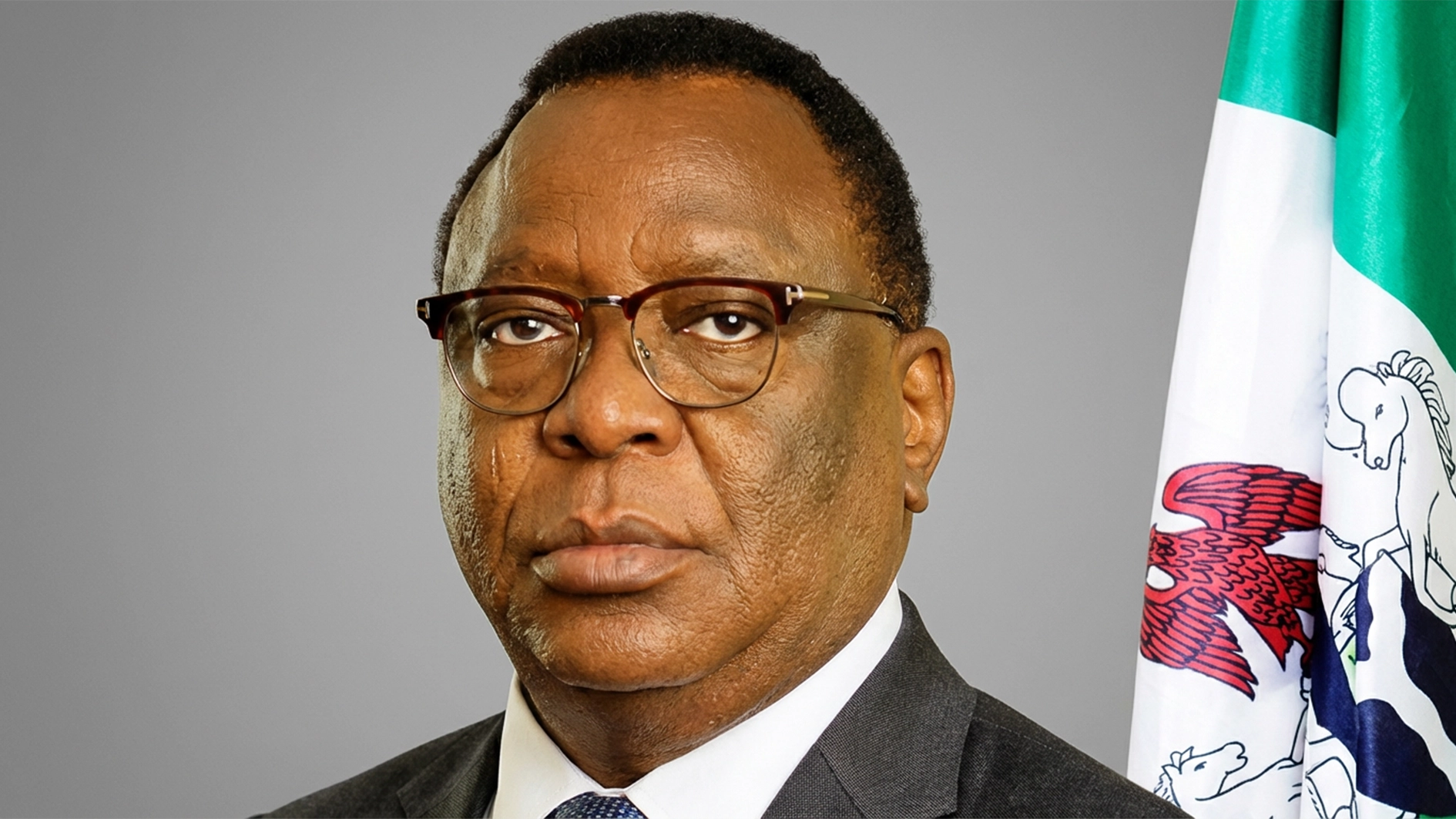
By: Emmanuel Okotie-Eboh
Since President Bola Ahmed Tinubu appointed Engr. Felix Omatsola Ogbe as Executive Secretary of the Nigerian Content Development and Monitoring Board (NCDMB) on December 7, 2023, the Board has increasingly positioned Nigerian Content as an important instrument for advancing the Federal Government’s economic reform agenda.
Ogbe’s appointment came at a period when the Tinubu administration was pursuing reforms aimed at attracting investment, improving the business environment, strengthening domestic production, creating employment and reducing Nigeria’s dependence on imported goods and services. Against this background, the role of the NCDMB has become particularly significant because the oil and gas industry remains one of the country’s most strategic economic sectors.
The Board is responsible for ensuring that activities in the industry create opportunities for Nigerian companies, workers, manufacturers, professionals and communities. Rather than treating local content merely as a regulatory requirement, the Ogbe-led NCDMB has increasingly presented it as a tool for industrial development, job creation, technology transfer, investment attraction and the retention of economic value within Nigeria.
Turning Tinubu’s Reform Agenda into Local Industrial Opportunities
One of the clearest areas where the NCDMB has supported the Tinubu administration is in the implementation of the President’s 2024 Presidential Directives on local-content compliance and the reduction of petroleum-sector contracting costs and timelines. The directives were designed to make oil and gas projects more competitive, reduce unnecessary delays, eliminate intermediaries without demonstrable capacity and ensure that qualified Nigerian companies receive opportunities based on proven capabilities.

The NCDMB responded by streamlining its approval processes and reducing its contracting touchpoints. The Board reported that the contracting cycle was reduced towards a six-month target, while its touchpoints were reduced from nine to five under the revised contracting-cycle framework. This is important to Tinubu’s economic agenda because faster contracting means that investments can move more quickly from approval to actual project execution. In an industry where delays can increase project costs and discourage investors, the NCDMB’s role as a business enabler has therefore become an important part of the wider effort to improve Nigeria’s investment climate.
Strengthening Nigerian Companies
Another major contribution of the NCDMB under Ogbe has been the continued effort to build the capacity of indigenous oil and gas companies. The philosophy behind Nigerian Content is straightforward: Nigeria should not merely produce crude oil while the major technical, manufacturing and service activities surrounding the industry are performed abroad. The Board’s interventions seek to ensure that Nigerian companies acquire the equipment, financing, technology, expertise and market access required to participate meaningfully in the oil and gas value chain.
In December 2025, Ogbe announced a $100 million Equity Investment Scheme designed to provide equity financing for high-growth indigenous energy-service companies. The initiative was structured as a new product under the Nigerian Content Intervention Fund and was developed in partnership with the Bank of Industry. In August 2026, the NCDMB and the Bank of Industry inaugurated the Investment Committee of the Nigerian Content Equity Fund, setting the stage for implementation of the $100 million financing window. According to the Board, the fund is intended to provide long-term financing in exchange for equity rather than relying solely on conventional debt. This represents a significant connection between local-content policy and the broader economic objective of strengthening Nigerian enterprises.
From Local Content to “Nigeria First”
Perhaps one of the strongest areas of convergence between the NCDMB under Ogbe and the Tinubu administration is the “Nigeria First” policy.
In July 2025, Ogbe pledged the NCDMB’s commitment to implementing the policy, which seeks to encourage the patronage of locally produced goods and services and reduce unnecessary dependence on imported products. For the NCDMB, the policy provides an opportunity to expand the meaning of Nigerian Content beyond compliance certificates and procurement rules. It means creating a situation where Nigerian manufacturers, engineers, contractors, technology providers and service companies can actually supply the industry with goods and services that meet required standards. The Board has consequently moved towards developing a dedicated Nigeria First procurement policy and integrating the principle into the review of Nigerian Content Plans and other regulatory processes. This approach directly supports the Federal Government’s objective of retaining more economic value within the country.
Building Manufacturing Capacity
The impact of this philosophy can also be seen in the Board’s support for local manufacturing. The NCDMB has continued to encourage Nigerian manufacturers to produce equipment and consumables required by the oil and gas industry. One example is its support for companies such as Yikodeen, whose expanded Nigerian manufacturing facility produces industrial safety footwear. The Board has stressed that the objective is not simply to ensure that Nigerian products are manufactured but that they are actually utilised within the country’s oil and gas industry.
This is important because manufacturing creates a multiplier effect. When an oil company purchases locally manufactured equipment, the benefit can extend beyond the immediate supplier to workers, raw-material providers, transport operators, financial institutions, technology companies and other businesses. That is precisely the type of domestic economic activity that the Tinubu administration’s industrialisation and “Nigeria First” philosophy seeks to encourage.
Financing Grassroots and Community Contractors.
Another area in which the NCDMB’s programmes intersect with the Federal Government’s economic inclusion objectives is community participation.
In 2025, the Board announced a restructuring of its N50 billion Community Contractors Financing Scheme, designed to improve access to financing for contractors from oil-producing communities.
The initiative includes measures intended to make financing more accessible and increase participation in the oil and gas value chain. This is significant because economic development in the oil-producing region cannot be sustained if local communities remain spectators to activities taking place around them. By providing financing and opportunities for community-based contractors, the NCDMB is attempting to create a stronger link between oil and gas activities and grassroots economic development.
From Local Content to “Nigeria First”
Perhaps one of the strongest areas of convergence between the NCDMB under Ogbe and the Tinubu administration is the “Nigeria First” policy.
In July 2025, Ogbe pledged the NCDMB’s commitment to implementing the policy, which seeks to encourage the patronage of locally produced goods and services and reduce unnecessary dependence on imported products. For the NCDMB, the policy provides an opportunity to expand the meaning of Nigerian Content beyond compliance certificates and procurement rules.
It means creating a situation where Nigerian manufacturers, engineers, contractors, technology providers and service companies can actually supply the industry with goods and services that meet required standards. The Board has consequently moved towards developing a dedicated Nigeria First procurement policy and integrating the principle into the review of Nigerian Content Plans and other regulatory processes. This approach directly supports the Federal Government’s objective of retaining more economic value within the country.
Building Manufacturing Capacity
The impact of this philosophy can also be seen in the Board’s support for local manufacturing. The NCDMB has continued to encourage Nigerian manufacturers to produce equipment and consumables required by the oil and gas industry. One example is its support for companies such as Yikodeen, whose expanded Nigerian manufacturing facility produces industrial safety footwear. The Board has stressed that the objective is not simply to ensure that Nigerian products are manufactured but that they are actually utilised within the country’s oil and gas industry.
This is important because manufacturing creates a multiplier effect. When an oil company purchases locally manufactured equipment, the benefit can extend beyond the immediate supplier to workers, raw-material providers, transport operators, financial institutions, technology companies and other businesses. That is precisely the type of domestic economic activity that the Tinubu administration’s industrialisation and “Nigeria First” philosophy seeks to encourage.
Financing Grassroots and Community Contractors.
Another area in which the NCDMB’s programmes intersect with the Federal Government’s economic inclusion objectives is community participation.
In 2025, the Board announced a restructuring of its N50 billion Community Contractors Financing Scheme, designed to improve access to financing for contractors from oil-producing communities. The initiative includes measures intended to make financing more accessible and increase participation in the oil and gas value chain. This is significant because economic development in the oil-producing region cannot be sustained if local communities remain spectators to activities taking place around them. By providing financing and opportunities for community-based contractors, the NCDMB is attempting to create a stronger link between oil and gas activities and grassroots economic development.
Supporting Strategic Energy Projects
The NCDMB’s contribution under Ogbe has also extended to strategic investments in the energy sector. In March 2025, the Board announced that it had acquired a 20 per cent equity stake in a 100,000-barrel-per-day refinery project being developed by African Refinery Group in partnership with NNPC Limited at Alesa-Eleme in Rivers State. The Board described the transaction as the first equity investment sealed under Ogbe’s leadership. The significance of such investments goes beyond the immediate financial participation of the Board. Refining capacity, domestic energy supply, technical expertise and industrial infrastructure are all linked to the Federal Government’s broader objective of strengthening energy security and reducing dependence on imported petroleum products.
The Dangote Refinery and Local Content
The NCDMB has equally strengthened its engagement with the Dangote Petroleum Refinery and Petrochemical Company.
In June 2025, the Board and Dangote Petroleum Refinery inaugurated a Joint Technical Committee to deepen local-content implementation during the operational phase of the 650,000-barrel-per-day refinery.
The significance of the initiative lies in the opportunity to connect one of Nigeria’s largest industrial investments with Nigerian suppliers, professionals, manufacturers and service companies. For the Tinubu administration, whose economic agenda places emphasis on investment, production and industrial capacity, ensuring that major projects create extensive domestic opportunities is particularly important. The NCDMB’s intervention therefore provides an institutional mechanism for ensuring that the benefits of such investments spread beyond the immediate project owners to the wider Nigerian economy.
Supporting Indigenous Infrastructure
The Board has also highlighted the emergence of indigenous infrastructure capable of transforming the economics of oil production.
At the 2025 Nigeria Oil and Gas Conference, the NCDMB highlighted the Otakikpo Crude Export Terminal in Rivers State, describing it as Nigeria’s first indigenous onshore crude-oil export terminal in more than 50 years. According to the Board, the project involved an initial investment of approximately $400 million and was designed to improve crude evacuation and enhance the economics of marginal-field operations.
Projects of this nature demonstrate the potential of local-content policies to move Nigeria beyond the traditional model in which indigenous companies participate mainly as contractors.
The long-term objective is to create Nigerian-owned infrastructure, technology and expertise that can support the industry and generate economic value locally.
measured by the emergence of stronger Nigerian businesses, more skilled workers, greater technology ownership, increased manufacturing capacity and sustainable jobs.
Under Engr. Felix Omatsola Ogbe, the NCDMB has increasingly positioned itself as a bridge between the Federal Government’s economic policies and practical opportunities in Nigeria’s energy industry.
For President Bola Ahmed Tinubu’s administration, the Board represents one of the institutions through which the principles of “Nigeria First,” industrialisation, investment attraction and domestic value creation can be translated into concrete activities within one of the country’s most important economic sectors.
The record of the Ogbe-led NCDMB is therefore best understood as part of a broader national effort.
Its contribution is not that it alone created every investment, job or industrial project in the petroleum sector. Rather, its significance lies in helping to ensure that as Nigeria attracts investment and expands energy production, Nigerian companies, workers, manufacturers, professionals and communities are positioned to participate in and derive greater economic value from that growth. That is where Nigerian Content becomes more than a regulatory policy.
It becomes an economic strategy. And under the leadership of Engr. Ogbe, the NCDMB has continued to place that strategy at the centre of its engagement with the Tinubu administration’s economic transformation agenda.
*Okotie-Eboh wrote in from Warri, Delta State

