 Follow Us on Google News


 Follow Us on Google Discover
By Adah Atonu
According to Winston Churchill, “the price of greatness is responsibility.” And in the affairs of every nation, great responsibility often comes with the opportunity to make a lasting difference. This is the responsibility Engr. Bashir Bayo Ojulari has taken on at NNPC Limited at a time when Nigeria needs a new sense of direction in the oil and gas industry.
With the country seeking to reduce revenue losses, raise production and derive greater value from its God given resources, Ojulari is proving that leadership in the petroleum sector is not merely about managing oil assets; it is about turning the nation’s natural wealth into tangible opportunities for its people.
His meticulous approach, vast industry experience and careful understanding of the gaps that have affected the management of Nigeria’s oil and gas resources have placed him at the centre of a promising new chapter for the sector.
The significance of his assignment goes beyond the management of a national oil company. Oil and gas remains one of Nigeria’s most important economic assets, capable of creating jobs, generating revenue, supporting industries and strengthening the country’s energy security.
For many years, however, the sector has struggled with production challenges, underinvestment, insecurity, operational inefficiencies and weak confidence from investors. Ojulari came into this difficult environment with a deep understanding of the industry and a determination to address the problems from their roots.
His appointment by President Bola Ahmed Tinubu on April 2, 2025, came at a critical period in the transformation of NNPC Limited. The Petroleum Industry Act had already changed the structure of the nation’s oil company, but legislation alone could not deliver the desired results. What was needed was leadership capable of turning reforms into practical action. Ojulari, with decades of experience in the petroleum industry, brought to the position the professional background and industry knowledge required for that task.
One of the clearest signs of his approach has been the renewed attention to crude oil production. Rather than accepting declining output as normal, his administration focused on improving the performance of NNPC Exploration and Production Limited. Production that had struggled around the 200,000 to 250,000 barrels per day range rose significantly, reaching about 330,000 barrels per day in August 2025 and approximately 355,000 barrels per day toward the end of that year. These figures are important because every additional barrel produced represents another opportunity for Nigeria to earn revenue and strengthen its economy.
But Ojulari’s vision is not limited to what is being produced today. He is also paying attention to tomorrow. His efforts to deepen investment in Nigeria’s deepwater oil fields have opened a new chapter for the industry. The approval of the Bonga Southwest-Aparo Final Investment Decision is particularly significant. The project is expected to add substantial crude oil and gas production capacity while creating thousands of direct and indirect jobs. Developments such as Bonga North and Preowei also hold the promise of further increasing national output.
This renewed interest in deepwater development is important for another reason. Nigeria cannot continue to depend on old fields and existing infrastructure while expecting oil revenue to grow. New investments are needed to replace declining production and expand the country’s earning capacity. Ojulari’s professional experience and relationships across the global oil and gas industry appear to be helping to rebuild investor confidence and remind international partners that Nigeria remains a country with enormous energy opportunities.
Beyond production figures and investments, however, there is another side to Ojulari’s leadership that deserves attention. He appears to understand that institutions succeed not only because of policies, but also because of the people who implement them. His administration has placed greater emphasis on performance, accountability and professionalism within NNPC Limited. His message is simple. People must understand their responsibilities, deliver results and know that the success of the company is ultimately tied to the welfare of Nigerians.
This change in management culture is particularly important for an organisation as large and strategic as NNPC Limited. To him, commercial decisions must be based on sound business considerations and the national interest rather than personal or political interests. Contracts, partnerships and investments should produce value for the company and, ultimately, for the Nigerian people. A more disciplined approach to decision making can help reduce waste, close loopholes and ensure that the nation’s oil wealth delivers better returns.
Ojulari has also demonstrated the importance of industrial harmony. In an industry where disagreements between management and organised labour can disrupt operations and affect national revenue, maintaining a healthy relationship with workers is a major achievement. By engaging with labour unions and encouraging cooperation across the workforce, his administration has created an environment where employees can contribute more effectively to the company’s transformation. No institution can succeed when its people are constantly working against one another.
The financial performance of NNPC Limited provides another reason for optimism. The audited 2024 results reportedly showed a profit after tax of about N5.4 trillion, while the 2025 unaudited results were projected at approximately N5.76 trillion. Such numbers should not merely be viewed as impressive corporate figures. They matter because a stronger and more profitable national oil company has greater capacity to support Nigeria’s economy, strengthen energy security and create sustainable value for the country.
The ongoing development of critical gas infrastructure further shows that the future of Nigeria’s energy sector cannot be built around crude oil alone. Projects and assets associated with the Ajaokuta-Kaduna-Kano pipeline, the Escravos-Lagos Pipeline System and the Obiafu-Obrikom-Oben pipeline are important to unlocking the country’s vast gas potential. Gas can power industries, support electricity generation, create jobs and provide another major source of revenue. In this sense, Ojulari’s assignment is not simply about producing more crude; it is about ensuring that Nigeria derives wider economic value from its entire energy resources.
Ultimately, Ojulari’s time at NNPC Limited offers a reason for renewed confidence in Nigeria’s oil and gas industry. His meticulous approach, industry experience and understanding of the gaps that have weakened the management of the nation’s petroleum resources are beginning to produce encouraging signs. At a time when subsidy removal and other reforms have placed greater attention on the true value of Nigeria’s natural resources, the country needs leaders who can prove that oil and gas can still be a blessing rather than a burden.
Ojulari’s service is a reminder that with the right leadership, discipline and national commitment, the resources God has blessed Nigeria with can be turned into greater prosperity for the Nigerian people.
Atonu is a public affairs commentator writing from Otukpo, Benue State.
Ojulari: A Blessing In Service To Fatherland
Date: 24 August 2026 8:06pm WAT
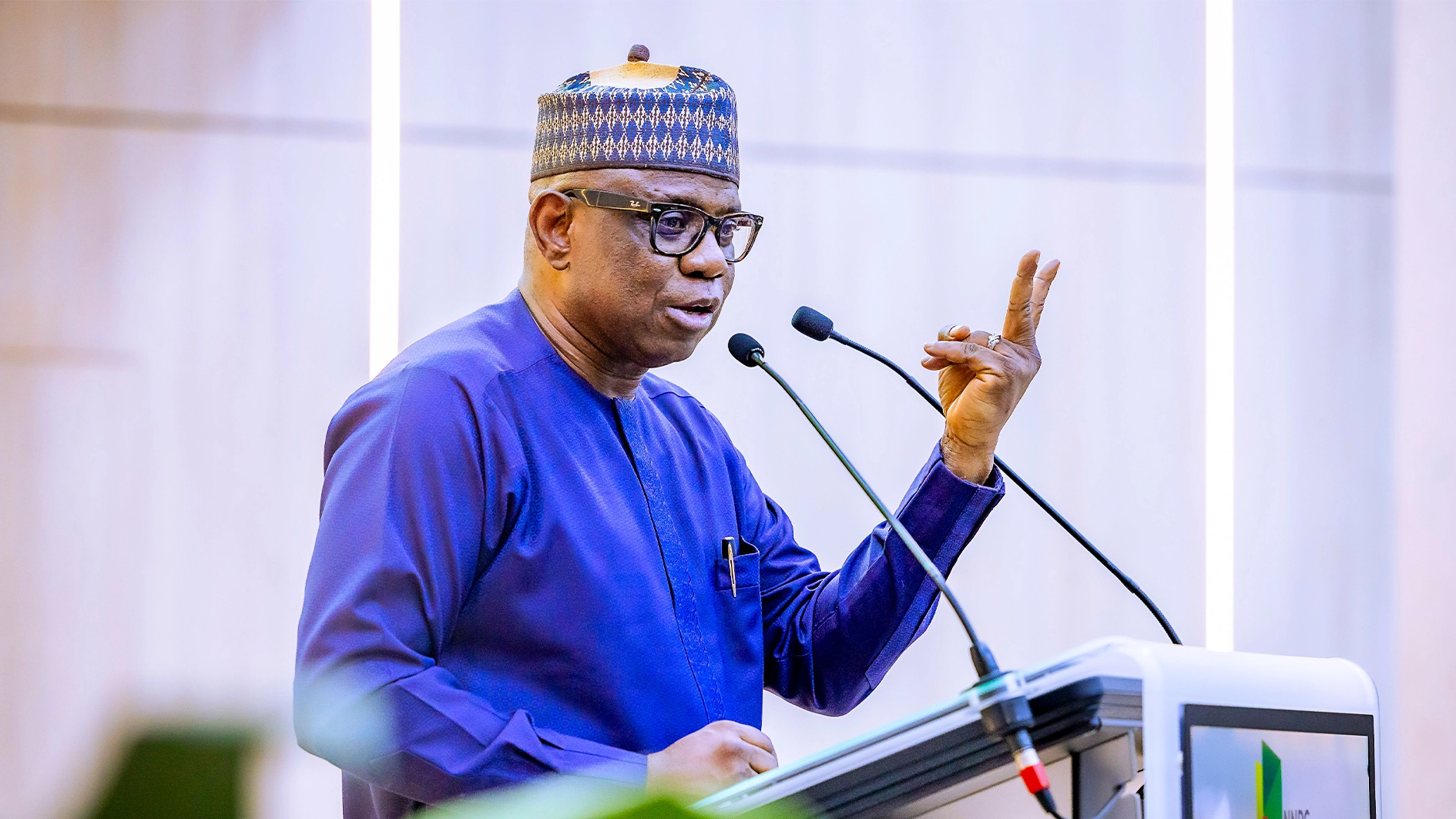
Group Chief Executive Officer of the Nigerian National Petroleum Company Limited (NNPC), Bashir Bayo Ojulari
Group Chief Executive Officer of the Nigerian National Petroleum Company Limited (NNPC), Bashir Bayo Ojulari

