In 1995, during the United Nations World Conference on Women in Beijing, delegates from across the world stepped out of a packed hall where a group of Rwandan women were speaking about rebuilding their nation after genocide.
They were not loud, but they were startlingly clear. They insisted that women must not only be present in government, but structurally empowered and written into law. That insistence would eventually give Rwanda the highest percentage of women in parliament in the world.
A Nigerian delegate who was at the meeting, in later years, said something memorable: “The women from Rwanda did not come here to debate what they knew was possible. They came here to tell us what they believed was necessary.”
Three decades later, Nigeria is approaching its own necessary moment, and one woman is compelling the country to recognise it.
Chief (Mrs) Osasu Igbinedion Ogwuche has spent the past 10 months moving through a political landscape that many Nigerians describe as rigid and divided.
Yet, in a way that feels almost counterintuitive, she has managed to do what few reformers ever achieve. She has created an agreement.
With just a few days until the National Assembly takes its final vote on the Reserved Seats for Women Bill, HB 1349, Osasu is guiding a widening coalition of advocates, politicians and stakeholders towards consensus and drawing rare bipartisan support. In doing so, she is reframing the possibilities of alignment in a country that is accustomed to fracture.
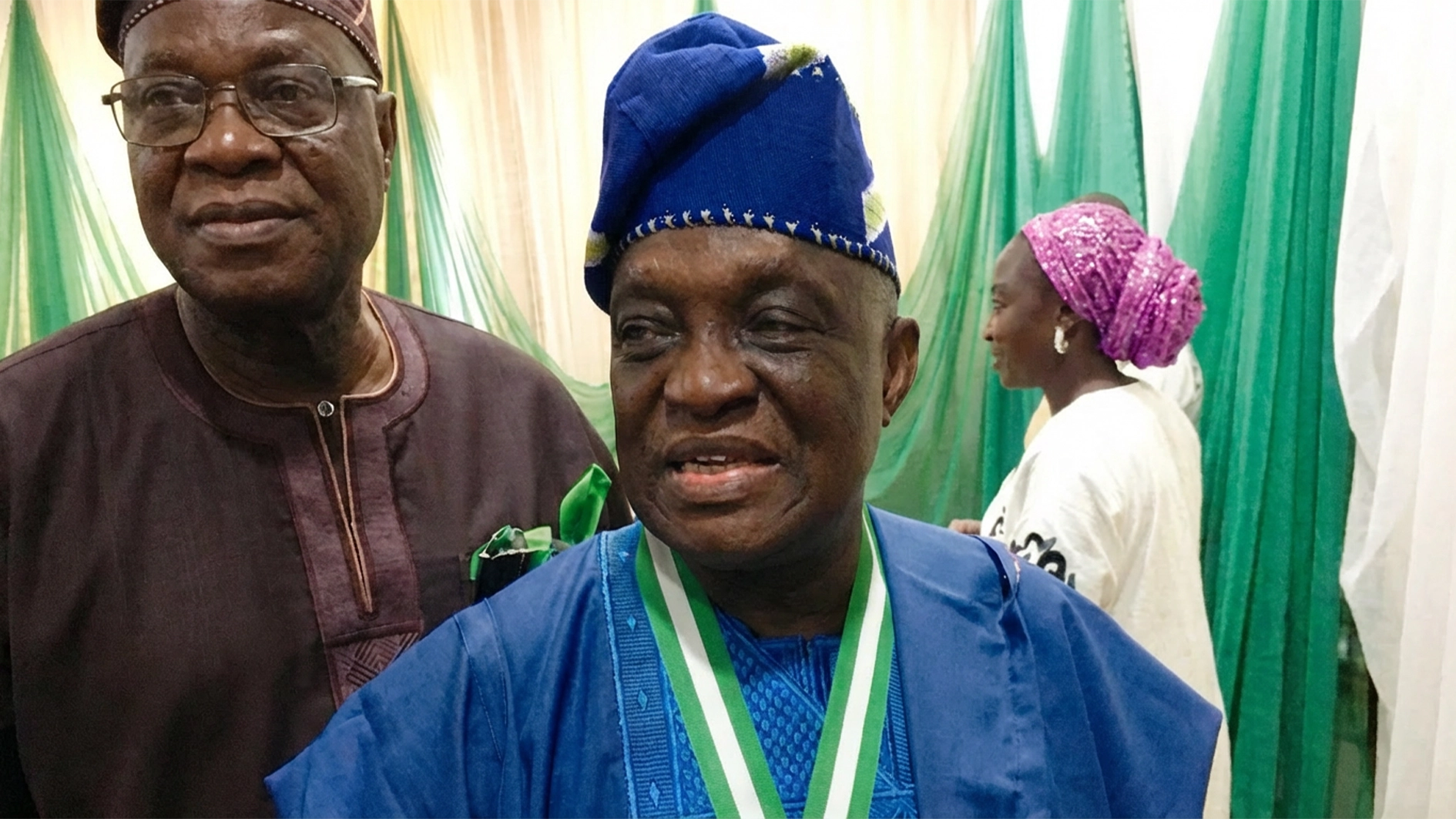
This past weekend alone, she secured public endorsements from Senator Hope Uzodinma, Chairman of the Progressive Governors Forum and Governor of Imo State, and Governor Seyi Makinde, Vice-Chairman of the Nigeria Governors’ Forum and Governor of Oyo State.
An APC leader and a PDP heavyweight aligned on the same reform. In Nigerian politics, developments like this are not only unusual, they are historic.
After a strategic meeting in Abuja, Osasu announced that: “His Excellency has pledged his full support for the Bill, and confirmed that all 27 Progressive Governors, whose state legislative caucuses collectively command more than two-thirds of the National Assembly, have resolved to back this campaign by calling on their lawmakers to vote ‘Yes’ on the 9th of December.”
The implication was unmistakable. If you want to understand political weather, observe where the first clouds gather. Uzodinma’s endorsement, as President Bola Ahmed Tinubu’s first Renewed Hope Ambassador, signalled a shift that the country could no longer ignore.
In Ibadan, Governor Makinde reinforced this shift.
Hosting Osasu and the Reserved Seats for Women Coalition, he stated that: “My administration remains committed to ensuring that women’s inclusion at all levels, not just as a token gesture, but in recognition of their proven capacity to drive development.”
Perhaps just as significant is the fact that Osasu did not confine her advocacy to governors and legislators. Last week, she publicly called on both the First Lady and the President to endorse the Bill. Less than a week later, the First Lady issued her support, adding momentum to the growing national alignment.
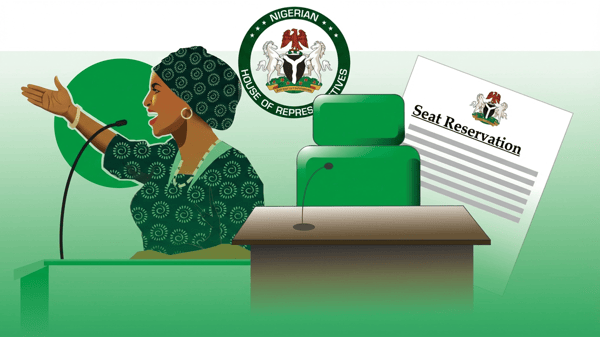
At the centre of this alignment is a deceptively straightforward proposal. The Reserved Seats for Women Bill seeks to amend Nigeria’s Constitution to create 182 additional seats for women in both the National Assembly and State Houses of Assembly.
In a country where women currently hold just 3.8 per cent of federal legislative seats, placing Nigeria 178th out of 182 countries globally, the reform is not symbolic. It is structural. It alters the mathematics of representation and, by extension, the possibilities of governance.
For Osasu, the Founder of TOS Group, who also leads the TOS Foundation that focuses on youth and women advocacy initiatives, the stakes are generational.
“This is a moment that will be remembered.
What we do now will shape the possibilities that our daughters inherit. Let us rise above partisanship and deliver a democracy that includes all Nigerians,” she said.
What has become clear is the fact that major societal shifts rarely begin with dramatic declarations. They begin with small but significant alignments that change direction without announcing themselves. That is what is unfolding here.
Across states and political identities, Nigeria is embracing an idea that has been proven again and again throughout the world. Inclusion is not a concession. Inclusion is a catalyst. When women participate fully, economies grow, institutions strengthen, and democracy becomes more resilient.
As the December 9 vote approaches in both chambers of the National Assembly, the nation turns its attention to the Constitution Review exercise. Yet the more compelling story may be the quiet, deliberate way Osasu has managed to create agreement in a country that has almost forgotten the sound of the word “consensus.”
Onemola writes from Abuja