 Get Guardian on Google
By Alabi Williams
There’s hardly room for ordinary citizens to put across their feelings and demands to politicians during grand campaigns. All you have is a flurry of activities, long convoys, tight security, booming loud speakers and rented chants. Except at townhalls, where the privileged elites are able to interrogate manifestoes and programmes of candidates and their parties, there are no provisions for feedback from the streets. Once the political class and others in higher society have been briefed and settled, ordinary folks are lectured on how to vote. They can be seen but not heard.
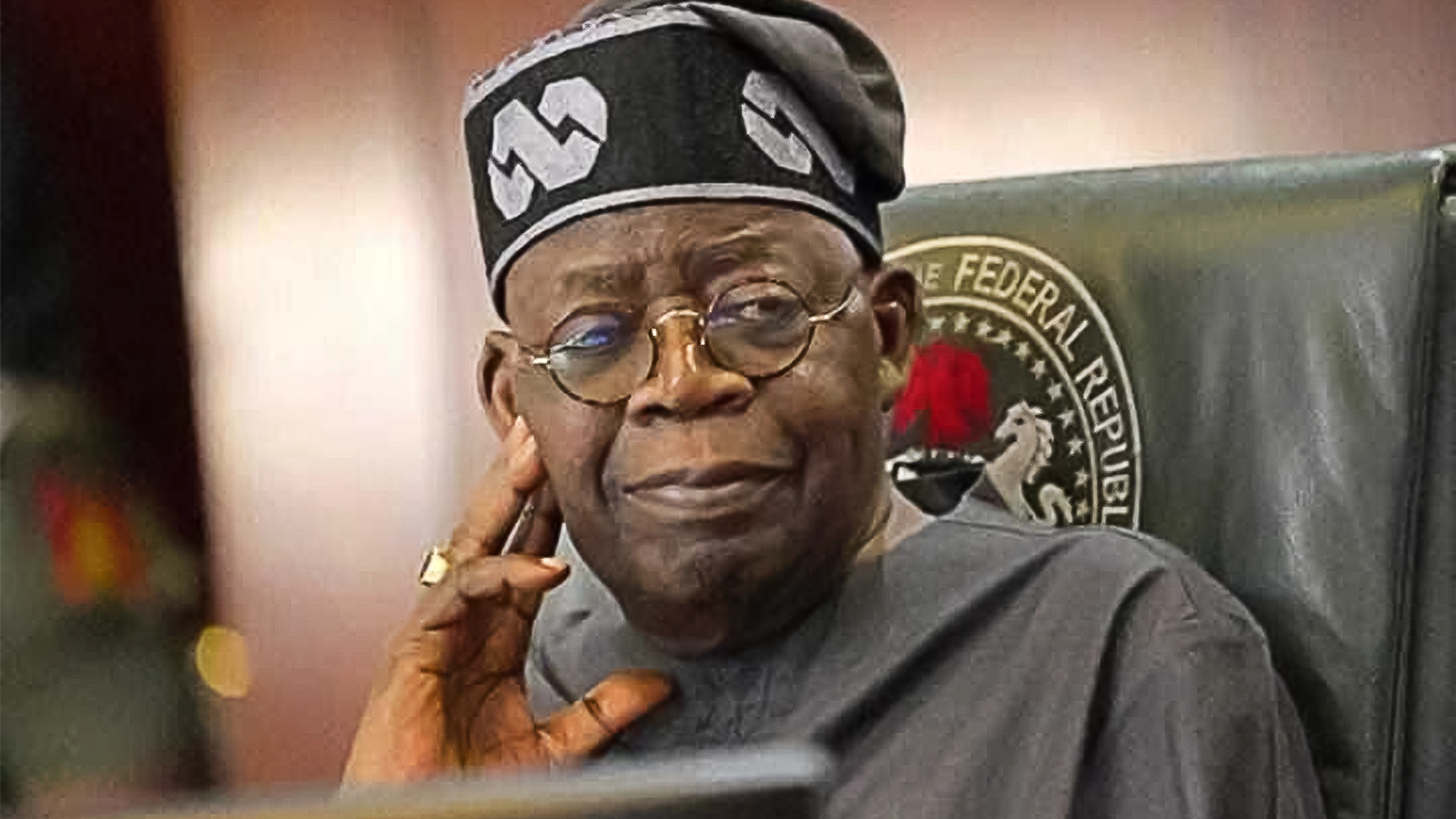
But some youths forced their voices to be heard on November 13, 2026, when they chanted ‘Ba ma yi’ to President Tinubu’s convoy as he departed the Shehu Shagari Central Mosque, Area 1, Garki, Abuja, where he had gone to pray. Ba ma yi, in Hausa simply means: we don’t want it or we do not support it. This phrase had been used across political ages to pass message to politicians who disregard the people.
For those who cared to listen, chants of Ba ma yi have been all over place, long before President Tinubu was serenaded with it at the mosque. Perhaps, that was too insignificant to matter to a ruling party that is menacingly endowed and too rich to listen to the masses.
At the APC campaigns in Kaduna, Kebbi and Sokoto, chants of Ba ma yi hummed in the backgrounds. They were ignored. Until they stepped forward on November 13, to make their voices heard. It was alleged that the protesters pelted President Tinubu’s convoy with missiles. Video recordings of the encounter were not explicit, but the chants and the rejection were clear.
The initial reaction of the Presidency was to post another footage of the same event, where another group joyously welcomed the President to the Mosque. Bayo Onanuga, presidential spokesman, described this version as the rousing welcome accorded to the President at the mosque. But that clip could not eclipse the Ba ma yi spectacle.
Did the feedback from the mosque convince government that Ba ma yi is the genuine response of the masses to its unpopular and poverty inducing economic policies? No. Instead, government notoriously framed it as campaign violence sponsored by opposition elecments.
Ba ma yi forced a statement on political tolerance from President Tinubu, where he canvassed that campaigns must be about issues that promote welfare of the people, rather than violence. The president said he had followed reports of political violence in different parts of the country. He condemned violence and said he was committed to peaceful, free and fair election, and urged politicians and their followers eschew violence. The president said that being in different parties does not make the people enemies, as all Nigerians are members of the same household.
Then he said: “We shall not tolerate any irresponsible conduct by politicians and their supporters. Security agencies are therefore authorised to confront thuggery and other anti-social and anti-democratic activities with full force.”
Not many observers believe that genuine concern for peaceful campaigns was the motivation for President Tinubu’s statement, coming the same day his convoy was pelted. That statement could have come much earlier, when the opposition reported multiple attacks across many states, with governors being promoters of violence. The presidential authorisation for security agencies to confront the thuggery in the middle of campaigns must be just and equitable to make sense. The Presidency and the ruling party control security agencies.
Swiftly, the FCT Police said it arrested the 78 youths suspected to stone the president’s convoy as he departed the mosque. But they were later released in what was described as presidential clemency, after warning.
The presidential pardon seemed to be a good political move to avoid backlash. This is not the time to squander the residual goodwill that is available. But the APC Presidential Campaign Council insisted with certainty that the opposition sponsored the protests to manipulate public opinion and to spread lies about the state of the nation. The Council does not believe that citizens that are at the receiving end of obnoxious polices retain the consciousness and obligation to express grievance and demand better life. That unfeeling arrogance of people in power!
Previous feedback
In 2024, there were hunger protests in parts of the country, Abuja, Lagos, Port Harcourt, Kaduna, Ibadan, Enugu, Maiduguri and others. Niger State was where citizens first protested loudly that they were hungry, before it spread to other states. The protests were most popular in the North. Citizens called for an end to bad governance and hunger. They wanted subsidy removal reversed, cut in living costs, including electricity, tackle insecurity and reduce cost of governance.
It turned violent in the North because of exposure and vulnerability to government’s economic reforms. President Tinubu was compelled to address the country on August 4, with the usual promise of sharing palliatives. The protesters were unimpressed. Government drafted the military to quell the uprising, at the end of which Amnesty International reported that 13 peaceful protesters were killed. Curfews were imposed in Kano, Borno, Yobe to stave escalation.
About 119 protesters were arrested including more than 50 minors, who were detained for about three months until their gaunt visage forced global outrage on the day they were brought to court. They were detained for nearly three months without food and medicine, before government was forced to announce amnesty for them on November 4, 2024. Perhaps, that reminder informed the timely amnesty for the Ba ma yi protesters. But the larger lessons of delivering good governance are lost on this government.
At the centre of Ba ma yi is the hardship inflicted by fuel subsidy removal in 2023. The policy was advertised as much-needed savings for use in crucial sectors of society. Despite subsidy removal and freeing of resources, this government remains neck-deep in debt. The other reforms and drive for taxes only make life harder for ordinary people. That’s why they call for change.
Senator Ali Ndume, in one of his maverick moments, once queried the borrowing methods of the Tinubu-led government, often without input of lawmakers. He said between June 2023 and June 2024, the government borrowed $9.45 billion. He gave the breakdown as: $500 million (June 2023) for a women’s programme. $800 million (June 2023) to cushion the effects of increased petroleum prices following fuel subsidy removal. $700 million (September 23) for adolescent girls’ initiatives/learning and empowerment. $750 million (December 2023) for renewable energy scale-up. $1.5 billion (June 2024) to support Nigeria’s economic stabilization reform. $750 million (June 2024) for immediate financial and technical support to stabilise the economy and scale up support for the poor.
There are no traces of implementation of these loans, but the ruling party has surplus cash for campaigns.
For a lawmaker who is supposed to report to his constituents, Ndume confessed to be unaware of any formal National Assembly approvals for these loans. In addition to the borrowed funds and increased revenues from Tinubu’s petrol tax, the budgets are poorly implemented. In three years, Nigerians have become poorer, hungrier and despondent. That’s the feedback from the streets.
Therefore, militarising the campaigns to suppress the people’s legitimate anger and demand for good governance cannot work. That seems to be the new thinking in government, as promoted in the Senate. The lawmakers suddenly realised that there are attacks on campaigns and candidates ahead of the 2027 elections. Senators confirmed and condemned the attack on President Tinubu at the Garki mosque.
The lawmakers directed the Inspector General of Police (IGP) and heads of other security agencies to arrest and prosecute perpetrators of political violence. They urged the Independent National Electoral Commission (INEC), to disqualify candidates and political parties found instigating violence. The Senate also urged governors to provide a level-playing field to all candidates and parties to use public facilities for campaigns.
Again, just like President Tinubu’s belated call for peaceful campaigns, the Senate came too late. When the candidate of Africa Action Congress (AAC), Omoyele Sowore was assaulted, along with his team in Ekiti, the Senate did not condemn the assault. Till date, the police is yet to go after the original perpetrators, who are known faces in government.
So, let the police begin the arrest from Ekiti. The gunmen who sprayed the home of Chief John Oyegun, in GRA Benin on February 24, 2026, where leaders of the African Democratic Congress (ADC) gathered for a meeting, are still at large. The killers of a member of Nigeria Democratic Congress (NDC), Ifeanyi Nwolie, in October 2026, at the party’s office/secretariat in Enugu GRA have not been arrested. The Police should also invite FCT minister, Nyesom Wike, for his inflammatory statements and repeated threat to put fire in some states. The man’s rainbow contraption is a threat to democracy.
On the order by the Senate to INEC to delist candidates or parties that instigate violence, let’s remind the lawmakers that there are provisions in the Electoral Act to deal with campaign and election violence. It does not require extra-judicial pronouncements that can be misused by an electoral body that has not demonstrated sufficient neutrality. Already, there are concerns out there of subterranean moves to further use the judiciary to disqualify candidates close to the elections.
It is important to listen to feedback from ordinary folks. Reliance on heavy disbursements and cash transfers at the upper echelon might give the impression that the people at the grassroots don’t matter. They will matter if INEC allows the elections to be free and fair. They will matter if the elections are not militarised. The people will matter if the judiciary remains impartial.
The era of taking Nigerians for granted must come to an end. Let Nigerians decide how they’re governed. That feedback from Garki is echoed all over the country. Let the resources work for the people. Let the poor breath!