
 Get Guardian on Google
In 2019, NJ Ayuk called for an African financial institution capable of funding the continent’s energy ambitions. Seven years later, Africa Energy Bank has become a reality. From championing indigenous participation to building African Energy Week into a major investment platform, the Executive Chairman of the African Energy Chamber has pursued a consistent vision: an Africa with greater control over the financing, development and economic benefits of its energy resources.
By Onome Amawhe
In 2019, when NJ Ayuk began calling for an African financial institution dedicated to financing the continent’s energy development, he was challenging a contradiction that had shaped African economies for generations.
Africa possessed enormous oil and gas resources, yet remained heavily dependent on foreign banks, investors and development institutions to determine how those resources could be developed.
For Ayuk, Executive Chairman of the African Energy Chamber, ownership of natural wealth meant little without access to the capital required to transform it into productive assets. African countries needed more than favourable investment conditions. They needed financial institutions capable of supporting their own development priorities.
He called for what he described as a “financial fortress”: an African institution dedicated to financing African energy projects.

The idea, he recalls, encountered scepticism.
Seven years later, on October 31, 2026, the African Export-Import Bank (Afreximbank) and the African Petroleum Producers’ Organisation (APPO) formally established Africa Energy Bank in Abuja, Nigeria.
With $5 billion in authorised capital, an inaugural board and former HSBC executive Helmy Ghazi appointed as president, the institution represents a significant response to the financing challenge Ayuk had long highlighted.
But his advocacy for an African energy bank is only one dimension of a wider career devoted to strengthening the continent’s position in the international energy industry.
Through the African Energy Chamber, African Energy Week, his books and campaigns for indigenous participation, Ayuk has consistently advanced one proposition: Africa must exercise greater influence over the development of its resources.
Challenging the Global Energy Financing Order
Ayuk’s call emerged as international financial institutions increasingly reconsidered their exposure to fossil-fuel investments.
African countries were being encouraged to industrialise, expand electricity access and create employment, even as some traditional financiers restricted support for new oil and gas developments.
For petroleum-producing economies, the consequences were substantial. Hydrocarbons remained important sources of government revenue, foreign exchange and industrial activity. Natural gas offered opportunities for power generation, fertiliser production, petrochemicals and manufacturing.
Yet long-term financing was becoming increasingly uncertain.
Ayuk argued that Africa could not build modern economies while allowing decisions taken elsewhere to determine the fate of its energy resources.
His position was not that Africa should withdraw from international financial markets. Rather, African institutions needed sufficient financial capacity to participate in investment decisions from a stronger position.
The scale of the challenge reinforced his argument.
The International Energy Agency estimated in 2024 that Africa required more than $200 billion in annual energy investment through 2030 to meet its energy and climate-related objectives. Investment that year was estimated at approximately $110 billion.
Meanwhile, around 600 million Africans lacked electricity and roughly one billion lacked access to clean cooking.
These figures represented factories operating below capacity, businesses dependent on expensive generators and households without reliable modern energy.
The proposed bank offered a possible institutional response.
In May 2022, Afreximbank and APPO signed a memorandum of understanding to develop Africa Energy Bank. Two years later, under the leadership of Professor Benedict Oramah and Dr Omar Farouk Ibrahim, the organisations signed its Establishment Agreement and Charter in Cairo.
Nigeria subsequently secured the headquarters, while further negotiations and preparations culminated in the October 2026 establishment.
Ayuk’s contribution was advocacy rather than formal institution-building. He helped advance the argument for African-led energy financing; Afreximbank, APPO and participating governments supplied the institutional framework.
Following the bank’s establishment, Ayuk acknowledged that distinction.
“I claim no personal credit,” he wrote. “I am a witness, a brother in the struggle, and a servant of one conviction.”
That conviction was that Africa should develop an independent, resilient energy sector capable of supporting broad-based prosperity.
Building Africa’s Voice in Global Energy
Ayuk’s advocacy reflects a philosophy developed through years of involvement in African energy investment.
A lawyer and entrepreneur, he founded Centurion Law Group, building a practice focused on corporate transactions, energy investment, regulation and commercial negotiations across African markets.
His experience brought him into contact with governments, petroleum companies, investors and entrepreneurs navigating the complexities of energy development.
In 2018, he founded the African Energy Chamber, which subsequently developed into an influential industry advocacy organisation.
Through the Chamber, Ayuk challenged the tendency to regard Africa primarily as a source of raw materials rather than a market with its own industrial ambitions and entrepreneurial capabilities.
The organisation has advocated investment-friendly regulatory frameworks, indigenous participation, local-content development and stronger commercial partnerships between African enterprises and international investors.
Its activities have extended across established and emerging petroleum markets, including Nigeria, Angola, Equatorial Guinea, Senegal, Mozambique, Uganda and Namibia.
For Ayuk, investment should produce benefits beyond hydrocarbon exports.
African companies should participate in engineering, logistics, technical services, infrastructure, processing and the wider energy value chain.
That argument has become a recurring feature of the Chamber’s engagement with governments and industry leaders.
Bringing the Energy Conversation Home
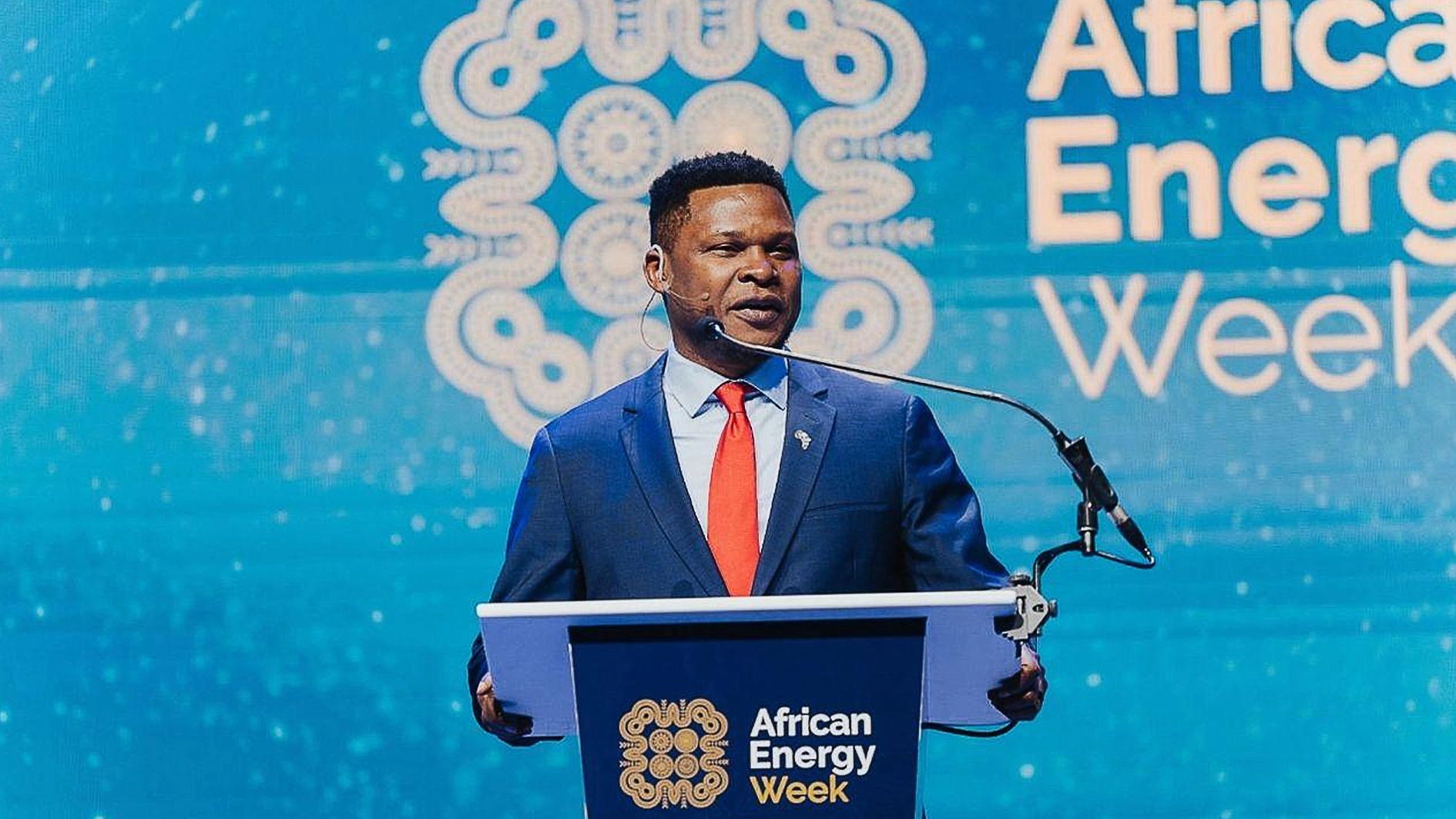
One of Ayuk’s most visible achievements has been the development of African Energy Week.
Launched in Cape Town in 2021 under the African Energy Chamber, the annual gathering was conceived as an African-centred platform for investment, commercial engagement and policy discussions.
Its underlying proposition was straightforward: important conversations about Africa’s energy resources should increasingly take place on African soil.
For decades, major international energy conferences outside the continent had attracted executives, investors and government representatives seeking opportunities in African markets.
Ayuk wanted African countries to host more of those discussions and participate more extensively in the commercial relationships they generated.
African Energy Week brought together petroleum ministers, national oil companies, international operators, financiers, service providers and technology companies.
The event subsequently expanded its international participation and programme.
According to figures cited by its organisers, attendance grew from approximately 1,700 participants at the inaugural edition to nearly 7,000 in 2024.
For the October 2026 edition, organisers reported more than 12,000 delegates and over $17 billion in announced investment commitments and transactions. These figures represent reported event activity, not necessarily completed investments or disbursed financing.
Beyond attendance, the gathering has provided platforms for project presentations, financing discussions, government engagement and business partnerships.
Its development reflects Ayuk’s broader ambition to strengthen Africa’s position as a centre of decision-making and commercial activity within the global energy industry.
Championing African Enterprise
Another important strand of Ayuk’s work has been his campaign for greater indigenous participation.
Across Africa, local energy companies face barriers involving access to finance, technical capability, infrastructure and competition with larger international operators.
Ayuk has repeatedly argued that African ownership must extend beyond legislative declarations.
Indigenous businesses need capital, skills, commercial opportunities and predictable regulatory environments to compete effectively.
Through the African Energy Chamber, he has advocated policies that support local-content development, investment partnerships and the expansion of African-owned service companies.
He has also promoted natural gas as an important resource for electricity generation, fertiliser production and industrial growth.
These positions connect directly with his original argument for an African energy bank.
Local-content policies can create opportunities, but financing determines whether many companies can exploit them.
An African-owned enterprise may possess the technical expertise to develop an asset yet lack access to affordable, long-term capital.
An institution capable of mobilising investment for commercially viable African projects could therefore strengthen the practical foundations of indigenous participation.
Changing the Intellectual Debate
Ayuk’s influence has also extended into publishing and public debate.
His books, including Billions at Play, Big Barrels, A Just Transition and Crude Oil: Power, Turnaround and Transformation in Angola, examine the relationship between energy resources, investment, public policy and African economic development.
Across these works, he challenges conventional assumptions about how Africa should navigate the global energy transition.
His central argument is that the continent’s energy policies must reflect its economic circumstances, infrastructure deficits and development requirements.
He has questioned approaches that restrict fossil-fuel financing without sufficiently addressing energy poverty and industrial underdevelopment.
His position remains contested.
Supporters consider it a necessary intervention in debates that sometimes overlook Africa’s development realities. Critics of continued hydrocarbon expansion emphasise climate risks, environmental consequences and the possibility of investing in assets that may become commercially uncompetitive.
These competing concerns underline the complexity of Africa’s energy choices.
Ayuk’s contribution has been to insist that African perspectives occupy a more prominent place in discussions that directly affect the continent’s economic future.
His recent advocacy has also embraced electricity infrastructure, renewable energy, digital technologies and the growing power demands of artificial intelligence and data centres.
The recurring theme is the need for reliable energy, investment and productive infrastructure.
The Vision Becomes an Institution
Africa Energy Bank brings several strands of Ayuk’s advocacy together.
Established by Afreximbank and APPO, the institution is intended to mobilise capital for energy development across exploration, production, transportation, processing, refining and distribution.
Its $5 billion authorised capital provides an institutional framework, although actual lending capacity will depend on paid-in subscriptions, additional investment and financing partnerships.
Initial lending activities are expected in 2027.
The bank cannot independently eliminate Africa’s energy-financing deficit. Its potential lies in attracting investors, sharing risks and helping commercially viable projects secure funding.
For Ayuk, its establishment demonstrates that African institutions can respond collectively to problems affecting the continent’s economic development.
But the achievement remains incomplete.
The bank must establish credible governance, mobilise capital, maintain commercial discipline and support investments that deliver measurable results.
Its ultimate significance will be determined by financed projects rather than founding declarations.
The Vision and the Legacy
There is a remarkable consistency in NJ Ayuk’s professional journey.
His campaigns for indigenous participation, investment reform, African-centred industry gatherings and dedicated energy-financing institutions address different aspects of the same challenge.
Africa possesses considerable natural resources, but transforming them into widespread prosperity requires capital, institutions, technical expertise and greater African participation.
Through the African Energy Chamber, Ayuk has helped amplify African perspectives within international energy discussions.
Through African Energy Week, he has contributed to creating a significant commercial and investment platform on the continent.
Through publishing and public advocacy, he has challenged prevailing assumptions about Africa’s energy development choices.
And through his early call for an African energy-financing institution, he helped advance an idea that has now found expression in Africa Energy Bank.
The bank’s formal establishment belongs to Afreximbank, APPO and the governments and leaders who brought the project to fruition. But its history also includes advocates who helped keep the need for African financial sovereignty in the public conversation.
For Ayuk, the institution’s creation represents a milestone in a campaign whose ambitions extend far beyond a single bank.
The larger objective remains an African energy industry capable of mobilising investment, strengthening indigenous enterprises, supporting industrialisation and expanding access to reliable energy.
Whether Africa Energy Bank fulfils that ambition will depend on the financing decisions and institutional performance still ahead.
But its establishment has given tangible form to an argument Ayuk was advancing seven years earlier: Africa’s energy future must be shaped not only by the resources beneath its soil, but by the institutions and enterprises empowered to develop them.
The financial fortress he envisaged is no longer merely an idea. Its defining test now begins.
Onome Amawhe is a Nigerian journalist, writer and editorial strategist, and Founder of Africa Executive, an editorial advisory specialising in executive content, corporate storytelling and strategic publishing. His work explores African leadership, business, culture, history and the continent’s evolving place in the global economy.