 Follow Us on Google News


 Follow Us on Google Discover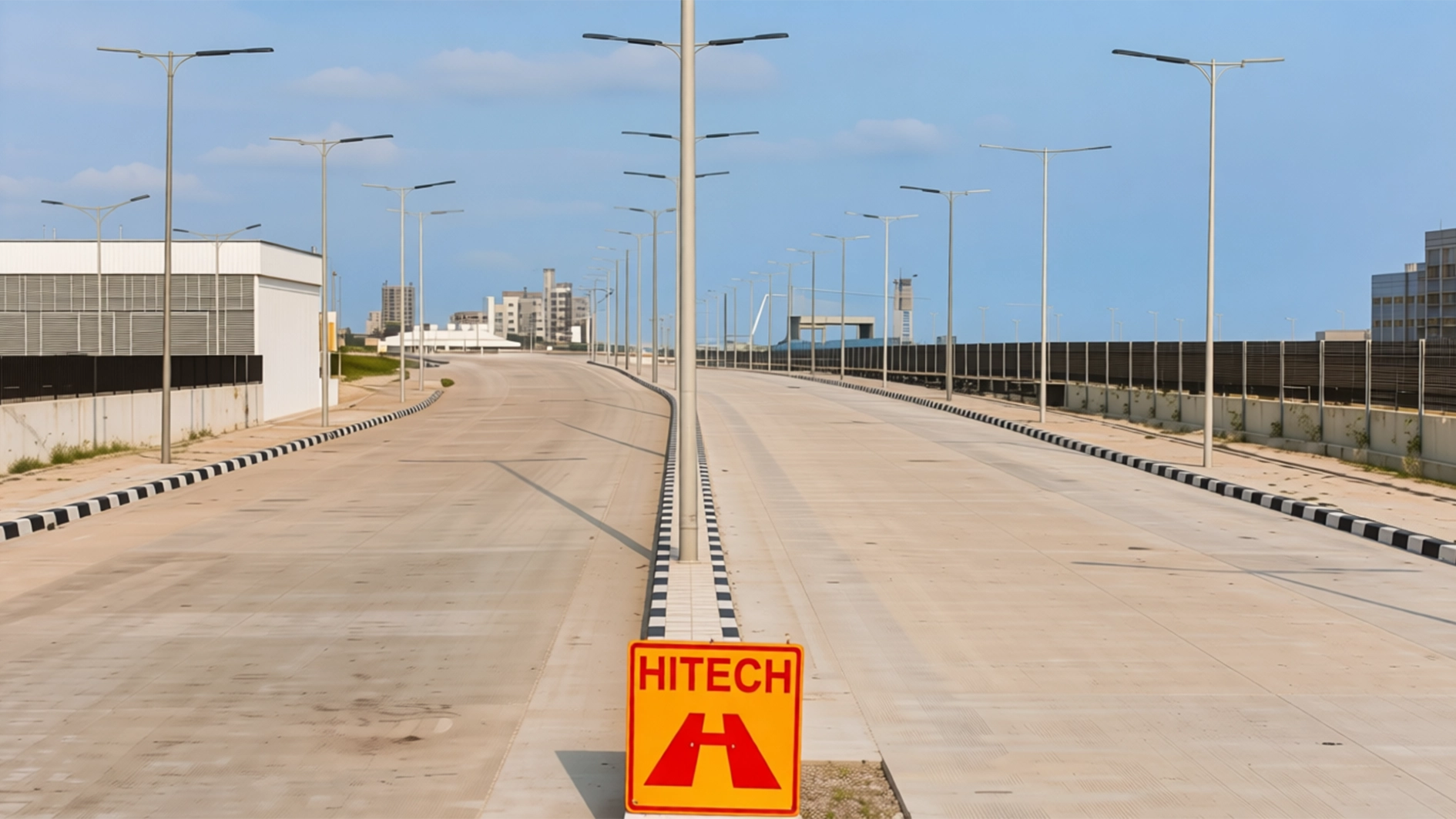
By Eric Teniola
Continued from yesterday
There are so many things to say about Calabar. No doubt the construction of the coastal highway between Lagos and Calabar serves to remind us about the importance of Calabar.
In the late nineteenth century, as European powers scrambled to consolidate territorial control in Africa, the British formalised their influence along the Niger Delta coast. In 1884, Queen Victoria signed a treaty of protection with the chiefs of Akwa Akpa (Old Calabar), enabling Britain to exercise control over the surrounding territory. Soon after, the Oil Rivers Protectorate was established in 1885 to manage trade and suppress inter-tribal conflicts in the coastal region. In 1893, this territory was renamed the Niger Coast Protectorate. Calabar was designated as the official capital of these protectorates.
Calabar’s location and commercial history underpinned its selection as headquarters. It had long been a thriving port for palm oil and other exports that were critical to British industrial needs. The transition from the slave trade to palm oil shifted economic power to local merchant houses, which then negotiated with European firms. British protection treaties signed with Efik chiefs in the 1880s facilitated smoother trade and strengthened British influence in the region. This commercial reach also fed into colonial objectives, enabling the British to tighten control over indigenous socio-economic networks.
Beyond administration, Calabar became a center for early educational and religious developments in Nigeria. Scottish missionaries established schools and churches in the mid-19th century, influencing local institutions and social reforms. For example, the Hope Waddell Training Institution, founded in 1846, became one of the earliest secondary schools in the region. Such institutions shaped local elites and contributed to the cultural synthesis that characterised colonial Calabar.

In addition to education, Calabar was the site of early colonial legislative engagement. In 1922, the British established the Legislative Council with elected members from Calabar and Lagos, marking one of the first forms of representative governance in British West Africa. This council approved budgets and enacted laws, laying important groundwork for the later political evolution of Nigeria.
Calabar’s role as the headquarters of the Oil Rivers Protectorate, the Niger Coast Protectorate, and the Southern Nigeria Protectorate positioned it as a birthplace of modern nation.
On a personal note, I feel excited any time I visit Calabar. The serenity of the ancient city excites me.
It should be noted that Nationalism and the struggle for Nigeria’s independence more or less started in Calabar when Professor Eyo Ita declared in the early struggle “This is the day of Nigeria youth. It must build a new social order, for whereas yesterday belonged to our fathers and their distant future belongs to posterity today and the immediate tomorrow are ours. We can and must shape them according to our needs and desires. The time has come when the young people of Calabar must live creatively, must build new and better homes, must bring new forms to birth in literature language, arts, music, methods and tools of industry, when they must dream of purer and juster laws and promote better health.
We must secure bare living first before we can think of luxuries of life. Calabar is a land of beauty. Nigeria is a land of beauty. Our sons and daughters must reveal its concealed beauties through the use of pencil and colour. Calabarian youth, like the knights of old, and like the militants’ youths of modern Russia, who volunteer to save their society at all cost, must pledge themselves completely to the cause of emancipating Calabar. The love of Calabar must consume us. The zeal for her emancipation must be our food and drink. We are either Calabarians or nothing. To the degree in which Calabar is saved to that degree shall we be saved.
Our God is He who cares for our homes, our womanhood, our childhood, the moral manhood of our race, our economic welfare, our health, and our political freedom. Who respects the beauty of the black man no less than he is interested in other races of mankind. This God speaks to us through the fruits of our land, through the animals that inhabit it, through the love and fellowship of our darling mothers and friends. He is the God of Nigeria, her abiding genius, her sustaining power. The youth must realise that it is serving His cause through the activities of its movement. It must realise that the whole of Nigeria is of supreme value before God, and that its creative work is part of the vast plan of the Divine Converser of our values”.
By building this highway, I am sure President Bola Ahmed Tinubu is appreciating the people of the South South and their leaders. The emergency of President Goodluck Jonathan GCFR on 6 May 2010, the establishment of NDDC, the Ministry of Niger Delta and the Amnesty Programme is not enough compensation for the people of South South region.
No doubt that region has contributed a lot to the modern-day Nigeria. Their leaders too, some of who are alive while some deceased, have served to make this country a great one. I think we owe them a debt of gratitude. I don’t think we can compensate them enough for their services. I will name a few at the risk of offending many.
We have Professor Eyo Ita ((1903–1972), Earnest Sesei Ikoli (1893-1960), Dr Kenule Beeson Saro-Wiwa (10 October 1941 – 10 November 1995), Major Isaac Jasper Adaka Boro (September 10, 1938- 9 May 1968), Chief Edwin Clarke (May 25, 1927 – February 17, 2025), Chief Eyo Ita Esua (1901-1973), Dr Clement Isong (April 20, 1920- 29 May 2000), Dr Joseph Wayas ( May 21, 1941 – November 30, 2021), Chief Anthony Eromosele Enahoro ( (22 July 1923 – 15 December 2010), Chief Godswill Akpabio (63), Chief Artur Edwin Prest (1906-1976) and Sir Festus Okotie-Eboh (18 July 1912 – 15 January 1966).
Others are Former President Goodluck Jonathan (68) GCFR, Chief Ufot Ekaette (17 April 1939- 25 September 2019), Chief Allison Akene Ayida (June 16, 1930- October 12, 2018), King Jaja of Opobo (1821-1891), Chief Douglas, Amanyanabo of Opobo (1915-1980), Professor Horatio Oritsejolomi Thomas (1917-1979), Dr. Udo Udoma (21 June 1917 – 2 February 1998), Chief Humphrey Omo-Osagie (1896-1977), Chief Michael Ani (30 November 1917 – 18 December 1985), Sir Dennis Osadebay (29 June 1911 — 26 December 1994), Dr Okoi Arikpo (20 September 1916- 26 October 1995), Chief Wenike Opurum Briggs (10 March 1918 – 21 April 1987), Chief Harold Dappa-Biriye (26 September 1920-2005),Chief Louis Orok Edet (1914–1979), Chief Margaret Ekpo and many others.
Let us take a look at some of them.
Professor Eyo Ita ((1903–1972) was the founder of the Nigeria Youth League Movement. He was born in Calabar. He had his education at Duke Town School and then to Calabar’s famous Hope Waddell Training Institute. After teaching at the Baptist Academy, Obanikoro, Lagos, (1926-1928), he went to the USA where he studied at the Teacher’s College of Columbia University, majoring in religions and education. He later read for BA in Canada. On his return in 1933, he became active as an educationist, a pamphleteer, and a nationalist who believed strongly in a role for Nigeria’s youth.
He formed the Nigeria Youth League Movement, which had little effective existence at first. After spending some time at Ogbomoso, where he taught but also wrote pamphlets and press articles, he returned in 1938 to Calabar, where a National Institute had been founded by local educated people, and he became its head. Then he started his own West AFRICAN People’s Institute, an educational institution for which he became famous. It had a press which published his works: The Assurance of Freedom (1949), Crusade for Freedom (1949), The Revolt of the Liberal Spirit in Nigeria (1949), Sterile Truths and Fertile Lies (1949), Two Vital Fronts in Nigeria’s Advancement (1949), National Youth Renaissance (undated), Theory of Social Symbiosis (1951), etc.
To be continued tomorrow.
Teniola, a former Director in the Presidency, wrote from Lagos.

