 Follow Us on Google News



 Follow Us on Google Discover
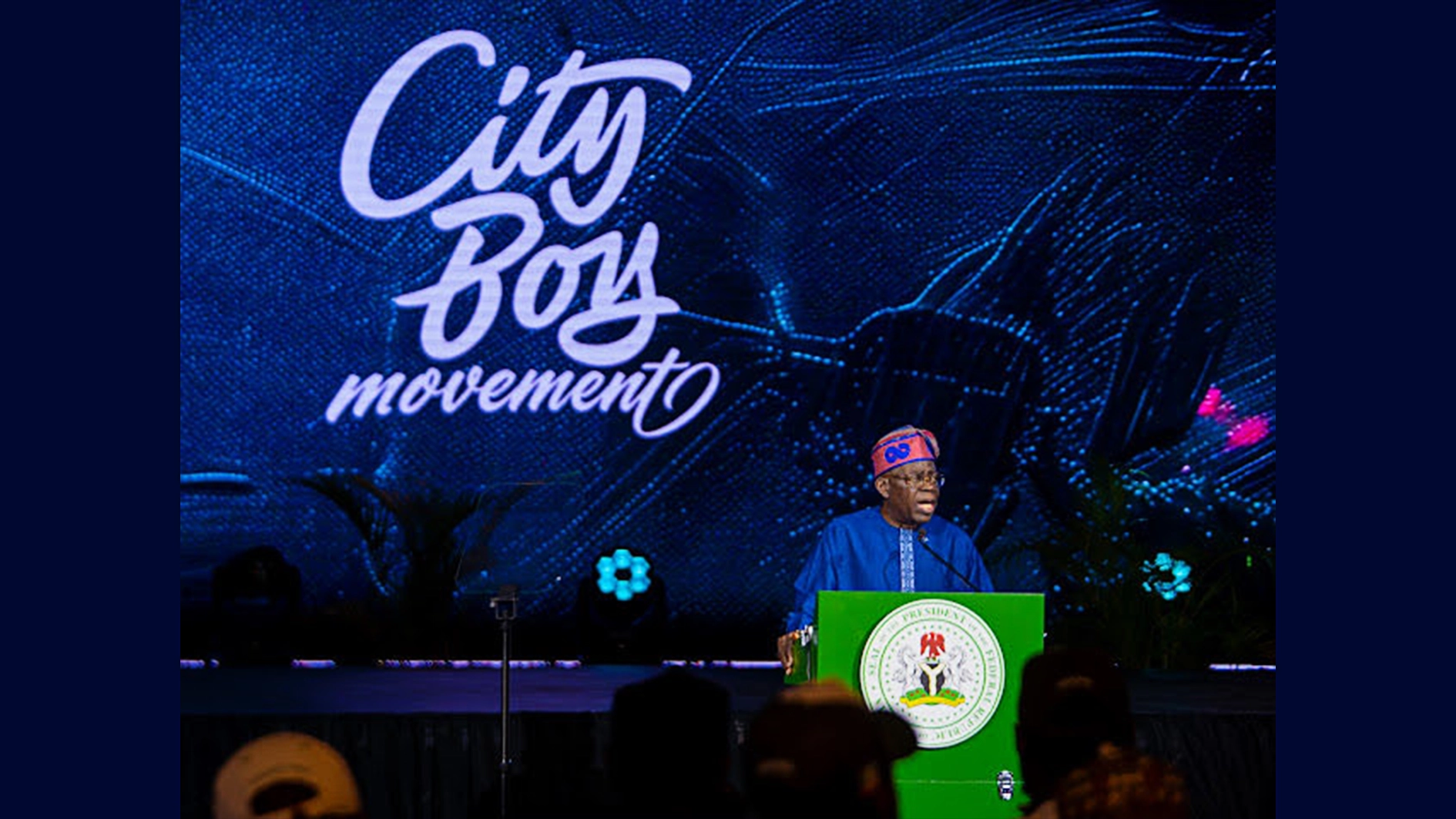
As Nigeria prepares for the 2027 general elections, political parties and their support groups are stepping up efforts to mobilise voters, particularly young Nigerians, through grassroots campaigns, social media engagement and community outreach.
Against this backdrop, the City Boy Movement’s pledge to mobilise 10 million youth votes for President Bola Tinubu has raised questions about its capacity to convert its growing membership into electoral support amid mounting concerns over economic hardship and the cost of living.
The movement’s Director-General, Francis Shoga, announced the target on Monday during a meeting between its national leadership and Tinubu at the State House, Abuja.
Shoga said the organisation had registered 4.6 million members in its national database and engaged more than 50,000 young Nigerians through its Renewed Hope Youth Tour across the six geopolitical zones.
He said the movement was determined to expand its nationwide reach and translate its membership base into votes for
Tinubu, who is seeking re-election in 2027.
However, delivering 10 million votes would require the group to move beyond membership drives, political rallies and online campaigns to demonstrate that its structures can persuade eligible voters to support the President and turn out on election day.

According to the Independent National Electoral Commission (INEC), Nigeria had more than 103 million registered voters as of October 5, 2026, following a three-phase Continuous Voter Registration exercise that recorded 10,772,421 new registrations, subject to final biometric verification.
While the expanding voter register presents a substantial electorate for political parties to engage, the City Boy Movement faces the challenge of proving that its reported membership translates into genuine electoral strength.
A membership database does not necessarily represent an equivalent number of eligible voters or guaranteed votes. Some members may not have completed voter registration, possess valid Permanent Voter Cards (PVCs) or ultimately support Tinubu at the polls.
The movement must also contend with Nigeria’s historically low voter turnout. INEC recorded participation of approximately 26.7 per cent in the 2023 presidential election, underscoring the difficulty of converting registered voters into actual ballots.
For the City Boy Movement, reaching its target would require sustained mobilisation at ward and local government
levels, voter education, effective communication of government policies and a reliable election-day turnout strategy.
Beyond membership figures
The gap between the movement’s current membership and its 10 million-vote ambition presents its first major test.
With 4.6 million members in its database, the organisation would need to expand its reach considerably while ensuring that existing supporters remain politically engaged and willing to vote for Tinubu.
Its ability to build a credible grassroots network will be critical. This means maintaining active structures across states, local governments and wards rather than relying primarily on rallies, public declarations and social media visibility.
The movement must also navigate a diverse political landscape in which voters weigh party loyalty, regional interests, candidate appeal, economic conditions and government performance when making electoral decisions.
Shoga said the organisation had engaged young Nigerians across the six geopolitical zones through its Renewed Hope Youth Tour, reiterating its commitment to expanding youth participation in national development.
He also appealed to Tinubu to consider qualified members of the movement for appointments to public offices.
The request introduces another consideration for the group’s leadership: managing members’ expectations about access to government and participation in decision-making. How the administration responds could influence the movement’s ability to sustain enthusiasm among its supporters.
Tinubu rallies young supporters
Addressing members of the movement, Tinubu urged young Nigerians to defend his administration’s policies, arguing that the country could not afford to reverse the economic reforms introduced by his government.
“You are not campaigning for me. You are campaigning for your own future, and that future is Renewed Hope,” he said.
The President maintained that Nigeria could not achieve lasting prosperity by relying on borrowing while postponing difficult economic decisions.
“We understood that a nation cannot borrow its way to greatness,” he said.
Tinubu acknowledged the difficulties associated with the reforms but commended young Nigerians who had defended his administration’s policies on campuses, in motor parks and on social media.
“I saw it. I noticed, and I will never forget it,” he said.
He praised the City Boy Movement for establishing structures across states, local governments and wards, describing its activities as more than public rallies and demonstrations.
“That is not noise. That is organisation,” he said.
The President urged the group to take his administration’s message to campuses, markets and communities, expressing confidence that its grassroots network would help communicate his policies and plans ahead of the election.
He also highlighted the student loan programme and initiatives aimed at developing technical skills as examples of efforts to expand opportunities for young Nigerians.
“I have trusted those people with real responsibility in this government. I have watched them deliver. I intend to do more,” he said.
Tinubu assured members that young Nigerians would remain part of his administration’s political and development agenda.
“The future of this country does not belong to me. It does not belong to my generation. It belongs to you,” he said.
He added: “You will not be left behind. Not in this campaign. Not in this government, not in Nigeria.”
Economic hardship poses a challenge
The City Boy Movement’s mobilisation drive comes amid continuing public debate over the effects of the Tinubu administration’s economic policies, particularly petrol subsidy removal and other reforms that have affected household spending and the cost of living.
The administration has defended the measures as necessary to address longstanding fiscal challenges, reduce economic distortions and place the economy on a more sustainable path.
However, unemployment, poverty, rising living costs and concerns about economic opportunities remain important issues for young Nigerians and could influence their voting decisions in 2027.
For the City Boy Movement, persuading young voters to support Tinubu may require more than repeating the administration’s policy arguments. It will need to demonstrate how the reforms have improved people’s lives and explain what further benefits voters could expect from another four years under the President.
Although Tinubu has urged young Nigerians to defend his policies, the movement’s effectiveness will depend partly on whether its message resonates with voters whose experiences of the reforms vary.
Its ability to sustain engagement beyond political gatherings and communicate the administration’s achievements at the community level could therefore prove decisive.
Opposition targets youth voters
The movement’s campaign is unfolding alongside efforts by opposition groups to attract young voters and challenge the ruling All Progressives Congress (APC).
The African Democratic Congress Presidential Campaign Council (ADC-PCC) has urged Nigerian youths to reject Tinubu and the APC, accusing the ruling party of failing to improve their living conditions after years in power.
The council argued that millions of young Nigerians continued to grapple with unemployment, poverty and rising living costs, insisting that they deserved practical solutions and a clearer vision for their future.
The opposition’s position highlights the competing narratives likely to shape the 2027 campaign. While the APC and its support groups are expected to defend the administration’s policies and record, opposition parties will seek to make economic hardship, employment and youth welfare central to the electoral contest.
The City Boy Movement must therefore do more than mobilise supporters. It must also counter criticism of the government’s performance and convince undecided voters that Tinubu’s policies offer a credible path towards economic improvement.
The battle for youth support is likely to extend beyond political rallies and online campaigns, with parties and support groups expected to intensify engagement across campuses, markets, communities and other grassroots networks.
The test ahead
The coming months will provide an opportunity for the City Boy Movement to demonstrate the strength of its structures and establish whether its reported membership can translate into electoral participation.
Its claim of 4.6 million members provides a starting point, but the 10 million-vote pledge sets a substantially higher target that will require expanded recruitment, sustained engagement and effective voter mobilisation.
The organisation must also account for members who are not eligible to vote, those who may not turn out on election day and those who could ultimately support other candidates.
Ultimately, the movement’s success will depend not simply on how many people it registers as members but on its ability to persuade eligible voters to support Tinubu and cast their ballots for him.
As political parties intensify preparations for 2027, the City Boy Movement’s 10 million-vote pledge will serve as a significant test of its organisational capacity and influence among young Nigerians.
Whether it can deliver on that promise will depend on the effectiveness of its grassroots network, the administration’s appeal to voters and the choices Nigerians make at the ballot box.

