 Follow Us on Google News


 Follow Us on Google Discover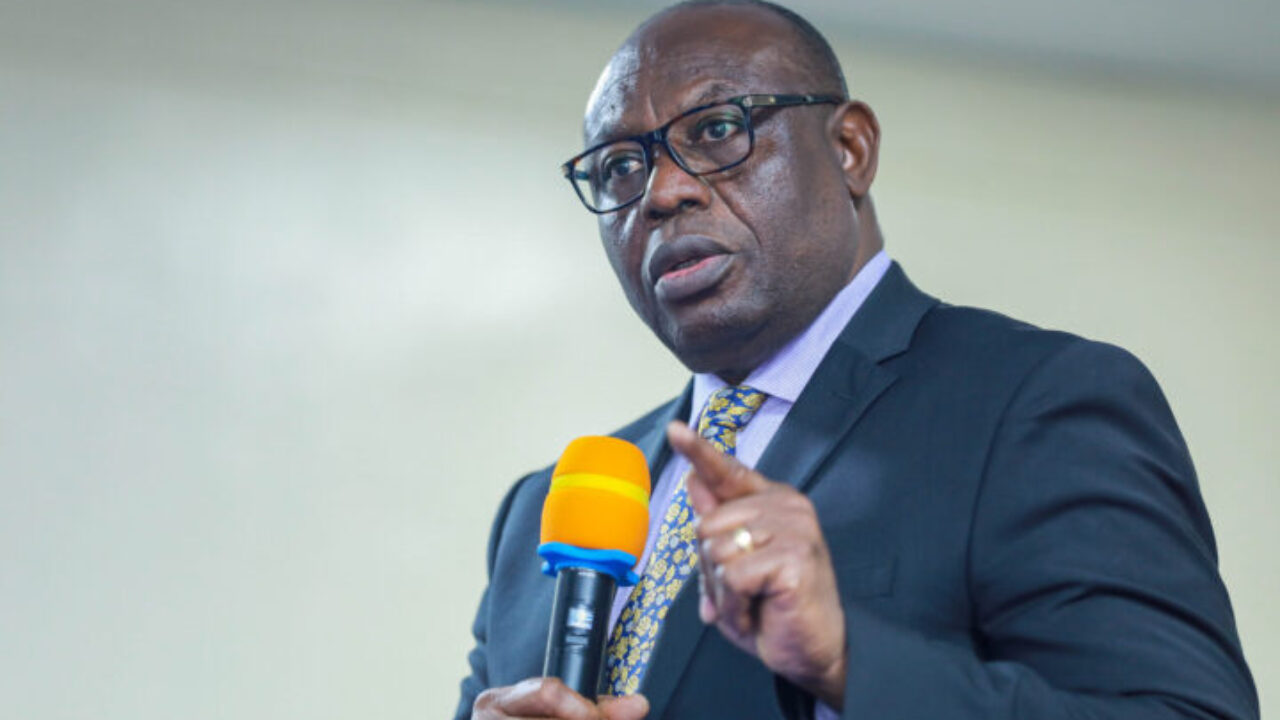
Identifies vote-buying, flawed primaries, insecurity, displacement, judiciary as hazards
Former National Commissioner of the Independent National Electoral Commission (INEC), Festus Okoye, has identified five critical electoral minefields that could shape Nigeria’s 2027 General Elections, warning newsrooms to strengthen their investigative capacity and legal competence ahead of the polls.
Okoye, who spoke during an industry masterclass organised by the Society of Nigerian Broadcasters (SNB), Lagos Chapter, said the evolving nature of electoral fraud, controversial party primaries, security challenges, displacement of communities, and growing public perception of the judiciary as the ultimate dispenser of political mandates posed serious challenges to the credibility of the 2027 elections.
He identified the regeneration of vote-buying as one of the major threats, noting that electoral inducement had evolved from covert cash distribution disguised as empowerment programmes to more brazen transactions at polling units, where voters could receive money from multiple sources.
According to him, the media must develop the capacity to identify and investigate these emerging methods of electoral manipulation rather than treating vote-buying as a conventional phenomenon.
Okoye also raised concerns over what he described as “platform shopping” by politicians, attributing the development partly to controversial party primaries and the growing influence of state governors in determining candidates.

He noted that with political party manifestos becoming increasingly similar, politicians dissatisfied with the outcome of primaries were increasingly moving across party lines in search of alternative platforms.
The former INEC commissioner listed the security infrastructure required for nationwide elections as another major vulnerability.
He argued that the level of security deployment and resources available during isolated off-cycle elections, such as the Osun governorship poll, could not simply be replicated when presidential, National Assembly, governorship and state assembly elections are conducted across the country.
Okoye further highlighted the challenge posed by abandoned communities and displaced local government areas, particularly in parts of the country affected by insecurity.
He questioned how elections and the subsequent collation of results would be effectively managed in communities that had been depopulated or rendered inaccessible by persistent insecurity.
His fifth concern centred on the judiciary and the growing perception that courts have moved beyond their traditional role as arbiters of electoral disputes to becoming institutions that effectively confer political mandates.
Okoye warned that such perceptions could further undermine public confidence in the electoral process and institutions responsible for resolving election disputes.
However, he also challenged the traditional interpretation of restrictions placed on election projections by the National Broadcasting Commission (NBC), arguing that an absolute prohibition was difficult to reconcile with democratic practices in other jurisdictions.
He maintained that while only INEC possesses the statutory authority to officially declare an election winner, the media should be able to analyse and project results based on verified polling-unit figures.

