
 Get Guardian on Google
…Questions BVAS, IReV data security
…Ask commission to disclose vendors handling voters’ data
Digital rights experts have accused the Independent National Electoral Commission (INEC) of failing to meet transparency requirements in the handling of voters’ personal data.
While raising concerns over the security of its digital election platforms ahead of the 2027 general elections, they said the commission had not provided adequate information about how it collects, processes, stores and shares sensitive voters’ information.
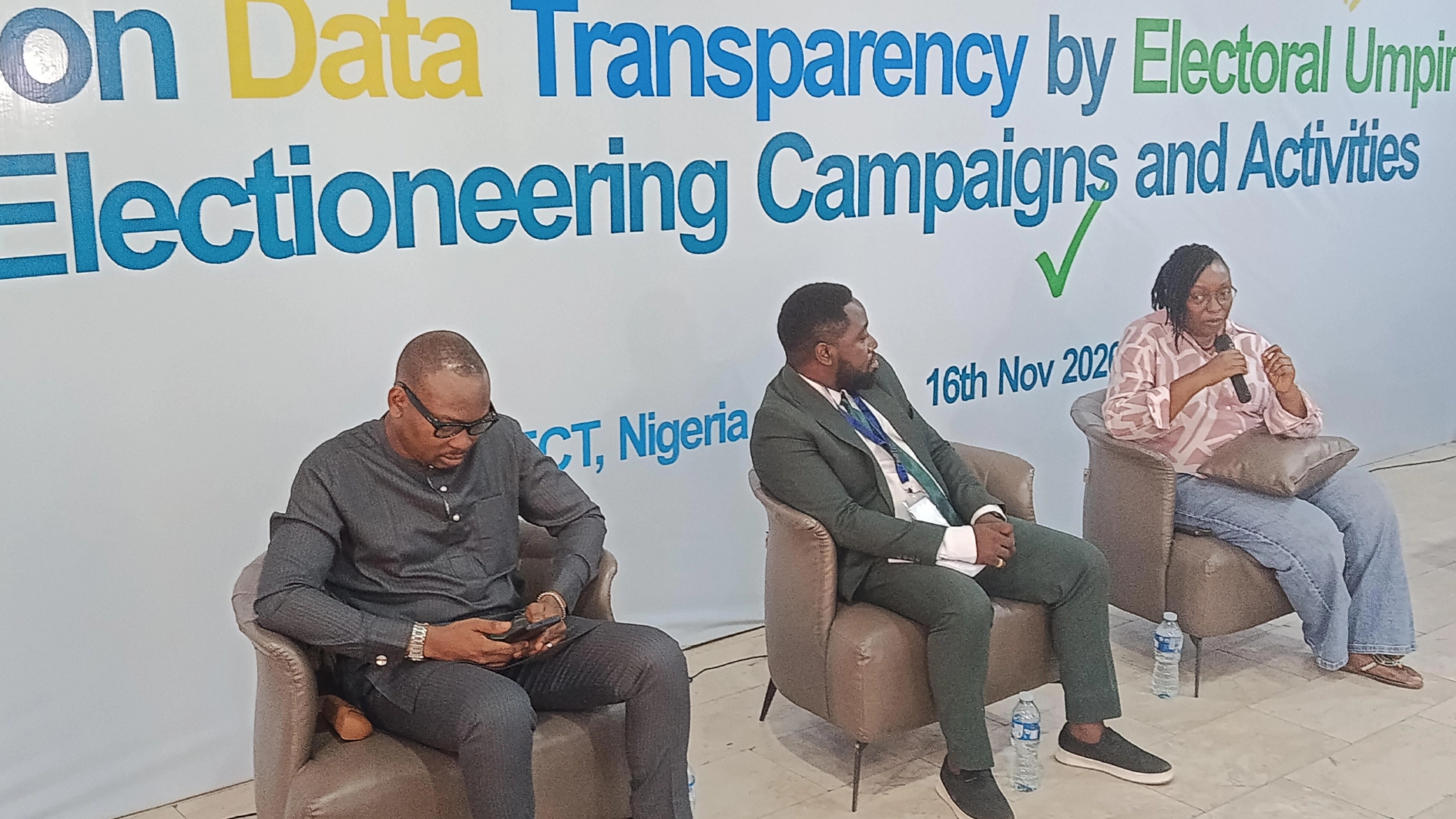
The experts spoke in Abuja on Monday at a roundtable on data transparency by electoral umpires during electioneering campaigns and activities organised by Digital Rights Lawyers Initiative (DRLI).
They specifically questioned the transparency surrounding the deployment of the Bimodal Voter Accreditation System (BVAS) and the INEC Result Viewing Portal (IReV).
Co-founder of the Digital Rights Lawyers Initiative (DRLI), Olumide Babalola, said INEC and the 36 state independent electoral commissions handled critical national and sensitive personal data but had failed to provide Nigerians with adequate information about their data management practices.
He demanded that the commission disclose the identities of technology vendors handling its digital platforms, their data protection arrangements and the security infrastructure supporting the systems.
Babalola said the Nigerian Data Protection Act required organisations handling personal information to be transparent about how such data were collected, processed, secured and shared.
He said: “The Nigerian Data Protection Act provides for whoever handles personal data, either as business concern or for whatever purpose, to be transparent in their use, in their sharing, in their process in general. Whatever they do with data, the law requires them to be transparent.
“Now, INEC and the other 36 electoral commissions, they handle critical national data. They also handle sensitive personal data. But what we have discovered over time is that they are not transparent in the use of their data.”
He said the concerns went beyond the publication of election results to the privacy and security of information supplied by voters during registration.
“In the past, we’ve seen incidents where someone from nowhere was able to display another person’s voter registration details. We’ve seen situations where, recently, we’ve had situations around AI-generated voter details. I mean, without addressing the data security issues around that, first of all, we’re concerned about transparency,” he said.
The lawyer said his organisation’s research showed that INEC had multiple websites, some of which were incomplete, making it difficult for citizens to identify the commission’s operative website and access information about its data protection policies.
He added that only about two state electoral commissions had websites, while others relied on websites belonging to state government agencies.
Babalola said: “Some of them do not have websites. They don’t have platforms where you can find information about them. INEC has websites. For some funny reasons, it has about three or four websites. Some incomplete, some complete. So we don’t even know which one is their operative website, and they have not even told anyone that.”
He argued that the absence of independent websites among state electoral commissions raised questions about their institutional independence.
Babalola listed the information electoral commissions should make available to voters to include their identities, data protection officers, technology vendors, third parties with whom voters’ information was shared, data security arrangements and the rights of data subjects.
He said INEC had not adequately disclosed who operated its digital platforms, where voters’ information was stored or the security arrangements protecting the data.
“I am a lawyer. I do not know who runs BVAS. Where is the data stored? Where is the server? I mean, the bidding process. I mean, the security infrastructure. We do not have all these things,” he said.
Babalola disclosed that DRLI had approached the court over alleged failures in data transparency and also submitted a Freedom of Information request to the Nigerian Data Protection Commission (NDPC) to establish INEC’s compliance record.
He added that the NDPC, in response to the organisation’s FOI request, indicated that INEC had been compliant for only one year and had not been compliant in the current year..
Babalola urged INEC to provide Nigerians with information about the digital platforms it intended to deploy for the 2027 elections, including the vendors responsible for operating them.
“Let INEC come out clean to Nigerians. Give us adequate information. You want us to trust you. You have to provide information where somebody is fully informed. That is when we can trust,” he said.
He also called on the commission to explain the circumstances surrounding the recent circulation of AI-generated voter information and disclose the outcome of investigations into the incident.
Speaking, digital rights expert, Adeboye Adegoke, said the increasing use of technology in electoral processes had made the protection and governance of voters’ data particularly important.
He said information collected during voter registration and used in conducting elections could be manipulated if the institutions responsible for safeguarding it failed to establish adequate protection mechanisms.
Adegoke said: “Those data, they represent a lot of things. So all those data are governed, are important because this data is very powerful.
“We’re also in the age of artificial intelligence, where people can use AI to manipulate data. Also, people who have access to data can do a lot of things. So when an institution has such amount of data or sensitive data, there are a lot of questions that they need to answer in terms of how they manage that data, in terms of how they ensure fairness to all the candidates in elections, to all the political parties in elections, because anybody who has access to those data can manipulate it on election outcomes.
Adegoke added that transparency alone was insufficient without adequate protection and privacy safeguards.
He said: “Transparency is not the only issue. It’s also about protection. It’s also about privacy. So there are a lot of issues around that which this roundtable is helping to address today.”
Executive Director of Digital Africa Research and Safety Lab (DigiAfricaLab), Rosemary Ajayi, also raised concerns about possible insider threats within electoral institutions, citing incidents involving the alleged unauthorised access to voters’ information.
Ajayi referenced the incident involving actor Emeka Ike, whose voter registration information was reportedly accessed by a serving government official.
She said: “There is talk about, you know, there’s usually talk about external actors, but there’s actually internal actors within INEC who are subjectising the system.”
Ajayi mentioned concerns surrounding alleged ghost voters, saying such incidents reinforced the need for greater transparency in the management of electoral data.
On INEC’s preparedness for the 2027 elections, she said she believed the commission was somewhat prepared but could not speak to the honesty of individuals within the institution.
She added that Nigerians were also preparing to protect their votes through different monitoring initiatives, including the use of drones and body cameras.