 Follow Us on Google News


 Follow Us on Google Discover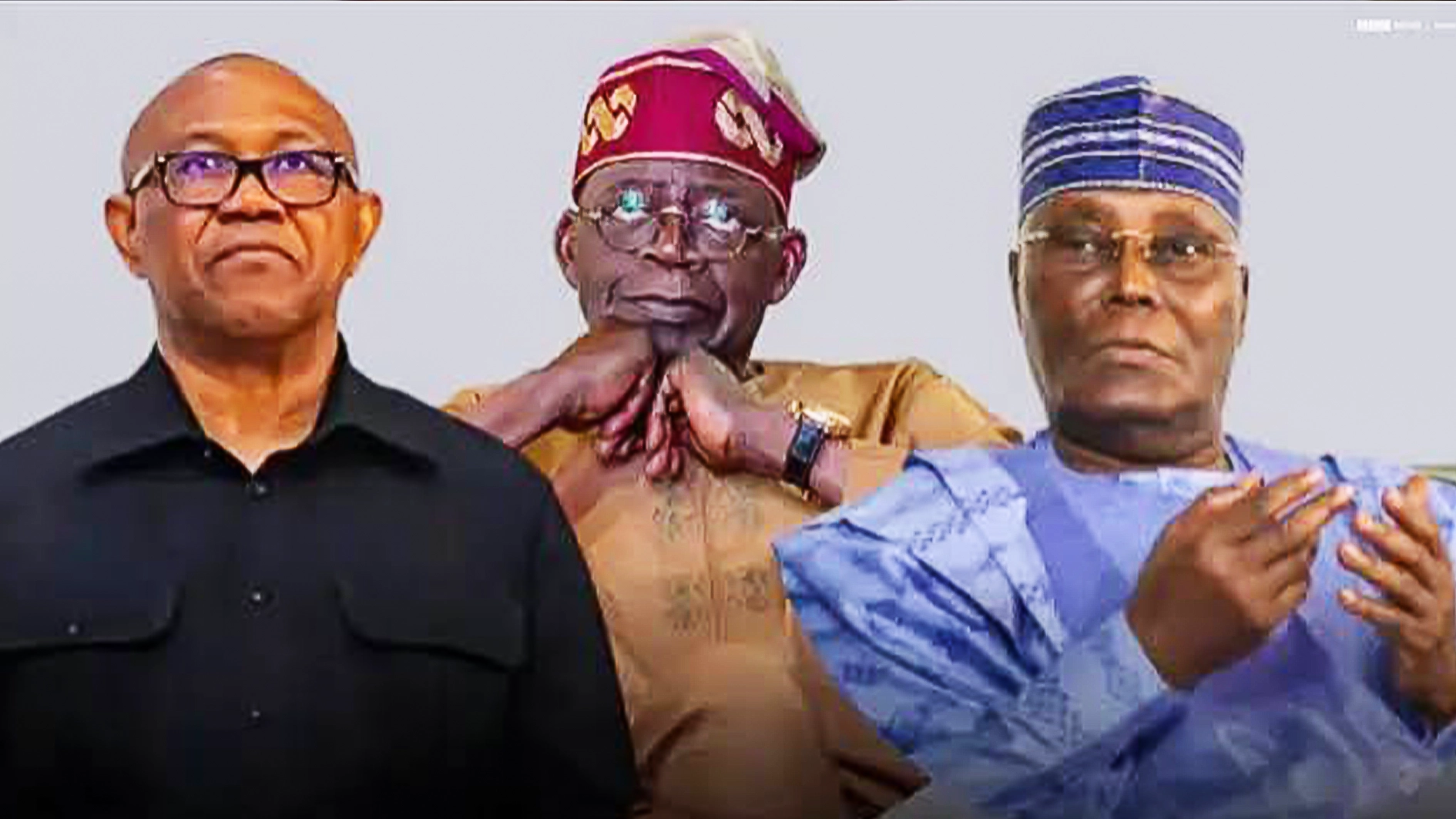
***As TInubu says election not do-or-die affair
**Nigerians should not vote for candidates who violate pact – Obi
***Accord meaningless without justice – Adebayo
***Sowore says previous pact failed, won’t prevent violence
****Abdulsalami warns against character assassination
***INEC: We won’t favour any candidate
Presidential candidates on Tuesday signed the National Peace Accord ahead of the 2027 general elections, but opposition figures raised concerns over the effectiveness of the pact, with some questioning whether it would go beyond a ceremonial commitment to deliver peaceful and credible elections.
This is even as President Bola Tinubu declared that the election must not be treated as a do-or-die affair.
While the National Peace Committee, led by former Head of State, Gen. Abdulsalami Abubakar, urged parties to shun character assassination, fake news, insults and inflammatory rhetoric, opposition presidential candidates Peter Obi, Adewole Adebayo and Omoyele Sowore expressed varying degrees of scepticism about the ability of the accord to prevent electoral violence.
The accord organised by the National Peace Committee in partnership with The Kukah Centre was signed at the Bola Ahmed Tinubu International Conference Centre, Abuja, ahead of the commencement of campaigns for the presidential and National Assembly elections on Wednesday, August 19.
The signing brought together presidential candidates, political party leaders, representatives of the Presidency and National Assembly, the Independent National Electoral Commission (INEC), security agencies, civil society groups and members of the diplomatic community.

Those who signed the pact include candidates of the All Progressives Congress (APC), President Bola Ahmed Tinubu, who was represented by the Secretary to the Government of the Federation, George Akume; presidential candidate of the Nigeria Democratic Congress (NDC), Peter Obi; presidential candidate of the African Action Congress (AAC), Omoyele Sowore; presidential candidate of the Social Democratic Party (SDP), Adewole Adebayo.
Others were presidential candidates of the Peoples Redemption Party (PRP), Donald Duke; presidential candidate of the Action Democratic Party (ADP), Ambassador Aliyu Bin Abbas; and presidential candidate of the Labour Party, Chibuzo Okereke.
Also present were the National Chairman of the All Progressives Congress, Prof. Nentawe Yilwatda; Deputy President of the Senate, Barau Jibrin, representing Senate President Godswill Akpabio; and Ado Doguwa, representing Speaker of the House of Representatives, Tajudeen Abbas.
Others included Inspector-General of Police, Tunji Disu, represented by Deputy Inspector-General of Police, Umar Shehu; INEC Chairman, Prof. Joash Amupitan; and Bishop Matthew Hassan Kukah, alongside members of the National Peace Committee, security agencies, diplomatic corps and civil society organisations.
But notably absent from the ceremony were the presidential candidate of the African Democratic Congress (ADC), Atiku Abubakar, and his running mate, Rotimi Amaechi.
Speaking to journalists before the commencement of the proceeding, Obi questioned the need for the Peace Accord if political actors would not abide by its provisions.
“That’s what I’m saying. We don’t even need to sign this. We’re seeking an office where we should be exemplary,” he said.
Obi maintained that the personal conduct of candidates was more important than the name given to the agreement.
On the punishment for candidates or parties that violate the accord, Obi said the electorate should sanction them at the polls.
“Well, the punishment of Nigeria should not vote for them.
“Whatever it is, whether we call it justice accord or we call it peace accord, personal conduct of the candidates must reflect the office seeking. Behaviour is personal. Any day, any time, it must reflect that office,” he said.
He said he had no fear about the 2027 election but urged Nigerians to ensure that their votes count.
“I have no fear. I still have to say that, please, for the sake of the children of Nigeria, can we have an election where people’s votes will count?” Obi said.
He said candidates must conduct themselves in a manner that reflected the offices they were seeking and campaign on issues confronting Nigerians.
Obi expressed sadness over the deaths recorded during the August 15 Osun State governorship election, saying no Nigerian should have to die for an election.
He called for support for the families of those who died during the poll.
“Let us not forget those who died and ensured that the election in Osun was achieved the way it went. Now we should visit them. We should console their families and we should remain prayerful and conduct ourselves in a way that in our democracy nobody needs to die for an election,” he said.
“It shouldn’t be. It is painful. And I wish it never happened again.”
On his part, presidential candidate of the Social Democratic Party (SDP), Adewole Adebayo, who was more critical of the initiative, argued that there could be no meaningful electoral peace without justice and respect for democratic principles.
“There cannot be anything like peace. How do you expect the justice to be done for those that violate the rules? The people who sign first will be the first to violate it,” Adebayo said.
He accused the government of undermining democratic principles and intimidating the opposition, arguing that the government had a major responsibility for creating the conditions for peaceful elections.
According to Adebayo, a government that respected its constitutional responsibilities would not need a peace accord to guarantee peaceful elections
His words: “You have a government that is against democracy itself, that says challenge is an offence. It is a government that is intimidating, harassing the opposition,” he said.
“If the government, which is responsible for 90 per cent of the problems of elections, changes its ways, even if they don’t sign anything, there is no peace accord sign.
“If the President can keep to his oath of office and govern the country according to the law, and make sure that all enforcement agencies, INEC and all the organisations and institutions of government play their role, there will be no need for signing this.”
Adebayo said he attended the ceremony out of obligation but remained sceptical about the effectiveness of the agreement.
“I believe that the ones who signed four years ago violated it. They won’t sign any time they violated it. So, we’re just here for fun.
“If you are the President of the country and you have been asked to come and sign peace accord and your country is not at war. It shows to you that you have not shown leadership,” Adebayo said.
The presidential candidate of the African Action Congress (AAC), Omoyele Sowore also questioned the practical value of the Peace Accord, citing the violence surrounding the Osun election.
Sowore said he participated in the process not because he had confidence in the accord but because he wanted to bring confidence into the system.
“I don’t have faith in it. I’m bringing faith to the system. Those are two different things,” he said.
He challenged the description of the Osun election as peaceful, alleging that 50 people died during the poll.
“How can you say, in good conscience, that an election that led to the death of 50 citizens of any country is a peaceful election?” .
He argued that previous peace accords had failed to prevent violence.
“The people who signed the peace accord in Osun State killed 50 people after they signed the peace accord,” Sowore alleged.
“So if you meant anything at all, why would you sign the peace accord and then go and carry a gun after that and kill 50 people?”
Sowore described the signing as a “ritual” that would be followed by renewed political violence.
He proposed that the Peace Accord should be complemented by a Justice Accord with enforceable consequences for violations.
“Maybe what the peace accord needs is also to have a justice accord that will fall if anybody then goes against the peace,” he said.
While opposition candidates expressed reservations about the accord,
2027 election not do-or-die affair, Tinubu while speaking urged political parties and candidates contesting the 2027 general elections to shun violence, hate speech and divisive rhetoric, declaring that the election must not be treated as a “do-or-die affair.”
The President represented by the Secretary to the Government of the Federation, George Akume, commended the National Peace Committee, particularly its Chairman and former Head of State, General Abdulsalami Abubakar, as well as the Sultan of Sokoto and Bishop Matthew Hassan Kukah, for sustaining efforts to promote peaceful and issue-based campaigns since 2014.
Tinubu noted that Nigeria’s return to democratic rule in 1999 had been accompanied by anxiety during election periods because of the intense competition for political power.
He, however, said the country had made significant progress in electoral management and transparency, particularly through technological innovations introduced by the Independent National Electoral Commission (INEC).
“Since 1999, when our country returned to democratic governance under the stewardship of General Abdulsalami Abubakar and his team, every election period has brought its share of anxiety because of the nature of our politics and the intense competition for power by political actors,” he said.
Tinubu said the introduction of the Permanent Voter’s Card, the Bimodal Voter Accreditation System and electronic card readers had helped reduce electoral manipulation, ballot stuffing and snatching.
According to him, the improvements had restored confidence in voters and made politicians more accountable to the electorate.
“These improvements have restored power to the voters who are now sure that their vote will count. Politicians are now more accountable to the people because votes count,” he said.
The President also cited recent governorship elections in Anambra, Ekiti and Osun states as evidence of Nigeria’s growing capacity to conduct elections with greater transparency and credibility.
He said the peaceful conduct of elections and transparent management of their outcomes could also reduce post-election litigation.
Tinubu said the signing of the Peace Accord was a solemn commitment by political leaders to place national interest above personal and partisan ambitions.
“We have gathered today to commit ourselves to a peaceful and transparent electoral process. Signing this Peace Accord is a solemn pledge to the Nigerian people that we, as leaders, will put the nation’s interests above personal or partisan ambitions,” he said.
He called on Nigerians, civil society organisations, international partners and the media to contribute to strengthening the country’s democratic institutions.
The President stressed that democracy went beyond periodic elections and the selection of political office holders, saying it also involved citizens’ participation, trust in public institutions and civic engagement.
“Democracy is not just about periodic elections that get politicians into government positions. Democracy is about how citizens participate in the affairs of their nation, build trust in public institutions, engage civically, and work together for good governance and a more just and equitable society,” he said.
Tinubu urged political parties and candidates to disagree on policies without resorting to ethnic or religious sentiments.
“It is natural during campaigns to disagree as opponents and advocate competing governing missions for our country. We may exchange occasional political jabs, but as members of the same household, the same national family, we must never resort to divisive and primordial sentiments of ethnicity or religion as tools for seeking power,” he said.
He called on the parties to campaign on the strength of their ideas and policy proposals.
“Let us campaign on superior ideas. Let us debate issues and promote the best policies to expand opportunities for our people and accelerate Nigeria’s journey from a developing nation to a first-world country,” he said.
Tinubu pledged the commitment of the All Progressives Congress (APC) to the principles of the Peace Accord, saying the ruling party would reject violence, hate speech, misinformation and incitement.
“As the campaign season kicks off, I commit myself and my party, the All Progressives Congress, to the tenets of this accord,” he said.
“Our party rejects violence, hate speech, the spread of misinformation, including through artificial intelligence, and all forms of incitement, especially via social media.”
He urged other political parties and political actors to make similar commitments ahead of the elections.
Tinubu said peaceful and transparent elections were essential to political stability, social harmony and economic progress.
He also reminded political actors that the outcome of an election should not be viewed as a matter of life and death, stressing that the country’s survival and unity should take precedence over partisan victory.
“Let us remember that elections are not a do-or-die affair. We are partners in the project of nation-building. Win or lose, our country, Nigeria, must be the ultimate winner,” Tinubu said.
Former Head of State and Chairman of the National Peace Committee, Gen. Abdulsalami Abubakar, urged political parties to use the 2027 campaign to debate policies and programmes rather than attack personalities.
Abdulsalami, represented at the event by former Chief of Defence Staff, Gen. Martin Luther Agwai, said the Peace Committee had facilitated 30 peace accords since 2015.
He said five were signed at the national level ahead of the 2015, 2019 and 2023 general elections, while 25 were facilitated at the subnational level, including off-cycle elections.
He said the committee had also established independent faith-based peace structures in 23 states to support its peace-building efforts.
Abdulsalami said campaigns had increasingly abandoned party manifestos in favour of “name-calling, personal insults and character assassination.”
He said the trend had removed dignity and decency from public discourse and created a toxic atmosphere capable of inciting citizens against the state, political parties and candidates.
He also disclosed that the committee had established an Election Security Information Hub to monitor electoral offences and broader security developments and assess their potential impact on elections.
Abdulsalami urged political parties, candidates, campaign councils and spokespersons to campaign peacefully and avoid incitement, personal attacks and abuse.
“Please campaign based on issues that are of significant concern to Nigerians. Avoid the spread of false and fake news, personal attacks and insults,” he said.
Meanwhile, on his part, INEC Chairman, Prof. Joash Amupitan, meanwhile assured political parties that the electoral commission would remain neutral in the 2027 elections.
“Let me state unequivocally that INEC has no interest in who wins or loses any election. The Commission does not have a candidate, nor does it favour any political platform,” Amupitan said.
He pledged a “lawful, transparent, credible, and inclusive process,” promising to act as an impartial umpire and ensure a level playing field for all contestants.
Amupitan urged candidates to focus their campaigns on Nigeria’s economic, security, infrastructure, healthcare, education and social inclusion challenges.
He described elections as competitive job interviews before the electorate, adding that Nigerians wanted solutions rather than insults.
He warned parties against hate speech, misinformation, disinformation, identity-based provocation, private armed groups and premature declarations of election results.
The INEC chairman said the commission’s preparations for the 2027 election were progressing, with plans to deploy about 1.4 million ad-hoc personnel across more than 176,000 polling units.
He said INEC had spent the past eight months improving its technology, logistics and personnel training, with lessons from recent elections in Anambra, the FCT, Ekiti and Osun states informing preparations for 2027.
He INEC could not guarantee a credible election alone.
“INEC cannot deliver a perfect election alone. An election is a multi-stakeholder venture. We provide the pitch and the refereeing, but the quality of the game depends on the players,” Amupitan said.
He disclosed that the commission was also introducing further transparency measures in result management.
“Peace is not the absence of competition; it is the presence of rules and the willingness to abide by them. Let us compete vigorously, but let us compete decently. Let us remember that at the end of this exercise, there will be no winners if Nigeria is the loser.”

