 Follow Us on Google News


 Follow Us on Google Discover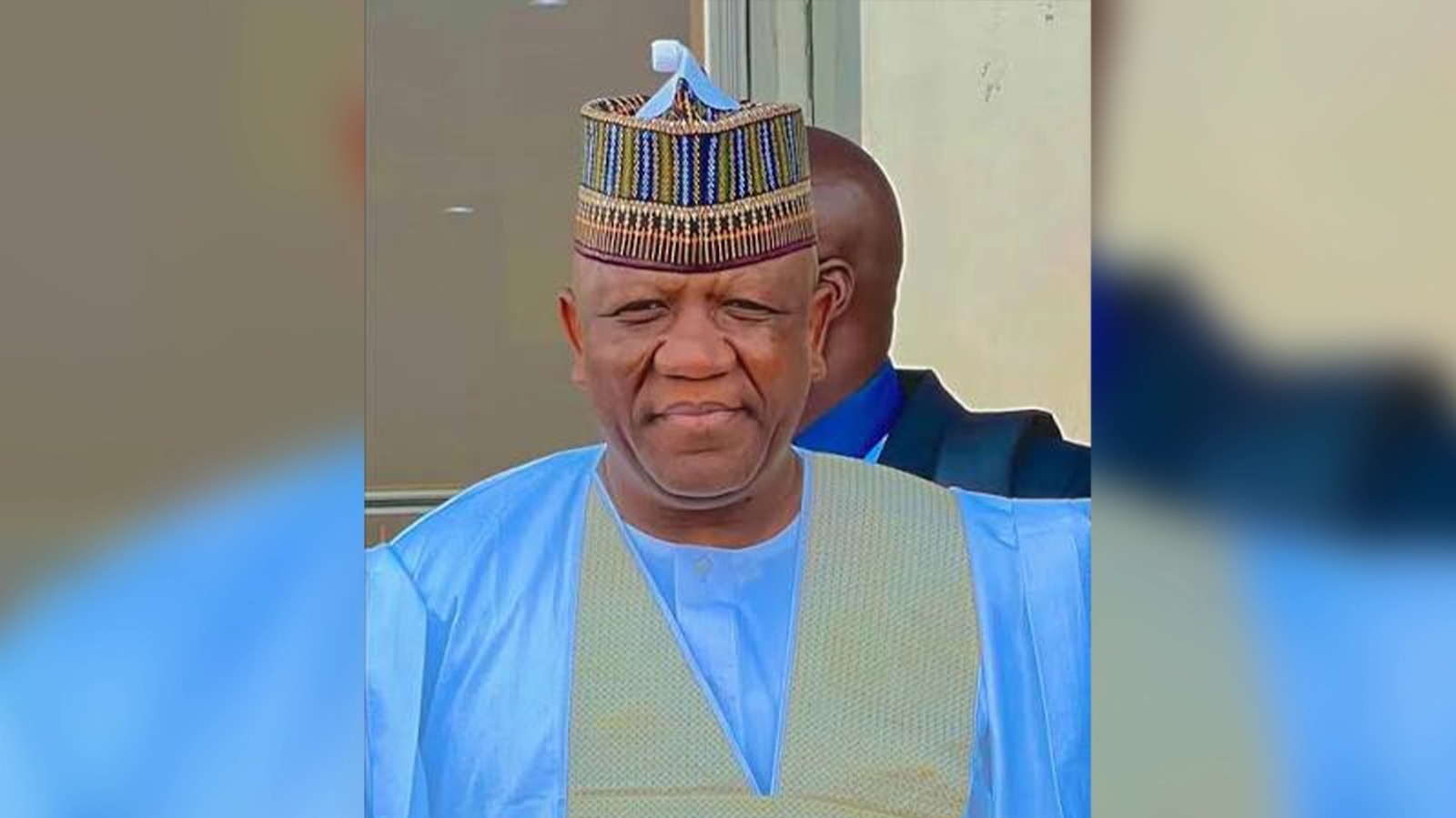
By Bello Tijani
There is a difference between political communication and political worship. Nigeria often confuses the two.
Once a politician receives an important appointment, congratulatory advertisements appear, extravagant adjectives multiply and previously sober adults begin competing to describe the appointee in language usually reserved for historic figures.
The result is frequently counterproductive. Rather than strengthening credibility, exaggerated praise creates suspicion.
This is why the communication around Senator Abdulaziz Abubakar Yari’s emergence as Director-General of the APC Presidential Campaign Council requires a different approach.
Credential marketing offers that alternative. The principle is uncomplicated: do not instruct the public to admire the man. Put his record on the table.

Yari’s formal political résumé already provides substantial material. He has been involved in party politics since 1999. He served in the House of Representatives between 2007 and 2011.
He governed Zamfara State for two terms between 2011 and 2019. His fellow governors elected him Chairman of the Nigeria Governors’ Forum in 2015.
Since 2023, he has represented Zamfara West in the Senate. And on August 22, 2026, he was formally announced as Director-General of the APC Presidential Campaign Council. Those facts do not require embellishment. What they require is context.
What did he learn from party administration? How did eight years of executive government shape his understanding of political organisation? What relationships came from leading the Governors’ Forum? What has his Senate experience added? How extensive are his grassroots networks? What evidence exists of his political mobilisation for President Tinubu before his latest appointment? What humanitarian activities has he undertaken, and can their scope be independently verified?
These are far stronger subjects for public communication than endless declarations of loyalty and greatness.
There is already evidence that Yari’s involvement in the President’s political project predates his appointment as campaign director-general. The Renewed Hope Network associated with him was publicly launched in March 2026 as a vehicle for nationwide political mobilisation around President Tinubu and his administration. Reports also documented its mobilisation activities around the APC convention later that month.
There is similarly a developing public record around humanitarian interventions associated with him. It was reported in August that a three-year programme had reached approximately 1.7 million people in Zamfara, with its latest phase involving 145 truckloads of maize and 42,000 bags of semovita for displaced persons and vulnerable households.
These are precisely the kinds of claims credential communication should interrogate and document. Not merely repeat. If the figures are accurate, preserve the evidence. If photographs exist, catalogue them. If beneficiaries can be identified, record their communities.
If political mobilisation occurred before the appointment, construct the timeline. If newspaper reports contemporaneously documented particular interventions, make them accessible.
The purpose is to build a public archive. This is where traditional newspapers and social media can complement one another effectively. Newspapers provide depth, institutional memory and a searchable record.
A serious personality profile can examine Yari’s political evolution. An interview can interrogate his understanding of the campaign assignment. A background analysis can assess his relationships across the North.
A special report can examine humanitarian interventions. Another piece can revisit his years at the Governors’ Forum and ask what that experience means for managing a presidential campaign.
Social media then performs a different function. It can turn a 1,500-word newspaper investigation into a timeline. An interview becomes six quote cards.
A humanitarian report becomes a documented infographic. A career profile becomes a 60-second chronology. Archival photographs can establish dates and relationships without overbearing commentary.
In this model, social media does not invent the credential. It amplifies the documented record. That distinction is crucial in an age of political cynicism.
The contemporary audience is considerably more suspicious of propaganda than political actors sometimes realise. Grand claims are instantly questioned. Numbers are challenged. Old videos are retrieved. Contradictions are exposed within minutes.
A successful credential campaign therefore needs to anticipate scrutiny rather than fear it. Every important claim should pass a simple test: Can we prove this? That should be the discipline governing the communication around Yari.
The objective should not be to manufacture an immaculate political personality. No politician with a career spanning more than two decades should expect to escape criticism, controversy or disagreement. Nor should credential communication attempt to immunise anyone from legitimate questions.
Its purpose is narrower and more credible: to ensure that assessments are made with the relevant record available.
Yari’s appointment to coordinate a presidential campaign is important enough to justify scrutiny of the experience he brings to it.
His time as governor matters. His leadership of the Governors’ Forum matters. His legislative experience matters. His party background matters.
His political relationships matter. His pre-appointment activities around the Renewed Hope project matter. His humanitarian interventions, where verifiable, matter.
And his North-West roots and broader northern relationships form part of the political context within which his new assignment will operate.
The intelligent communication strategy is therefore not to shout louder. It is to document better.
In the end, the most effective credential marketing may be the kind that hardly looks like marketing at all.
Put the facts in the public domain. Establish the chronology. Provide the evidence. And allow the record to speak.
• Tijani writes from Kano

