
 Get Guardian on Google
The Independent National Electoral Commission (INEC) has disclosed that it is currently facing more than 300 pending court cases, raising concerns over the impact of prolonged litigation on preparations for the 2027 general election.
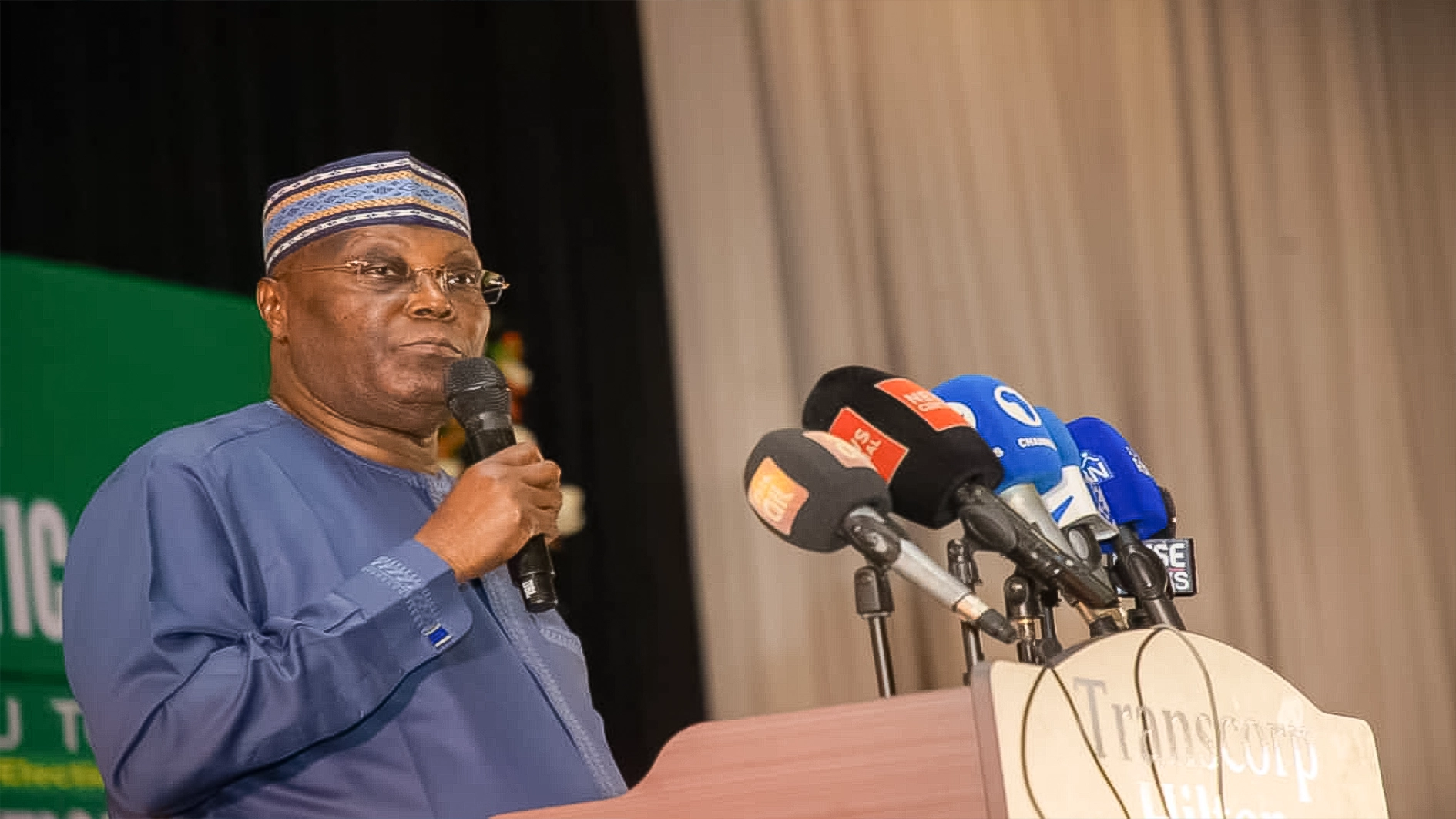
INEC chairman, Prof. Joash Amupitan, disclosed this on Thursday while speaking at Chatham House in London, where he also assured that INEC would abide by any court decision on the eligibility of former Vice-President Atiku Abubakar to contest the 2027 presidential election.
Amupitan was responding to a question on whether Atiku would be eligible to contest if he failed to overturn the court judgment affecting the leadership of the African Democratic Congress (ADC), the platform on which he intends to pursue his presidential ambition.
He said the commission was constitutionally bound to obey court orders, particularly decisions of the Supreme Court, irrespective of their political implications.
“If he eventually fails, well, I’m obligated under Section 285 of the Constitution of Nigeria to obey every court order, especially if it is from the Supreme Court,” he said.
Amupitan, however, expressed concern over the growing number of lawsuits involving the commission, noting that unresolved disputes could complicate its preparations for the forthcoming elections.
“Some of those issues we have with court cases, over 300 cases hanging on the neck of INEC, and elections is just about 66 days away,” he said.
He explained that INEC had earlier advocated an accelerated hearing of the ADC leadership dispute, arguing that pre-election matters should be resolved early enough to enable the commission to plan its logistics and other electoral activities.
“When it happened in April, the position of the commission was that matter should be resolved within three weeks,” he said.
According to him, the commission had initially acted in compliance with a court directive to suspend action and await the outcome of the legal process, but the dispute subsequently proceeded to the appellate court.
The INEC chairman called for reforms to the handling of pre-election disputes, proposing that such cases should be concluded at least six months or one year before a general election.
“I had advocated in several fora that we pre-election matters should abate at least a year before the election, or let’s say six months, so that we can fix our logistics,” he said.
He said the commission had already commenced procurement of sensitive election materials, warning that unresolved court cases could create complications for its preparations.
Amupitan also lamented that INEC often bears the public backlash arising from implementing judicial decisions, even when the commission is merely complying with court orders.
“The danger is that whenever there is such decision, and it’s you to now implement, you become the problem. The problem now is transferred unto you,” he said.
The Federal High Court had nullified the leadership of the ADC faction led by former Senate President David Mark, a decision that has raised questions about the party’s leadership and the validity of political decisions taken under it, including Atiku’s presidential ambition.
The ADC has indicated its intention to challenge the judgment at the Court of Appeal.