
 Get Guardian on Google
***Law will take its full course on you, INEC warns promoters of violence
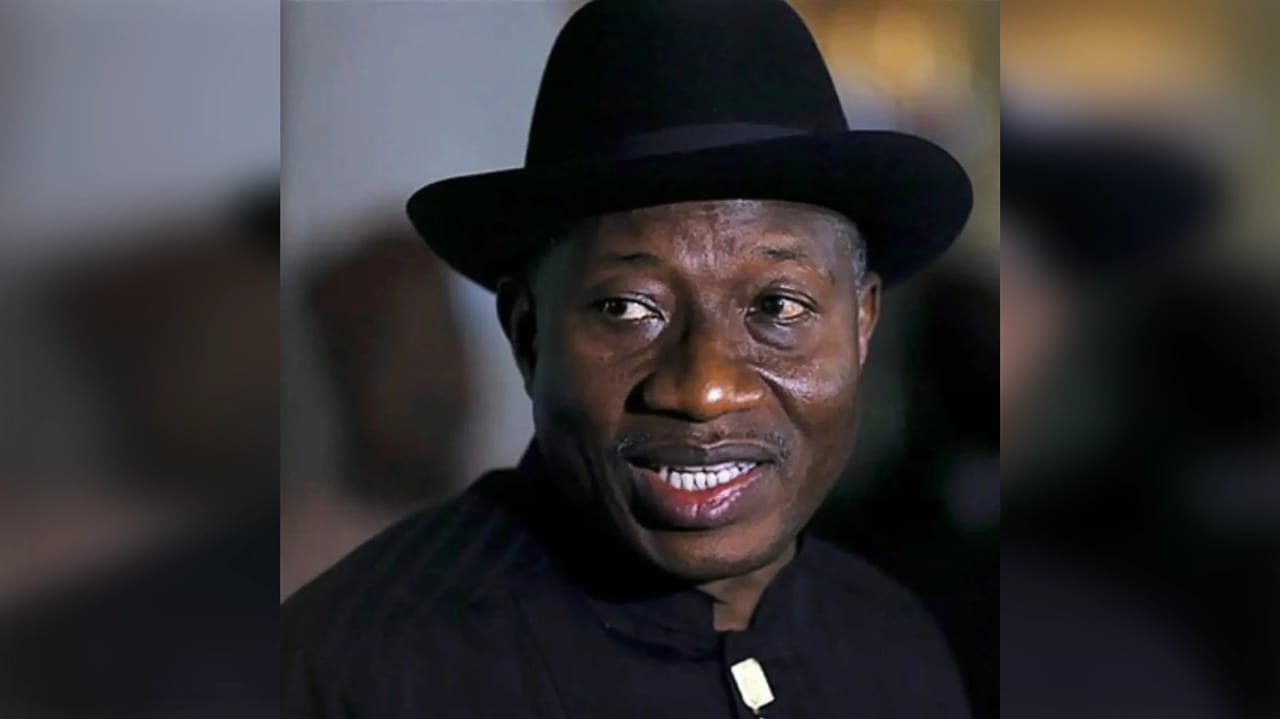
Former President Goodluck Jonathan has warned that Nigeria could face a serious crisis after the 2027 general elections if growing political intolerance, thuggery, ethnic rivalry and declining confidence in democratic institutions are not urgently addressed.
Jonathan raised the concern on Tuesday at the 2026 Goodluck Jonathan Foundation Peace Conference in Abuja with the theme, “Safeguarding Trust and Strengthening Social Cohesion in a Competitive Political Environment”.
Jonathan expressed concern that political parties and campaign organisations were increasingly being run like rival cult groups, with opponents treated as enemies.
“We are running political organisations and campaign teams as cult groups. Cult groups are always rival. You see the other cult groups as an enemy, so you must attack and kill and blame. And that is not politics. We must not manage the political systems as cult groups,” he said.
The former president said he had received calls from Nigerians and friends abroad expressing concern about the country’s political direction and the possibility of post-election crises.
He warned that political actors were becoming increasingly intolerant of opposing views and the legitimate right of others to contest elections at every level of government.
Jonathan further raised concerns about conflicting judicial pronouncements, particularly when courts of coordinate jurisdiction issue contradictory decisions on the same matters.
He said the growing perception that litigants could shop for favourable court decisions could undermine public confidence in the judiciary.
Jonathan warned that the 2027 elections could degenerate into destructive ethnic rivalry if political leaders continued to exploit divisions for electoral advantage
He added: “Once people begin to lose faith in our courts and resort to self-help, the consequences can be very, very disastrous. Because if we don’t have confidence in our courts, the next step is self-help,” he said.
“Nothing could be more dangerous to our national existence than the deliberate encouragement of ethnic rivalry,” he said.
He called for a review of Nigeria’s political recruitment process, arguing that ethnic, religious and other primordial considerations often prevent competent and credible people from emerging as leaders.
“Let us choose competence over prejudice, service over personal ambition, and national interests over narrow considerations. Democracy must produce leaders capable of uniting our people and advancing our collective development,” he said.
The former president also urged citizens not to limit their participation in democracy to voting, but to speak out against political excesses and hold leaders accountable.
Using football as an analogy, Jonathan described the Independent National Electoral Commission (INEC) as the referee, the judiciary as the video assistant referee (VAR), and the general public as supporters whose conduct could influence the game.
He said religious leaders, traditional rulers and other influential members of society had important roles to play in promoting tolerance and preventing violence.
Speaking, INEC Chairman, Prof. Joash Amupitan acknowledged that the 2023 general elections left a significant trust deficit.
He described the forthcoming off-cycle governorship elections in Anambra, Ekiti and Osun states, the Federal Capital Territory Area Council elections and 16 bye-elections as important opportunities to assess the commission’s preparedness ahead of 2027.
Amupitan said the commission had removed more than 1.6 million invalid records from the voters’ register following biometric audits, adding that over 100 million voters had been verified.
He also disclosed that INEC had acquired 57,000 new Bimodal Voter Accreditation System (BVAS) devices and planned a nationwide mock accreditation and result transmission exercise on November 28.
The INEC chairman condemned attacks on campaign convoys and supporters of political parties, warning that perpetrators would face the law.
“Let me issue a clear and unambiguous warning to all political actors, sponsors, and their foot soldiers: the law will take its full course, and security agencies working alongside the Commission will go after the promoters and perpetrators of violent campaigns without fear or favour,” he said.
On the growing influence of artificial intelligence in elections, Amupitan said the commission had established an AI Division within its Information and Communication Technology department to monitor database anomalies and verify digital assets.
In his keynote address, former President of the ECOWAS Commission, Dr Omar Alieu Touray, identified national consensus on democratic principles, public trust, responsible political competition, early warning mechanisms, inclusive development and effective responses to misinformation as essential conditions for peaceful elections.
Touray warned political leaders against turning electoral contests into struggles over ethnic, religious or regional identities.
“The challenge before political leaders and citizens alike is therefore clear: political competition must remain a contest of ideas and programmes. It must not become a struggle of identities,” he said.
He also cited Jonathan’s decision to concede defeat in the 2015 presidential election as an example of leadership that prioritised national stability over personal ambition.
“No political victory is worth the sacrifice of national peace. No electoral defeat should ever be interpreted as the defeat of an ethnic, religious or regional community. And no political ambition, however legitimate, should outweigh the responsibility to preserve the nation,” Touray said.
The Minister of Defence, Gen. Christopher Musa (retd.) said social cohesion remained essential to Nigeria’s national security.
Musa who was represented by his Senior Special Assistant on Strategic Communication, Mercy Bala, warned that distrust and division could create opportunities for criminal and non-state actors to exploit grievances and destabilise communities.
He called for professionalism, impartiality, early warning mechanisms and inclusive engagement in addressing threats to peace.
“No political ambition is worth the loss of innocent lives, the destruction of property or the destabilisation of our country,” he said.
The 2026 conference is the third in the series organised by the Goodluck Jonathan Foundation, following earlier editions in 2019 and 2022.