 Follow Us on Google News


 Follow Us on Google Discover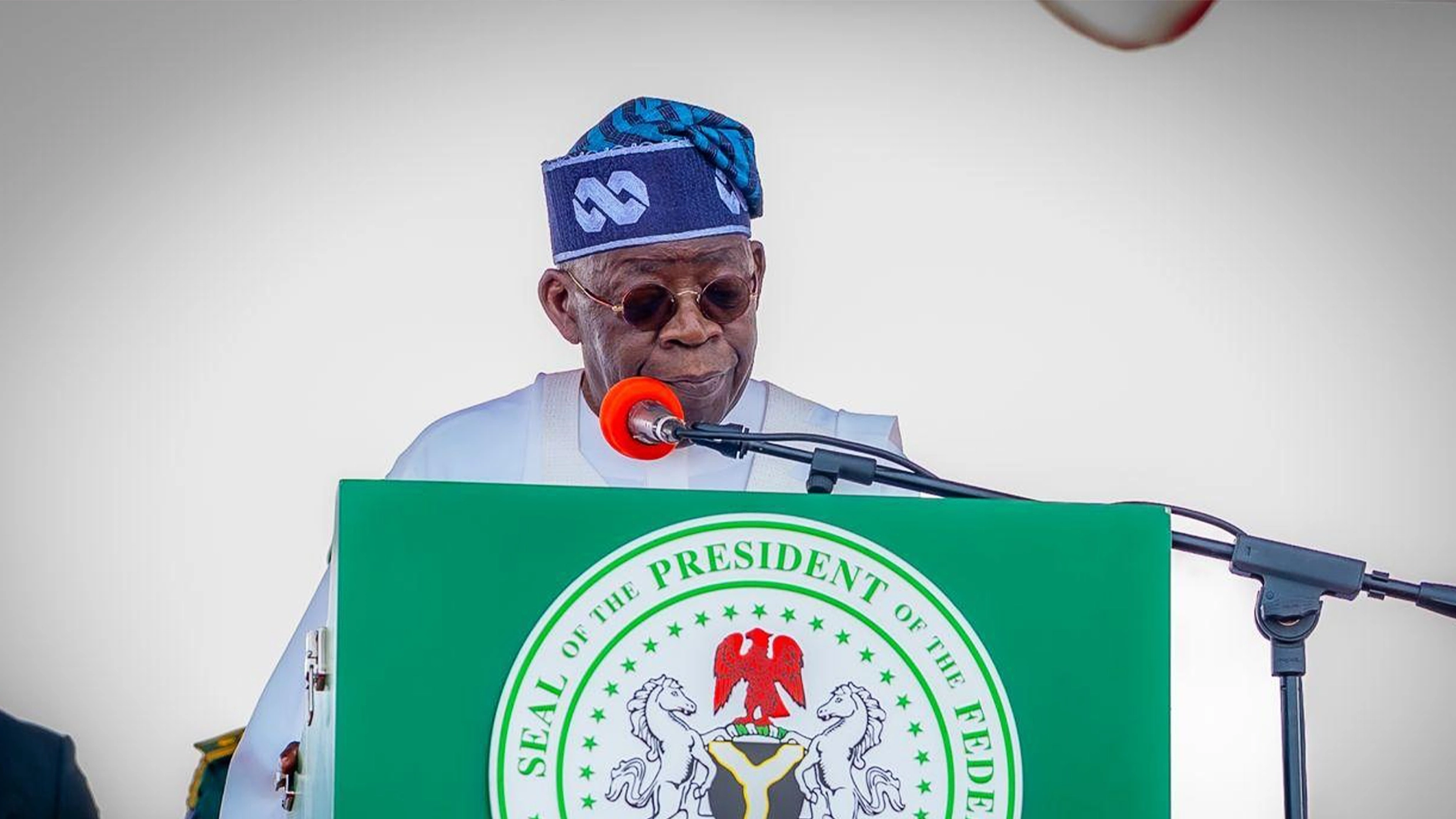
• Charges INEC to ensure credible election
• HURIWA demands strict neutrality from INEC, security agencies
• Odeyemi, Ajisafe raise alarm over alleged missing ballot papers
• Olurode predicts peaceful election
As the electorate in Osun State decides who becomes their next governor on Saturday, August 15, President Bola Tinubu has charged the Independent National Electoral Commission (INEC) and security agencies to guarantee a peaceful, transparent and credible governorship election.
Also, the Human Rights Writers Association of Nigeria (HURIWA) has urged the INEC and security agencies to ensure that voters freely choose their leaders in the election.
The President’s charge came on Friday via a statement by his Special Adviser on Information and Strategy, Bayo Onanuga, in which he also urged voters to turn out en masse and exercise their franchise without fear or intimidation.
Tinubu urged INEC to uphold the integrity of the electoral process and ensure that the election meets the required standards of transparency and fairness.
Fifteen candidates are vying for the Osun governorship, including incumbent Governor Ademola Adeleke of the Peoples Democratic Party (PDP), Munirudeen Bola Oyebamiji of the All Progressives Congress (APC) and Najeem Salaam of the African Democratic Congress (ADC).

“As the people of Osun State head to the polling units to elect who will govern them in the next four years, I call on the Independent National Electoral Commission to ensure orderly conduct of the election.
“The election must be transparent, free and fair. I urge INEC to ensure the integrity of the process,” the President said.
He described the Osun governorship election as the last off-cycle governorship poll before the 2027 general election, urging INEC to use it to demonstrate its preparedness for the next nationwide electoral exercise.
“INEC must use this last off-cycle election as a test case to demonstrate to Nigerians their full preparedness for the 2027 polls,” he added.
The President also directed the Inspector-General of Police and other security chiefs deployed for the election to provide maximum protection for voters and electoral personnel, warning troublemakers against attempting to disrupt the process.
“I have charged the Inspector-General of Police and other heads of security outfits taking part in the election to provide maximum security at polling units. No room should be allowed for troublemakers to disrupt the process,” Tinubu said.
He stressed that electoral officials and voters must be able to perform their civic responsibilities without fear, intimidation or violence.
Tinubu, therefore, called on eligible voters across the state to come out in their numbers and exercise their franchise, assuring them that adequate security measures had been put in place to ensure peace before, during and after the election.
“Voters should feel confident to go out in their numbers to vote for the candidate of their choice as all measures necessary to ensure a peaceful, free and fair election have been put in place,” he said.
The President urged all stakeholders, particularly political parties and their supporters, to respect the democratic process and accept the outcome of the election.
“Our elections must be credible, and the outcome of the Osun governorship election must reflect the will of the people,” Tinubu declared.
In a statement on Friday by its National Coordinator, Emmanuel Onwubiko, HURIWA demanded strict neutrality from INEC, the Nigeria Police Force and the Economic and Financial Crimes Commission (EFCC) before, during and after the poll.
The rights group warned against violence, vote-buying, intimidation and manipulation, saying the election must not become another test of Nigeria’s ability to protect the integrity of its democratic process.
It called for zero tolerance for armed thuggery, ballot snatching, voter intimidation, harassment of opposition supporters and other forms of electoral criminality.
HURIWA said security agencies must demonstrate that they are institutions of the Federal Republic of Nigeria and not instruments for advancing the interests of any political party.
It particularly warned against selective arrests or harassment of opposition supporters while political actors aligned with those in power are allowed to operate with impunity.
The group also challenged INEC to demonstrate its independence and professionalism, describing the Osun election as an important test of public confidence in the commission ahead of the 2027 general election.
It urged the commission to ensure that eligible voters cast their ballots without fear and that the collation and declaration of results are conducted transparently and in accordance with the law.
“INEC must therefore demonstrate absolute independence, transparency, professionalism and impartiality throughout the process,” HURIWA said.
The organisation also demanded maximum transparency in the electronic transmission and publication of polling-unit results, saying voters should be able to monitor the movement of results through the various stages of collation.
It warned that any opaque results-management system could fuel suspicion and undermine confidence in the outcome.
The rights group warned political parties and candidates against turning the state into a battleground for political competition, urging them to reject violence and financial inducement.
“Political power must come from the ballot box and not from the barrel of a gun, bags of money or the manipulation of electoral institutions,” it said.
HURIWA said the election would have implications beyond Osun, arguing that its conduct would influence Nigerians’ perception of the preparedness of INEC and security agencies for the 2027 general election.
The group, therefore, urged INEC to use the poll to demonstrate that Nigeria’s electoral democracy was progressing rather than regressing.
The Guardian observed that, in line with the President’s directive, armed personnel of the Nigerian Army, Police and Department of State Service (DSS) were on red alert on Friday, patrolling major towns and communities in the state.
Military personnel in armoured vehicles were spotted patrolling major highways and streets in Osogbo, Ikirun, Ilesa, Ede, Ile-Ife and other identified hot spots in the state.
Similarly, patrol vans mounted with General Multipurpose Machine Guns (GPMGs), manned by hooded military personnel were sighted around Olaiya, Gbongan-Ibadan expressway and major neighbourhoods in Osogbo, the state capital.
More than 15,000 policemen were deployed for the exercise. The Nigeria Security and Civil Defence Corps (NSCDC) had mobilised 10,000 personnel, while Federal Road Safety Corps (FRSC) had announced that 2,500 officials would be on ground with ambulances for emergencies.
The number of troops deployed by the Nigerian Army could not be ascertained. However, a top security source told The Guardian that contingents were drafted from 2 Division Mechanised Division, Odogbo Barracks, Ibadan.
Credible sources also disclosed that drones and helicopters would be used for aerial surveillance by security agencies.
Meanwhile, there were strong indications on Friday that the election could proceed peacefully, despite politically motivated killings, alleged cult-related activities and other violent incidents that had heightened concerns over the security of the poll.
However, former Deputy National Publicity Secretary of the Peoples Democratic Party (PDP), Diran Odeyemi, and the party’s National Vice Chairman, South-West, Kamorudeen Ajisafe, alleged that there were pockets of violence and irregularities in parts of the state as well as disappearance of thousands of ballot papers.
Their claims contrasted with the assessment of political scientist and former INEC Resident Electoral Commissioner, Prof. Layi Olurode, who expressed optimism that the election would be peaceful.
With about 1.9 million voters expected to participate, the extensive deployment of security personnel and other measures by the authorities appeared to have reduced the immediate risk of violence.
As of Friday, the atmosphere remained calm across Osogbo, as well as in Ede and Ilesha. In the Iwo and Ife axes, residents also went about their businesses peacefully and expressed readiness to vote in the election, provided the calm atmosphere persists.
In Iwo, residents discussed the election and its possible outcome, while security personnel maintained a visible presence at strategic locations ahead of the poll.
For Adeyemi Adeyinka, who travelled from Lagos to Iwo to observe the election, the security presence had eased his initial fears.
“I came from Lagos to Iwo for this election. Not to vote, of course; I vote in Lagos. But I have been following this election and campaign, and I am sure it will be an interesting one,” he said.
Adeyinka said he had initially feared violence but became less apprehensive after arriving in Iwo.
“I was scared that there was going to be violence, but my brothers assured me that there are security men everywhere. And I can see it for myself too,” he said.
Olurode described the contest as one of the most competitive in recent years, saying the political interests surrounding the election made its outcome difficult to predict.
“Personally, it looks like a very competitive election,” Olurode said.
According to him, the Federal Government is also interested in the outcome because the APC controls the centre.
“Whether we like it or not, the Federal Government is also interested in this election. It is not just between Accord and APC. APC is the party at the centre; it is the party of power and the party of the President,” he said.
Olurode, however, said the strength of the leading contenders made it impossible to confidently predict the winner.
“Nobody can beat his chest and say this is the party that is going to win this election. I won’t even risk my money and bet on which party is going to win,” he said.
He expressed optimism that the poll would remain peaceful.
“I think, from the look of things, we are probably in for a very peaceful election. I hope that the turnout for this exercise will be higher than the previous ones,” he said.
Odeyemi, Ajisafe Raise Fresh Concerns
But Odeyemi and Ajisafe offered a markedly different assessment of the situation, alleging that pockets of violence persisted in Esa-Oke, an area associated with a prominent opposition stalwart.
Speaking with The Guardian on telephone, Odeyemi alleged that security agents had deliberately abandoned areas considered weak for a particular party, thereby creating conditions that could encourage voter apathy and facilitate electoral malpractice.
Ajisafe, on his part, alleged that the rigging process had begun on Thursday at an INEC office in Osogbo, where he claimed about 4,000 ballot papers for Wards 4 and 5 were discovered to be missing.
He further alleged that 1,189 ballot papers were missing in Ward 6, Irepodun Local Council, and another 338 in Ward 8 of the same council.
A source within the commission, however, dismissed the allegation of missing ballot papers.
Religious Leaders Urge Restraint
The Grand Mufti of Yorubaland and National President of Jama’at Ta’wunil Muslimeen, Sheikh Dawud Imran Molaasan, called for a peaceful poll, urging Muslims in Osun to participate actively in the election.
“We need a candidate that will represent us. The majority of the Muslim community in Osun State always vote,” he said.
Molaasan called on Muslims to put aside their differences and mobilise voters across wards and polling units.
“As the Grand Mufti of Yorubaland, I encourage Muslims to forget their differences and come together. We need to plan ahead too,” he said.
But the Waziri of Yorubaland, Yahqub Abdulbaki Muhammed, expressed concern over the growing hostility surrounding elections, particularly the use of abusive and inflammatory language.
He traced election-related violence in the area to the 1983 elections but said the situation had worsened.
“Election violence around here started in 1983, which was the election between Obafemi Awolowo and Bola Ige. But compared to now, it’s getting worse with the way people have been broadcasting insults and things that are not in line with media ethics,” he said.
Muhammed also raised concerns about vote-buying, saying economic hardship had made voters increasingly susceptible to inducements.
“Bribery is now the order of the day again these days. They call it gifts, and people are collecting them,” he said.
Despite the concerns, he predicted a high turnout, saying residents had shown an unusual interest in the election.
Beyond The Ballot
The relative calm on the eve of the election is encouraging, but it does not erase the deeper security challenges confronting Osun.
The state’s alleged cult networks, political thuggery and other criminal structures cannot be dismantled through election day security deployment alone. Their persistence has often been linked to political patronage, economic hardship, weak enforcement and the mobilisation of young people for violence purposes.
Therefore, the immediate priority on election day is clear: protect voters, secure electoral materials, ensure that every eligible citizen can cast a ballot without intimidation and announce the result without let or hindrance.

