 Follow Us on Google News


 Follow Us on Google Discover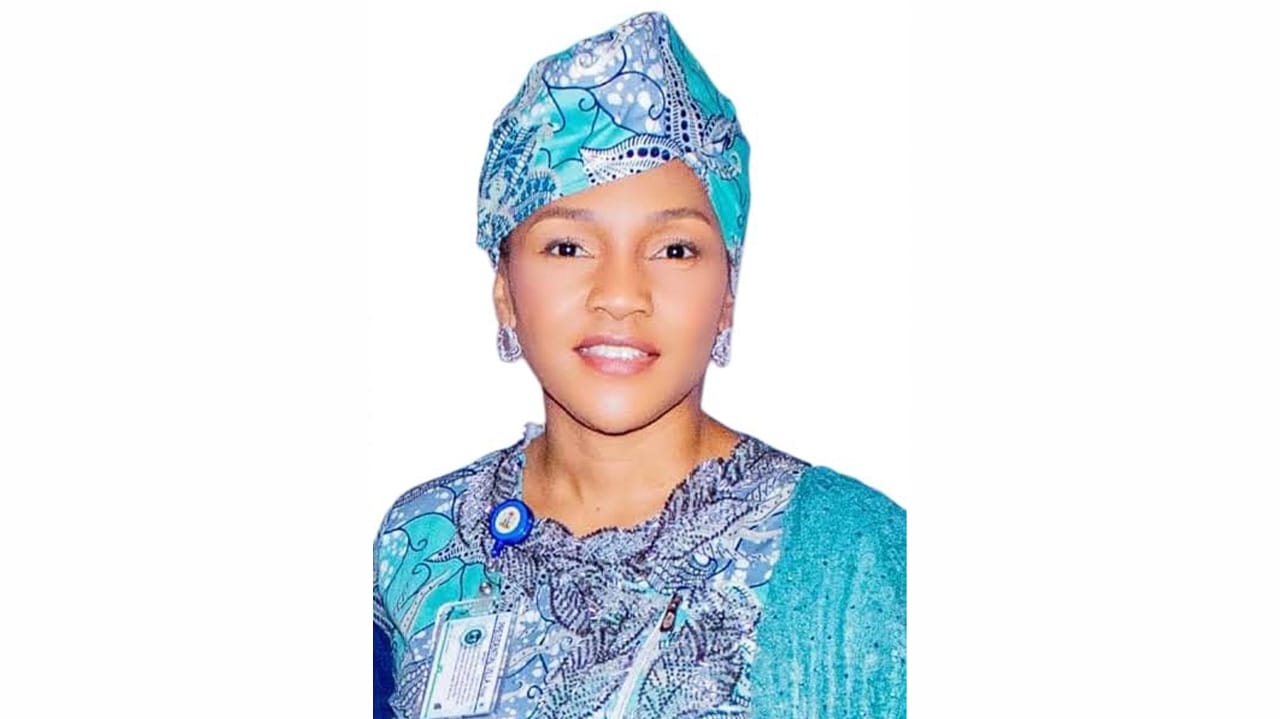
The Director-General of the Presidential Enabling Business Environment Council (PEBEC), Princess Zahrah Mustapha Audu, has declared that President Bola Ahmed Tinubu will be judged favourably by posterity, describing him as Nigeria’s greatest-ever leader to date.
Audu, who is also the National Publicity Secretary of the City Boy Movement, said Tinubu’s leadership should be assessed not only by the immediate discomfort associated with his economic reforms, but by the institutions he is building, the difficult decisions he has taken and the future those decisions could make possible for Nigeria.
In an article titled “President Bola Ahmed Tinubu Is Nigeria’s Greatest-Ever Leader,” Audu argued that history often provides a clearer assessment of consequential leadership long after the events have occurred, noting that citizens experiencing reforms in real time often contend with disruption, uncertainty and disagreement.
She said Nigeria was currently passing through such a period, insisting that Tinubu’s political significance predated his emergence as president in 2023.
According to her, Tinubu’s political journey, which included his tenure as a senator during the Third Republic, participation in the pro-democracy struggle, exile, and two terms as governor of Lagos State, demonstrated an unusual level of political endurance and institutional influence.
Audu also credited Tinubu with playing a central role in opposition politics after leaving the Lagos State Government House, arguing that his coalition-building efforts contributed to the emergence of the All Progressives Congress (APC) and the historic transfer of federal power in 2015.

She said the experience demonstrated that Tinubu’s political influence was not dependent solely on occupying public office, adding that few politicians had been able to organise people, institutions and political coalitions after losing the formal machinery of government.
The PEBEC boss identified the Lagos experience as an important foundation of what she described as Tinubu’s philosophy of a capable state, arguing that effective governance required institutions capable of mobilising revenue, implementing policies, enforcing rules and creating an environment where private enterprise could thrive.
She said the same philosophy was now being tested at the national level through the administration’s economic and institutional reforms.
On the removal of petrol subsidy, Audu acknowledged that the policy transition had imposed genuine hardship on Nigerians but argued that the difficulties should be considered against the question of whether the previous arrangement could have been sustained indefinitely.
She maintained that leadership sometimes required choosing between the immediate difficulty of adjustment and the potentially greater consequences of postponing structural reforms.
Audu further highlighted the administration’s business-enabling reforms, arguing that the efficiency of government was itself an important component of economic competitiveness. She cited company registration, permits, customs procedures, regulatory approvals and commercial justice as areas where administrative delays could impose significant costs on businesses.
She said the work of PEBEC and the broader business-facilitation agenda was aimed at reducing the institutional cost of doing business in Nigeria and repositioning government as an enabler rather than an obstacle to legitimate enterprise.
According to her, the administration’s ambition of building a $1 trillion economy by 2030 provided a broader framework for these reforms, adding that improving government efficiency and accountability was central to achieving the objective.
Audu said the defining characteristic of Tinubu’s leadership was his willingness to expend political capital on difficult decisions rather than merely preserve political popularity.
She argued that reforms were often politically difficult because their costs were felt immediately, while their benefits might take years to materialise, stressing that continuing with an existing system was itself a decision about the future.
Comparing Tinubu’s political career with the leadership attributes she considered necessary for statesmanship, Audu described his trajectory as unusual, listing his experience as senator, pro-democracy activist, exile, two-term governor, opposition organiser, coalition builder, party strategist, presidential candidate and president.
She, however, acknowledged that Tinubu’s work remained unfinished and that his administration should continue to be subjected to scrutiny and demands for improved living conditions, social amenities and infrastructure.
Audu said Nigerians should nevertheless develop the historical perspective to recognise consequential leadership while it was still occurring, rather than waiting until leaders had left office or died before reassessing their contributions.
“Posterity will judge President Bola Ahmed Tinubu favourably,” she said, maintaining that his place in Nigerian history was already difficult to ignore because of the breadth of his political journey and the institutions and political structures he had helped shape.
She thereby asserted that her assessment of Tinubu as Nigeria’s greatest-ever leader was not based on the claim that he had solved every problem confronting the country, but on what she described as his capacity to confront problems previous governments had postponed and organise institutions, people and political power toward building a different future for Nigeria.

