 Follow Us on Google News
 Follow Us on Google Discover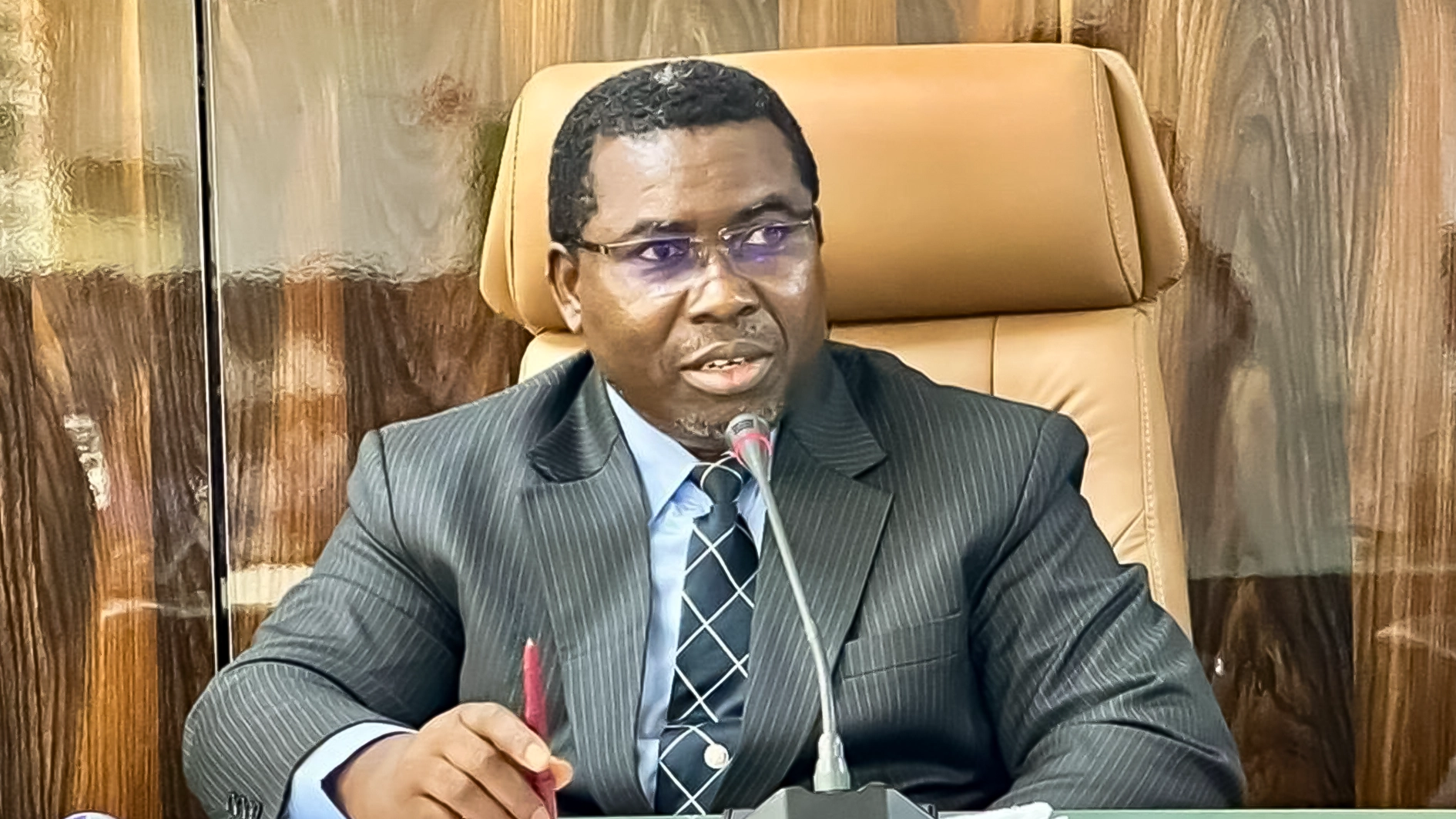
There is a saying that ‘you cannot shave a person’s head in their absence’. However, the reverse is
fast becoming true in the Nigerian electoral system, where the next set of leaders is ‘voted for’ but in the absence of the electorate. SEYE OLUMIDE reports that the oddity looms large and may get worse in the 2027 general elections.
As political parties position themselves for the 2027 general elections and the Independent National Electoral Commission (INEC) fine-tunes preparations for the polls, a more troubling reality is unfolding beyond the mere contest for offices.
Nationwide, millions of eligible voters are increasingly turning their backs on the ballot box, raising fears that voter apathy, rather than political rivalry or insecurity, could pose the greatest threat to the credibility and legitimacy of the elections.
The growing loss of confidence in the electoral process has created what many observers describe as a silent rebellion, with an increasing number of Nigerians opting out of democratic participation. Unless urgently addressed, the trend could inflict lasting damage on the country’s democracy.
A slow and steady decline
Indeed, Nigeria’s return to democratic rule in 1999 was greeted with widespread enthusiasm. Voter turnout exceeded 50 per cent in that election and peaked at nearly 70 per cent in 2003. Since then, participation has declined steadily, falling to about 44 per cent in 2015, 35 per cent in 2019 and a historic low of about 27 per cent in the 2023 presidential election, despite more than 93 million registered voters.
The pattern is equally evident in the number of votes secured by winning presidential candidates. Former President Olusegun Obasanjo polled 18.7 million votes in 1999 and over 24 million in 2003, while the late President Umaru Musa Yar’Adua won with 24.6 million votes in 2007, the highest in Nigeria’s Fourth Republic.

Former President Goodluck Jonathan secured 22.5 million votes in 2011, Muhammadu Buhari won with 15.4 million in 2015 and retained office with 15.2 million in 2019. President Bola Ahmed Tinubu won the 2023 election with 8.79 million votes, almost 16 million fewer than the winner of the 2007 election, despite a significantly larger population and voter register.
Beyond the statistics, interaction with Nigerians in markets, motor parks and workplaces across the country revealed widespread disillusionment.
Many proudly displayed their Permanent Voter Cards (PVCs) but expressed little enthusiasm about participating in the next election. Their verdict was strikingly similar: “What has democracy really done for us?”
For many, the right to vote remains intact, but confidence that elections can improve their lives has steadily diminished.
Why Nigerians are turning away from the ballot
Several stakeholders, among whom are the Deputy Governor of Lagos State, Obafemi Hamzat, erstwhile Minority Leader in the Senate, Olorunnimbe Mamora and others, agreed that voter apathy in Nigeria is driven by a combination of political, economic and institutional factors that have steadily eroded public confidence in elections.
Foremost is the declining trust in the electoral process. Allegations of electoral manipulation, vote-buying, delayed transmission of results, and controversies surrounding the deployment of the Bimodal Voter Accreditation System (BVAS) during the 2023 elections have left many Nigerians questioning whether their votes truly count.
Disappointment with governance has compounded the problem. Successive administrations have struggled to meet public expectations in critical areas such as security, employment, healthcare, education, electricity supply and infrastructure, reinforcing the perception that elections rarely translate into better governance.
Economic hardship has also deepened public disengagement. Rising inflation, unemployment and the soaring cost of living have forced many Nigerians to prioritise daily survival over civic participation.
Insecurity remains another major obstacle. Electoral violence, voter intimidation, attacks on polling units, kidnappings and other security threats have discouraged many citizens from participating in elections. In Lagos, for instance, some members of a particular ethnic group remain reluctant to vote after claiming they were targeted during previous elections.
The increasing monetisation of politics has equally weakened confidence in democracy. Widespread vote-buying and the growing influence of money in elections have created the impression that financial inducement, rather than competence or popular support, determines electoral outcomes.
Political parties have also fuelled public disillusionment through internal crises, manipulated primaries, candidate imposition, frequent defections and the absence of clear ideological differences, leaving many voters with little confidence that meaningful alternatives exist.
Operational challenges, including the late arrival of election officials, malfunctioning technology, relocation of polling units and long queues, have further discouraged participation.
Post-election litigation that overturns results months or even years after polls have been concluded has also strengthened public scepticism about the value of voting.
Another challenge is Nigeria’s inability to accommodate millions of registered voters who reside outside their constituencies on election day. With no provision for absentee voting in general elections, many eligible citizens are effectively excluded from the process.
Taken together, these factors have steadily weakened public confidence in elections, making voter apathy one of the gravest challenges confronting Nigeria’s democracy.
Lagos State Commissioner for Information and Strategy, Gbenga Omotoso, believes the widening gap between voter registration and actual turnout reflects a deeper crisis of confidence in the electoral process.
Similarly, Convener of the Movement for Credible Elections (MCE), Wale Okunniyi, warned that the real challenge ahead of 2027 may not be which political party wins power, but whether enough Nigerians still believe the ballot remains an effective instrument for democratic change.
President of the Yoruba Ronu Leadership Forum, Akin Malaolu, shares the same concern. According to him, the declining turnout reflects far more than civic indifference. Rather, it points to growing public frustration over unfulfilled campaign promises, worsening economic conditions, electoral malpractice and the widespread belief that voting rarely produces better governance.
To these analysts, voter apathy is no longer merely an electoral issue; it has become a test of the country’s democratic legitimacy. Unless confidence in elections is restored, they warn, the greatest challenge confronting the 2027 general elections may not be political competition itself but persuading millions of disillusioned Nigerians that their votes still matter.
The implications of the declining voter turnout are already evident in recent elections.
The June 18, 2022, governorship election in Ekiti State offers a striking example. Of the 989,224 registered voters, only 382,109 cast their ballots, meaning fewer than four in every 10 eligible voters determined the outcome of the poll.
The trend became even more pronounced during the 2023 presidential election. Although Nigeria had more than 93 million registered voters, only about 25 million valid votes were cast, leaving the overwhelming majority of eligible voters outside the electoral process.
These figures underscore a widening disconnect between citizens and democratic governance.
While the 1999 Constitution does not expressly address voter apathy, Section 14(2)(c) provides that “the participation of the people in their government shall be ensured,” making citizens’ involvement in governance a constitutional ideal.
Similarly, Section 2(a) of the Electoral Act 2026 empowers the Independent National Electoral Commission (INEC) to undertake voter and civic education, placing the responsibility for promoting electoral participation primarily on the commission.
Mamora, however, argued that the responsibility extends beyond INEC.
According to him, political parties, civil society organisations, religious institutions, the media and the National Orientation Agency (NOA) all have complementary roles in educating citizens on the value of democratic participation.
“The National Orientation Agency, in particular, must step up voter education. Democracy thrives when citizens understand both their rights and responsibilities,” he said.
Also expressing concern, Lagos State Deputy Governor and APC governorship aspirant, Obafemi Hamzat, described voter apathy as one of the biggest threats to Nigeria’s democracy.
He noted that the highest voter turnout recorded in any local government during the last Lagos State council election was only about 18 per cent, a development he described as alarming.
According to him, many Nigerians have become disillusioned because they no longer trust the electoral process or see tangible benefits from democratic governance.
“People need to feel they are part of the system and that their votes matter,” Hamzat said, stressing that sustained voter education, responsive governance and greater transparency in elections are essential to rebuilding public confidence.
Seasoned public administrator and APC Diaspora stalwart, Khairat Animashaun-Ajiboye, attributed the decline in participation to a widespread feeling among citizens that they no longer matter in the political process.
According to her, many Nigerians believe political leaders will remain in office regardless of the people’s wishes.
“What Nigerians want is the assurance that their votes will count and that their choices will ultimately improve their standard of living. Until they are convinced of that, many will remain indifferent,” she said.
For the 2019 Alliance for Democracy (AD) governorship candidate in Lagos State, Owolabi Salis, meaningful electoral reforms are indispensable.
He argued that allegations of result manipulation, vote-buying, electoral violence and perceived judicial inconsistencies have combined to weaken public confidence in elections.
“People are beginning to feel their votes do not count. Until the integrity of the electoral process is strengthened, voter confidence will remain low,” he said.
Offering another perspective, former Chief Press Secretary to ex-INEC Chairman Mahmood Yakubu, Rotimi Oyakanmi, blamed part of the problem on provisions of the Electoral Act.
He pointed to Section 56, which restricts voters to their designated polling units, noting that millions of Nigerians, including security personnel, journalists, election officials and other workers deployed outside their registration areas, are unable to vote on election day.
He also linked voter apathy to the failure of many elected officials to fulfil campaign promises and the growing spread of misinformation and conspiracy theories surrounding elections.
According to him, these factors have collectively discouraged many eligible voters from participating in the democratic process.
Recognising the danger posed by declining public participation, INEC and the National Orientation Agency have intensified collaboration ahead of the 2027 general elections.
During a recent meeting with NOA Director-General, Lanre Issa-Onilu, INEC Chairman, Professor Joash Amupitan, called for a decentralised grassroots voter education campaign capable of rebuilding public trust in elections.
According to him, voter education must go beyond informing citizens about election dates and procedures to explaining why their votes matter and how legal and technological safeguards are designed to protect electoral outcomes.
He warned that the country faces a deeper challenge than logistics or political competition.
“We must be honest with ourselves,” Amupitan said. “We are battling a silent, dangerous enemy in our electoral ecosystem, voter apathy and deep-seated cynicism.”
His warning captures the challenge confronting Nigeria’s democracy as preparations gather pace for the 2027 general elections.
Political parties may focus on candidates, alliances and campaign strategies, but the success of the elections will ultimately depend on whether millions of disillusioned Nigerians can once again be persuaded that democracy remains capable of improving their lives.
Unless confidence in elections is restored through credible polls, responsive governance, sustained civic education and meaningful electoral reforms, the greatest threat to the 2027 general elections may not be who wins power, but how many Nigerians choose not to participate at all.

