 Follow Us on Google News
 Follow Us on Google Discover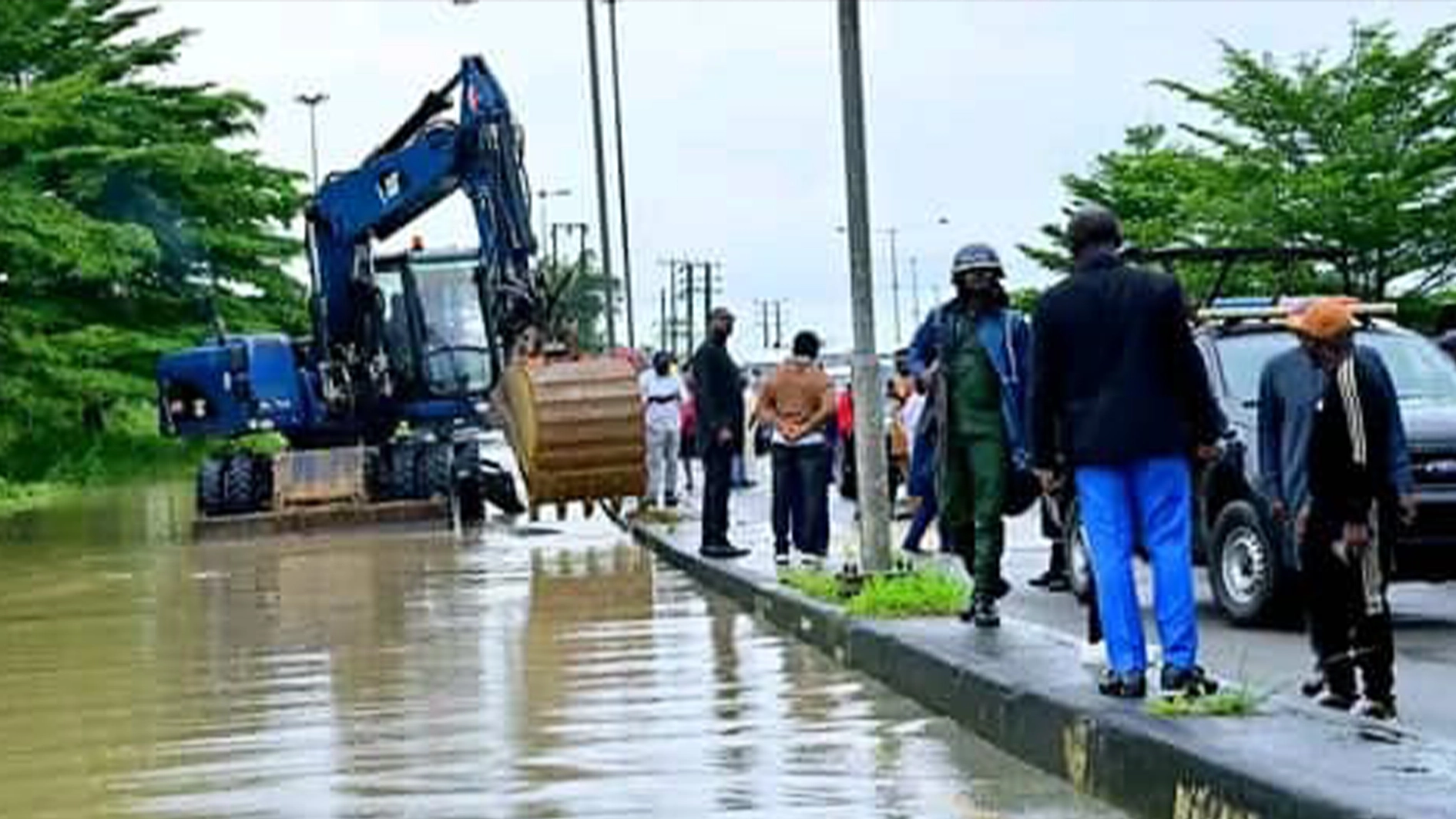
Climate experts have called for stronger flood management strategies at all levels of government to enhance community-based early warning systems and improve preparedness for both rural and urban flooding.
They argued that the challenge is no longer the generation of flood warnings but ensuring that vulnerable communities receive timely information and take appropriate action to reduce the impact of disasters.
The experts also advocated long-term adaptation measures, including investment in resilient infrastructure such as efficient drainage systems, coordinated urban planning and improved land-use management. They stressed the need to end fragmented coordination between federal and sub-national institutions and called for improved data generation to support evidence-based flood management policies.
They spoke at a virtual forum organised by Enough is Enough Nigeria and BudgIT Foundation in partnership with The Cable on the theme: ‘Why do our cities keep flooding despite years of warning, and what has to change to build genuinely flood-resilient communities?’
The 2026 Annual Flood Outlook projected that more than 14,000 communities across 266 local government areas in 33 states are at high risk of flooding. Another 15,597 communities in about 405 local government areas were classified as medium-risk flood zones, while major cities, including Lagos, Abuja, Port Harcourt and Ibadan, were identified as being highly vulnerable to severe urban flooding.
According to the experts, recent flooding in Lagos and cities such as Accra and Kumasi in Ghana has underscored the urgency of translating early warnings into effective action.

Leading the discussion, Co-founder of the International Climate Change Development Initiative (ICCDI) Africa, Olumide Idowu, described flooding as one of the most destructive climate-related disasters affecting communities worldwide.
He noted that Nigeria already has several national and regional early warning systems driven by agencies such as the Nigerian Meteorological Agency (NiMet), state emergency agencies and regional partnerships, including the African Centre of Meteorological Applications for Development (ACMAD), which provide weather forecasts and flood alerts.
However, Idowu said weak local preparedness and poor institutional coordination continue to undermine the effectiveness of these systems. He observed that unlike Europe and parts of Asia, where early warning systems are integrated with emergency response, land-use planning and resilient infrastructure, Nigeria has yet to establish effective mechanisms for translating forecasts into coordinated action.
“Risk management should reinforce the importance of moving from early warning to early action. We must strengthen community-based early warning systems, invest in local disaster preparedness and integrate indigenous knowledge with scientific forecasting,” he said.
Idowu urged governments to provide clear guidance and response procedures for communities, stressing that early warnings alone do not save lives. “Flood disasters are not simply the result of extreme rainfall. They are often the consequence of weak planning, inadequate preparedness and delayed action.
A warning that never reaches the most vulnerable people is not an early warning; it is a missed opportunity to protect lives, livelihoods and communities,” he added.
Head of Natural Resources and Climate Governance at BudgIT Foundation, Opaluwa Enebi, said all tiers of government allocate funds annually for climate adaptation and mitigation, although the funding is often inadequate.
He disclosed that the Federal Ministry of Environment received about N7 billion for flood control in 2024, with a similar allocation in 2025, while approximately N80 billion has been earmarked for flood and erosion control in the 2026 budget.
According to him, the actual disbursement depends on the availability of revenue and budget implementation. “Despite these allocations, hardly any communities across the country are free from flooding. Whether in the North, South-West or South-South, flooding has become a recurring challenge,” he said.
Enebi expressed concern over poor budget implementation for climate-related projects.
“Climate projects are often among the first to suffer funding cuts. Our analysis for the first half of the year showed that in one state, more than 95 per cent of climate projects had received no funding.”
He stressed that state and local governments, being the first responders to disasters, should assume greater responsibility for flood management and climate adaptation.
On urban flooding, Enebi blamed poor waste management and weak planning practices. “Much of the flooding in our cities results from what I describe as user error. Drainage channels are routinely used as refuse dumps, leading to blockages. Even where drainage systems are desilted, as in Lagos, the excavated silt is often left beside the drains and washed back during subsequent rainfall.”
He added that inadequate waste management, poor maintenance of drainage infrastructure and weak urban planning continue to worsen flooding in many Nigerian cities.

