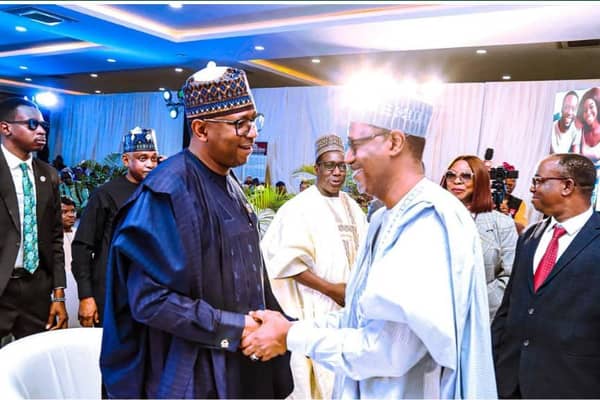
THE Federal Government has charged quantity surveyors to uphold the highest standards of cost control, contract management and value optimisation in the delivery of national infrastructure, warning that Nigeria can no longer afford project wastage, leakages or inflated costs.
Vice President Kashim Shettima, speaking at the 2025 NIQS Biennial Conference and General Meeting in Abuja, said the administration’s bold fiscal reforms must be matched with discipline in public expenditure, procurement and project implementation.
Shettima, represented by the Special Adviser to the President on Economic Affairs, Tope Fasua, described quantity surveyors as “professionals entrusted with cost management, value assurance, financial discipline and the stewardship of public resources.”
He added, “As we rebuild Nigeria, the government needs partners, not contractors. We need professionals of conscience who will speak truth to power, flag independent risks, and protect public costs with realistic zeal.”
Shettima said the administration has prioritised infrastructure as a catalyst for job creation, industrialisation and national competitiveness. Ongoing efforts, he noted, include the strengthening of transport corridors, expansion of energy infrastructure, investments in housing, revitalisation of water and sanitation systems, and enhancement of digital connectivity.
To ensure value for money, he emphasised the need to strengthen procurement governance, adopt AI-enabled project monitoring, enforce transparent benchmarking, and develop digital cost management systems.
He added that the government would deepen collaboration with NIQS in establishing a national infrastructure cost database that eliminates arbitrary pricing.
Shettima cautioned against abandoned projects, inflated contracts and variations disguised as cost overruns. He stressed the shift from “building projects to building systems,” driven by data, integrated planning and results-based execution.
According to the Vice President, Nigeria requires a new generation of professionals “courageous enough to challenge reckless estimates, resist pressure to compromise, and uphold the sanctity of public trust.”
Beyond technical expertise, he urged experienced practitioners to mentor younger surveyors, instilling values that safeguard national resources. “Building Nigeria is not just a policy agenda; it is a moral duty,” he said.
He reaffirmed the government’s commitment to an infrastructure landscape free of corruption, “where projects are delivered on time, within budgets, and where fiscal reforms translate to better roads, safer cities, functional schools, vibrant industries and a stronger economy.”
Minister of Housing and Urban Development, Ahmed Dangiwa, said Nigerians expect better use of public funds, especially as the nation navigates economic transition.
He urged quantity surveyors to uphold integrity and enhance procurement transparency, noting that no national development effort can succeed “without discipline, checks and balances and professional judgment.”
Dangiwa, an architect, said the national urban renewal and slum upgrade programme, now active in 150 locations, requires NIQS guidance to ensure efficient design, realistic costing and accountability. He also pointed to the National Land Title Administration Programme as another area that demands structured evaluation and cost discipline.
NIQS President, Mr Kene Nzekwe, described the conference theme as timely, given the country’s economic challenges, infrastructure gaps and governance concerns. He said Nigeria stands at a critical juncture in its quest to diversify the economy, improve infrastructure and enhance governance.
Nzekwe noted that quantity surveyors remain pivotal to national progress through cost management, procurement oversight and project delivery. Their skills, he stressed, can ensure value for money and improve living standards.
He said, “Nigeria is turning the corner with far-reaching macro-fiscal reforms. Sustaining these reforms and scaling up social protection for the poor and vulnerable is critical to putting the economy back on track.”
Nzekwe added that NIQS is committed to embedding these reforms in its procedures to enhance service delivery and strengthen expert cost advisory functions.