 Follow Us on Google News


 Follow Us on Google Discover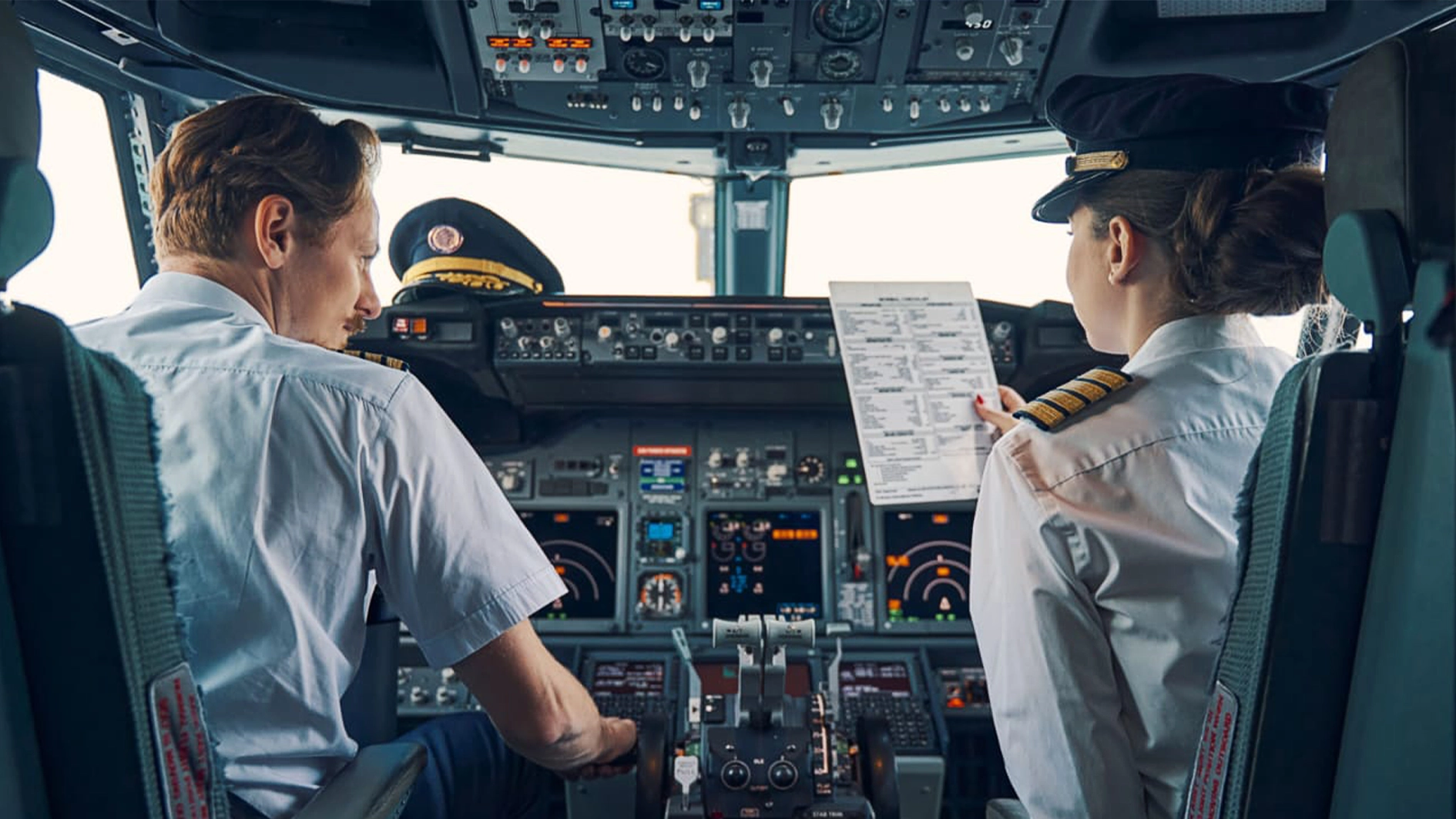
Experts in the Nigerian aviation industry have said that the country can learn from the recent attempted hijacking of a FlyDubai flight by building on existing aviation security arrangements through strengthening personnel vetting, lawful intelligence sharing, access management, crew training, and the reporting of security concerns, OLUSEGUN KOIKI reports.
The cockpit, long regarded as the most secure section of an aircraft, is increasingly at the centre of threats confronting the global aviation industry.
For decades, aviation security has concentrated heavily on preventing terrorists, hijackers and other unauthorised persons from gaining access to aircraft, especially after the September 11, 2001 attacks in the United States.
Prior to the attacks, the cockpit was wide open for viewing even by the air passengers, but the attacks compelled a change in the design of aircraft by manufacturers and a stringent review of aviation safety rules by different organisations, including the International Civil Aviation Organisation (ICAO) and the U.S. Federal Aviation Administration (FAA).
However, the alleged attack by a co-pilot on the captain of a FlyDubai aircraft operating Flight FZ1073 on September 30 has brought a less visible, but potentially significant vulnerability into focus.
The incident, which occurred on a flight from Dubai to Tel Aviv, Israel, raised fresh concerns about the adequacy of existing safeguards against insider threats, particularly those originating from the cockpit.

The FlyDubai incident was not the first time threats had emanated from the cockpit, but the airline, crew and passengers were lucky to escape the latest threat.
For instance, on March 24, 2015, a Germanwings Flight 9525, an Airbus A320 flying from Barcelona to Düsseldorf, was intentionally crashed into the French Alps by co-pilot Andreas Lubitz, killing all 150 persons on board.
The hijacking happened when the captain left the cockpit for a brief moment. Investigations by the French Bureau of Enquiry and Analysis for Civil Aviation Safety (BEA), which led the technical investigation team, revealed that Lubitz locked the reinforced door from the inside.
He then manually adjusted the autopilot to change the altitude from 38,000 feet down to 100 feet, initiating a controlled descent into the mountains.
Investigation also revealed that Lubitz had suffered from a severe mental disorder with psychotic symptoms, which he concealed from his employer and aviation authorities.
Also, on February 17, 2014, the co-pilot of Ethiopian Airlines Flight 702, Boeing 767 aircraft, Hailemedhin Tegegn, 31, locked the pilot out of the cockpit when the captain used the restroom while the plane was flying from Addis Ababa to Rome.
The co-pilot flew the aircraft to Geneva, Switzerland and requested political asylum before landing safely. Though no fatalities occurred among the 202 people on board, the co-pilot was subsequently sentenced to a 20-year jail term in absentia by a court in Ethiopia.
Aviation experts told The Guardian that the latest threat should serve as a wake-up call for regulators, airlines and security agencies, including those in Nigeria.
They said it was necessary for authorities to reassess how they identify, monitor and manage personnel entrusted with the responsibility of operating aircraft and protecting passengers.
They posited that the very system designed to guarantee operational safety, built on professional competence, mutual confidence and clearly defined responsibilities, could become susceptible when a trusted individual deliberately abuses the authority and access attached to the job.
The Chief Executive Officer (CEO) of Nigame Aircraft Consultancy Incorporation, Olufemi Adeniji, said insider threats posed a serious danger to the global industry.
Adeniji said that individuals with legitimate access could exploit their knowledge of procedures, equipment and security arrangements in ways that outsiders may find difficult.
Adeniji explained that the major challenge was not just how to keep unauthorised people out of the cockpit, but how to ensure that those authorised to occupy it remained fit, trustworthy and accountable throughout their careers.
According to him, insider threats are among the major exposures in aviation because insiders already possess authorised access to sensitive facilities, aircraft, operational systems, cargo, baggage and security information.
He mentioned insider threats in the aviation sector, including airline employees, pilots, engineers, ground handlers, contractors, temporary workers, and other personnel whose professional responsibilities, he said, provide access to restricted areas or safety-critical operations.
He added: “The threat can be deliberate, motivated by financial gain, ideology, revenge or coercion. It can also arise from negligence, complacency, failure to follow procedures or an individual’s inability to recognise and respond appropriately to a security risk.
“Unlike an outsider, who must first overcome security barriers, an insider may already possess the identification, technical knowledge and institutional familiarity required to bypass or exploit existing safeguards.
“This makes insider threats difficult to manage. An individual may have passed the necessary background checks, obtained the relevant licences and demonstrated the required professional competence before circumstances change or previously unknown information emerges.”
Adeniji opined that aviation security must consequently extend beyond conventional passenger screening to encompass personnel vetting, access controls, security awareness, reporting mechanisms and continuous risk assessment.
He noted that Nigeria had established an aviation security framework, including the National Civil Aviation Security Programme and the National Aviation Security Risk Management Team, established by the Nigeria Civil Aviation Authority (NCAA) in February 2026.
According to him, the team was intended to strengthen the identification, assessment and mitigation of aviation security risks, including those associated with insider threats.
But he noted that the existence of regulations and institutional structures does not automatically eliminate threats, arguing that their effectiveness depended on consistent implementation, credible intelligence, appropriate technology, enforcement and cooperation among agencies and aviation service providers.
He advised Nigeria’s authorities that security must go beyond the passenger, stressing that vetting must be continuous, authorised access must be controlled, aviation organisations need a strong reporting culture, while mental and behavioural warning signs should not be ignored.
“The next step should be to move from compliance-based security to intelligence-led, risk-based insider-threat management,” Adeniji added.
Besides, the former Rector of the Nigerian College of Aviation Technology (NCAT), Samuel Caulcrick, said the aviation industry depended on absolute certainty that every professional, from aircraft engineers and handlers to air traffic controllers and flight crew, performed according to the highest regulatory standards.
He explained that the FlyDubai Flight FZ1073 incident had ensured the need for the industry to re-examine its approach to insider threats.
He identified operational, systemic trust and regulatory surveillance as the major pillars supporting aviation safety.
He said: “Pilots step into the cockpit trusting that engineers have released a perfectly airworthy machine, handlers have loaded cargo correctly, and fuelers have provided the right grade and amount of fuel.
“The public steps into an aircraft trusting that national regulators like the Federal Aviation Administration (FAA) and European Union Aviation Safety Agency (EASA) are actively auditing, certifying and monitoring every moving part.
“Trust is not left to chance. It is maintained through continuous surveillance, unannounced audits, mandatory safety reporting, and strict licensing. This is why aviation relies on a ‘Just Culture’ that encourages transparent error reporting.”
According to him, the FlyDubai incident demonstrated the danger inherent in a system in which a trusted professional could turn against the organisation.
Caulcrick expressed that the incident raised fundamental questions about the effectiveness of existing aviation security measures, including reinforced cockpit doors, access control and the monitoring of safety-critical personnel.
He noted that cockpit doors were strengthened after the September 11, 2001 terrorist attacks to prevent unauthorised persons from gaining access to the flight deck.
However, he said the FlyDubai incident, as well as the 2015 Germanwings crash, demonstrated that security measures designed to keep outsiders out could also create vulnerabilities when the threat came from within the cockpit.
Caulcrick therefore called for a shift from reliance on professional trust to active and continuous verification of personnel in safety-critical positions.
Besides, the Director, Research, Zenith Travels Limited, Olumide Ohunayo, said the insider threat was a global security challenge affecting not only aviation but the entire security and safety ecosystem.
Ohunayo said insiders would always look for ways to exploit weaknesses in existing systems, making it necessary for authorities to continually review security arrangements based on practical experiences.
He, however, warned that the challenge could be more significant in Nigeria because of weaknesses in citizen data management and inadequate coordination among security and regulatory agencies.
He advocated greater deployment of advanced technology to strengthen the identification and monitoring of potential insider threats.
Besides, Ohunayo urged the Nigerian aviation industry to implement more rigorous, ongoing background checks for safety-critical professionals.
He maintained that such checks should not be treated as a one-off exercise, stressing that the frequency should be increased where necessary.
He also called for greater emphasis on psychological fitness alongside the traditional medical assessment of aviation personnel.
Ohunayo further urged security agencies and aviation stakeholders to improve intelligence sharing and coordination, particularly in the screening and monitoring of personnel working in security, ground handling and other technical areas.

