 Follow Us on Google News


 Follow Us on Google Discover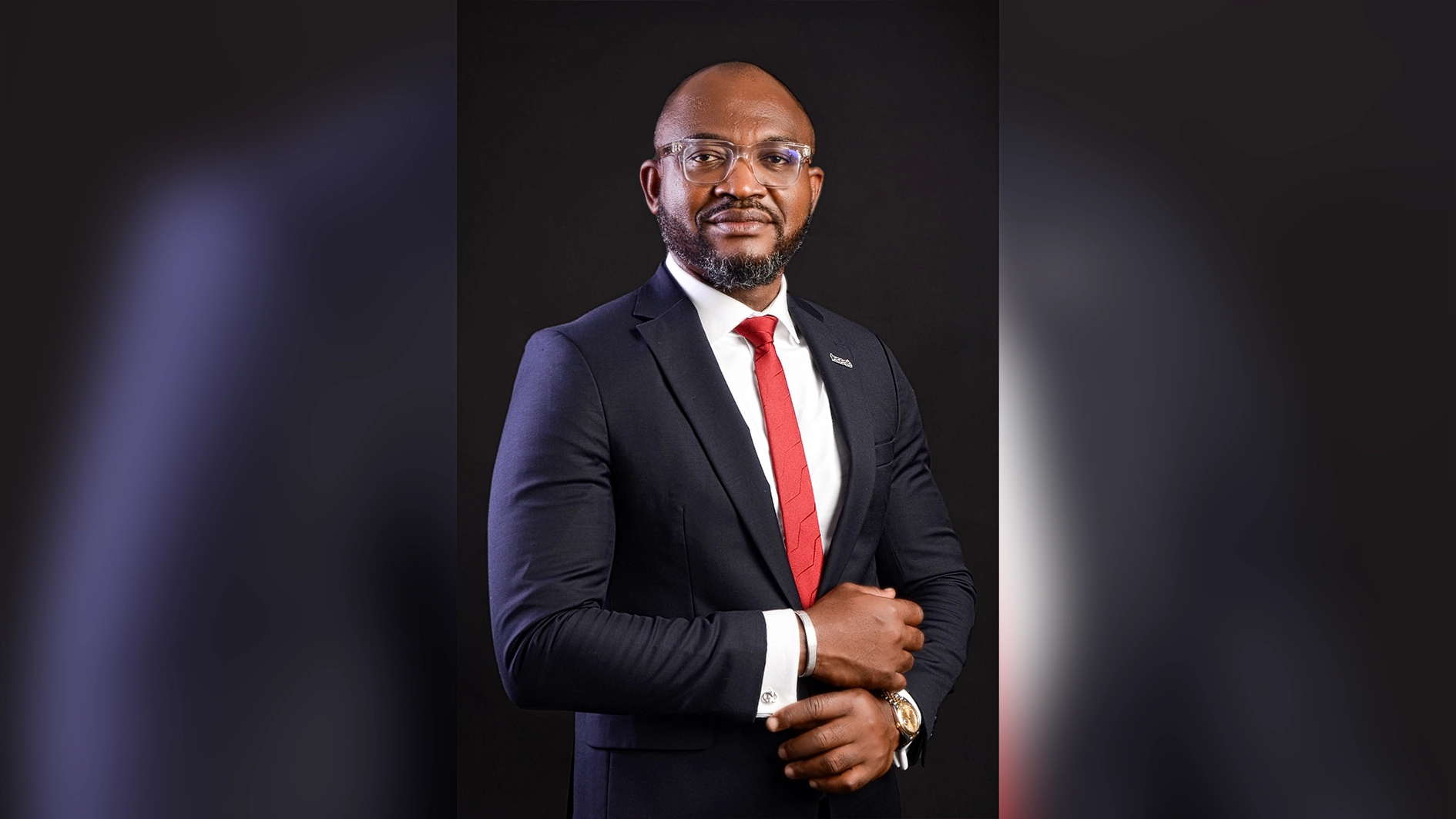
For a man whose career has spanned finance, consulting and technology, the through-line has always been problem solving. Engr. Kingsley Eze, FNSE, Chief Executive Officer, Tenece Ltd, began his professional career at Diamond Bank as a Financial Control Analyst, a role that grounded him in discipline, numbers and the inner workings of business. From there he made a deliberate pivot into technology with Anderson Consulting, drawn by the growing weight of the internet and digital tools in shaping commercial outcomes.
That shift clarified something for him. Engineering, in his view, is not defined by a title or a discipline alone. It is the practice of identifying a problem, crafting practical solutions, and applying knowledge and technology to deliver better results. It is that same principle that now anchors his commitment to engineering in Nigeria. He sees the profession as central to addressing the country’s most pressing needs, from improving business performance and strengthening public service to building infrastructure and creating solutions tailored to local realities. Nigeria’s challenges, he notes, are particular to its context. Addressing them effectively will require engineers capable of developing solutions that are equally specific, practical and rooted in the environment they are meant to serve.
In this special report, Engr. Kingsley Eze, FNSE, shares his perspective on the significant milestones achieved by Tenece Ltd, the key challenges facing the engineering industry, and his projections for the sector’s future.
What core values guide your leadership and the operations of your organization?
At Tenece, we are guided by deferred compensation and the discipline of delayed gratification. Our ambition is not to build a company that performs well today and fades tomorrow. We are building an institution designed to outlast all of us.
That requires a long-term view, making investments now whose full returns may not be immediately visible. It demands patience, discipline, and a conscious choice to prioritize the future over short-term gains.
We also hold excellence as a way of life. For us, excellence is not conditional. It is not reserved for convenient moments or for when people are watching. It is the standard that shapes how we approach work every single day.

We operate in an environment where mediocrity is sometimes accepted and “good enough” is often considered sufficient. Tenece exists to prove a different point. We are committed to demonstrating that it is possible to build an organization where excellence, professionalism, and high standards are embedded in how our people think, decide, and deliver.
As the CEO of Tenece Ltd, what key opportunities do you see for engineers and engineering firms as Nigeria pursues economic diversification and infrastructure development?
I believe Nigeria’s progress will be determined by our ability to develop solutions tailored to our peculiar challenges. That creates enormous opportunities for engineers and engineering firms, because they sit at the center of designing and delivering those solutions.
The opportunities cut across nearly every aspect of national development. Civil engineers will be essential to roads, railways, housing and other physical infrastructure. Electrical engineers will be critical to closing the gaps in power and energy. Computer and electronics engineers will drive the build-out of our digital infrastructure and technology capabilities.
Beyond specific disciplines, however, Nigeria must take ownership of the engineering of its own infrastructure. We cannot continue to rely on external expertise to design, build, and maintain the systems that underpin our economy.
If we are serious about economic diversification and global competitiveness, we must build the local capacity to understand our problems, design context-appropriate solutions, execute them at scale, and continuously improve them. That, to me, is the defining opportunity for Nigerian engineers and engineering firms
Can you share some of your organization’s ongoing projects?
We are making significant investments in building our artificial intelligence capabilities and offerings. Our ambition is for Tenece to emerge as a leading AI company in Africa, and to play a defining role in helping African corporations make the transition into an AI-driven future.
We view AI as more than the next technology trend. It will fundamentally reshape how businesses operate, how decisions are made, and how value is created. Our focus is on positioning ourselves to guide organizations through that transition and help them integrate AI in ways that are practical and impactful.
In parallel, through the Genesys Foundation, we are investing in the development of the technical and engineering talent that will power Nigeria’s digital and economic future. We recognize that infrastructure and solutions are only as strong as the people who build and sustain them. Talent development is therefore central to our long-term strategy.
We are also nearing completion of the Tenece Experience Centre. The Centre is designed as a space where people can see, touch, and understand what the future of technology looks like. Our goal is to make emerging technologies more tangible, and to demonstrate how they can be applied to solve real business and societal challenges.
As a stakeholder in the industry, do you think regulatory bodies are doing enough to eradicate quackery?
Regulation is critical to eradicating quackery and protecting the integrity of the engineering profession. Standards matter, especially in a field where the quality of engineering work directly affects lives and the country’s infrastructure.
Bodies such as the Nigerian Society of Engineers, of which I am a Fellow, are doing commendable work in promoting professionalism and upholding standards. That said, I believe there is still more ground to cover.
One area with significant potential is stronger collaboration between industry and academia. We must ensure closer alignment between what our academic institutions produce and the skills and competencies that industry actually requires.
If we are to raise standards across the profession, it starts with the pipeline. Engineers entering the profession must be properly trained, adequately equipped, and exposed to the realities of modern engineering practice. Deeper partnerships among regulators, academia, and industry are essential to achieving that.
What policy interventions or government support are critical to enable Nigerian engineers to compete globally and deliver world-class projects locally?
The most important intervention is education. We must build better delivery models that produce the right talent and skills for the economy we intend to create.
The world is changing rapidly, and the demands on engineers are changing with it. We cannot rely solely on traditional approaches to engineering education and expect our graduates to compete effectively in a global economy.
This will require coordinated action among government, academia, and industry. Government must provide the policy direction and funding environment. Academia must deliver quality education and research. Industry must define the practical skills and competencies needed in the workplace.
When these three work in alignment, we can develop a talent system that produces engineers who are not only academically sound, but capable of solving real problems and competing at a global standard.
What is your assessment of the Nigerian Content Development and Monitoring Board (NCDMB) in supporting local firms?
NCDMB plays an important role in deepening local participation and building the capacity of Nigerian firms. However, there is room for the organization to be more visible and to engage more directly with local firms and other industry stakeholders.
Greater visibility and engagement would help local businesses better understand the opportunities available, while also giving NCDMB clearer insight into the challenges firms face on the ground.
The ultimate goal should be to create an environment where Nigerian firms are not just participants, but are building the capabilities to compete effectively and deliver increasingly complex projects.
How is your organization preparing for the future in terms of talent development, sustainability, and the adoption of emerging technologies like AI, renewable energy, and smart infrastructure?
We are investing deliberately in all three areas because the future will demand a different approach to technology, talent, and sustainability.
On artificial intelligence, we are actively building our AI capabilities and solutions. Our ambition is to help African businesses make a practical transition into an AI-enabled future.
In renewable energy, we are partnering with GreenAge to deliver local solutions. Nigeria’s energy challenges require approaches that are practical, sustainable, and suited to our context, and we see renewable energy playing an increasingly central role in that mix.
Talent development is equally core to our strategy. Through the Genesys Foundation, we are building the technical talent that will drive Nigeria’s digital and economic future. We believe that adopting emerging technologies and delivering world-class infrastructure must go hand in hand with developing the people who can design, implement, and sustain them.
Ultimately, our focus is on preparing for the future rather than waiting for it. We are building the technology, the talent, and the capabilities that will enable Nigerian and African businesses to participate meaningfully in the next phase of global economic development.

