 Follow Us on Google News


 Follow Us on Google Discover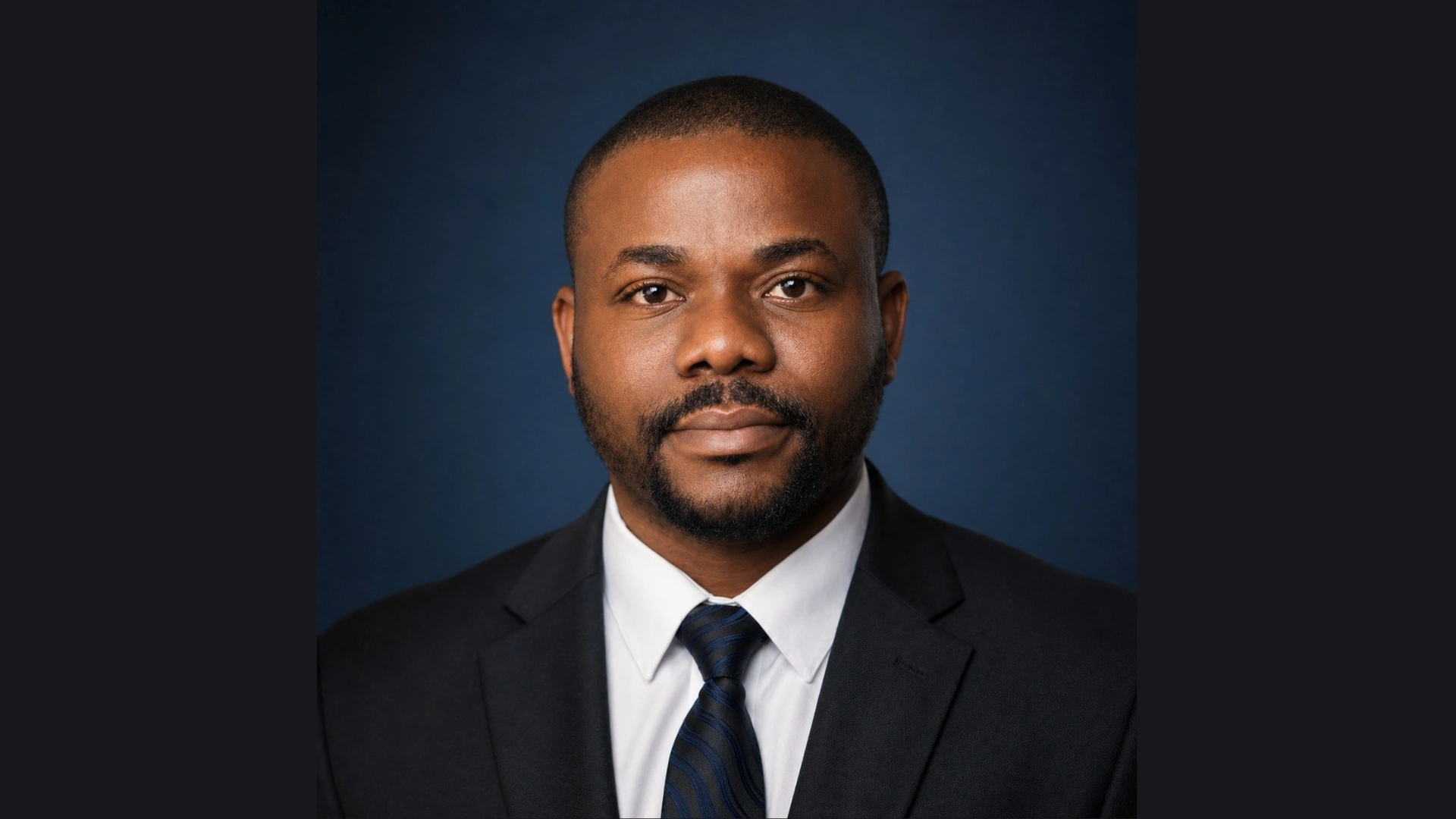
Artificial intelligence is reshaping healthcare, finance, telecommunications, education, government, and nearly every sector of the global economy. Organisations are investing heavily in machine learning and automation to improve productivity and decision-making. Yet one challenge continues to receive far less attention than it deserves. The quality and integrity of the data that powers these intelligent systems.
According to data integrity and artificial intelligence governance specialist James Odinaka-Olisa Okonkwo, the future of artificial intelligence will not be determined by increasingly sophisticated algorithms alone. It will be determined by whether organisations can build trustworthy data ecosystems that produce trustworthy decisions.
Okonkwo’s career reflects a unique intersection of telecommunications engineering, communication systems research, predictive analytics, machine learning, organisational intelligence, and enterprise data governance. From designing and maintaining critical communications infrastructure to developing predictive analytical models and leading enterprise data governance initiatives, his work has consistently focused on one objective: helping organisations make better decisions through reliable information.
In this interview, he discusses the evolution of his career, the growing importance of data integrity, and why responsible governance will become one of the defining challenges of the artificial intelligence era.
Your career began in telecommunications engineering. How did that experience influence your interest in artificial intelligence and data integrity?
My career began with telecommunications infrastructure, working with fibre optic networks, DWDM transmission systems, and national network operations. Our responsibility was to maintain reliable communication systems because millions of people depended on those networks every day.

Working in that environment taught me something that has stayed with me throughout my career. Systems rarely fail without warning. They produce signals that indicate future problems long before failure occurs. The challenge is recognising those signals early enough to respond.
As I worked with operational data, I realised that the real value was not only in the physical infrastructure but in the information generated by that infrastructure. Hidden inside that data were patterns that could predict future events and improve decision-making.
That realisation shifted my focus from infrastructure itself to the intelligence contained within data. Today that same philosophy guides my work in data integrity and artificial intelligence governance.
You later conducted research in cognitive radio and intelligent spectrum detection. How does that research relate to your current work?
My research focused on how wireless communication systems detect useful signals in environments filled with uncertainty and interference.
Although that work was rooted in telecommunications engineering, the underlying principle applies across many disciplines.
Every intelligent system must distinguish meaningful information from background noise. Whether the objective is detecting radio signals, forecasting crime patterns, improving healthcare delivery, managing organisational performance, or allocating community resources, success depends on identifying reliable information within large volumes of uncertainty.
That research reinforced an important lesson for me. Intelligence begins with trustworthy information.
You later pursued graduate studies in data analytics and machine learning. What inspired that transition?
I wanted to move beyond describing historical events and begin understanding future possibilities.
Data analytics enables organisations to recognise patterns, forecast outcomes, anticipate risks, optimise operations, and improve strategic decisions.
During my graduate studies, I worked on predictive analytics projects involving crime forecasting, public safety analysis, and machine learning applications for weather prediction. Although these projects addressed different industries, they revealed a common principle.
Complex systems generate observable patterns before major events occur. Organisations that recognise those patterns early can respond more effectively and make significantly better decisions.
That idea continues to influence both my research interests and professional work.
Today you lead enterprise data integrity initiatives. Why has data integrity become such an important issue?
Artificial intelligence is only as reliable as the information that supports it.
Many organisations invest heavily in advanced technology while paying comparatively little attention to data governance, validation, quality assurance, and accountability.
That creates significant risk because inaccurate information inevitably produces inaccurate conclusions.
Reliable data improves forecasting, strategic planning, funding decisions, compliance reporting, operational efficiency, and executive decision-making. Poor quality data weakens every one of those functions.
Before organisations can trust artificial intelligence, they must first establish confidence in the integrity of their data.
Discussions about artificial intelligence often focus on automation. You emphasise governance instead. Why?
Technology without governance introduces unnecessary risk. Organisations need intelligent systems that operate transparently and whose recommendations can be understood, explained, and evaluated.
Artificial intelligence should strengthen human judgment by providing better evidence and deeper insight rather than replacing responsible decision-making.
Responsible governance ensures that technological innovation remains aligned with ethical principles, organisational accountability, and public expectations. Innovation and governance should evolve together.
How do you see artificial intelligence transforming nonprofit organisations and public institutions?
Public institutions and nonprofit organisations generate enormous amounts of operational and community data every day. When managed properly, that information can improve funding decisions, identify underserved populations, measure long-term outcomes, strengthen accountability, and support evidence-based policymaking.
Artificial intelligence creates opportunities to learn continuously from those datasets and respond more effectively to emerging needs.
The greatest opportunity is not replacing people. It is enabling people to make better decisions using better information.
Your experience spans engineering, analytics, research, and organisational leadership. What connects those experiences?
The connecting principle has always been improving decision-making. Engineering taught me how systems function. Research taught me how systems behave under uncertainty.
Analytics taught me how to recognise meaningful patterns. Data governance taught me that information must be trustworthy before it becomes valuable.
Every stage of my career has reinforced the same conclusion. Better information produces better decisions.
What do you believe intelligent organisations will look like in the future?
The next generation of organisations will move beyond collecting information.
They will continuously learn from data, anticipate change, identify emerging risks, optimise operations, and adapt in real time.
The organisations that succeed will not necessarily possess the largest datasets.
They will possess the highest quality information supported by strong governance frameworks and intelligent decision systems.
In the coming decade, trustworthy data will become one of the most valuable strategic assets any institution can possess.
What advice would you offer policymakers, executives, and young professionals entering this field?
Invest in data integrity before investing in artificial intelligence. Develop governance alongside innovation. Build organisations that value evidence, transparency, accountability, and responsible technology.
Artificial intelligence will continue to transform society, but public confidence in those systems will ultimately depend on the integrity of the information behind them.
The future belongs to organisations that build intelligence on a foundation of trust.

