 Follow Us on Google News
 Follow Us on Google Discover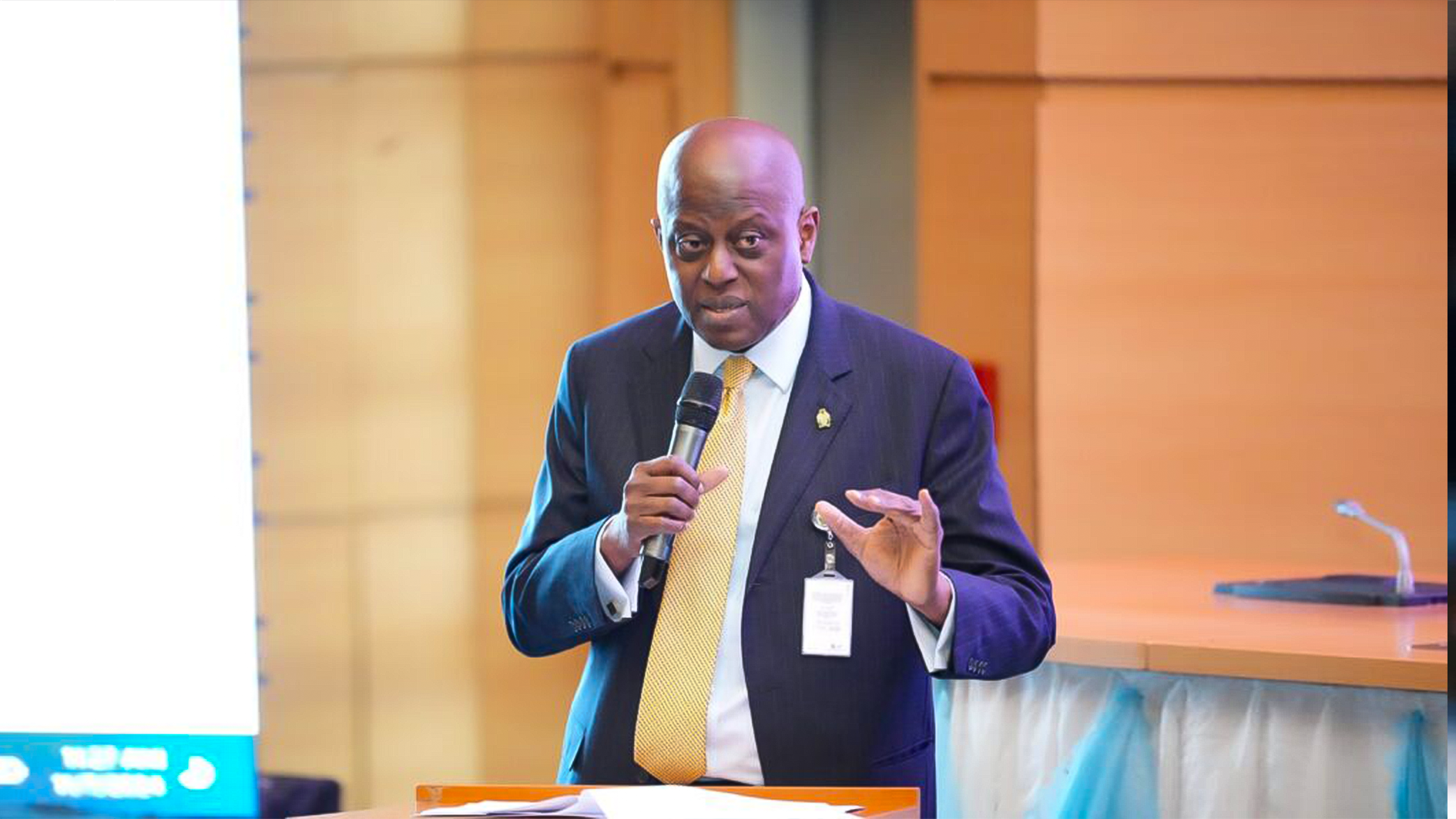
…says banks lack footprint to reach millions, fintechs are bridging the gap
…financial inclusion must protect Nigerians from shocks, not just move money
…Cardoso: Price stability, consumer protection critical to deepen inclusion
Emir of Kano and Former Governor of the Central Bank of Nigeria (CBN), Sanusi Lamido Sanusi, has admitted that he was wrong to delay the entry of telecommunications companies into Nigeria’s financial services space, saying the decision slowed the expansion of financial inclusion.
Speaking at the launch of the Access to Financial Services in Nigeria (A2F) 2026 Survey Report on Wednesday in Abuja, Sanusi said his decision was influenced by concerns over the safety of depositors’ funds following the banking crisis at the time.
However, reflecting on his tenure as CBN governor, he said the subsequent growth of fintechs and mobile-based financial services had demonstrated that telcos could have accelerated financial inclusion much earlier.

“I’m responsible for delaying the entry of telcos into this space
“Part of the challenge, of course, was we had just come out of a banking crisis where we were worried about depositors’ funds, and I wasn’t comfortable allowing companies that I was not the primary regulator of to have access to a huge pool of funds,”Sanusi said.
Sanusi said that, with hindsight, the decision showed how policies driven by legitimate concerns could produce unintended consequences.
“I do think if I had allowed that to happen, there would have been much more progress,” he said, while commending subsequent CBN administrations for opening the space to telecommunications companies and fintech operators.
According to him, financial inclusion has advanced more rapidly in recent years because digital financial service providers have been able to reach parts of the country that conventional banks struggle to serve.
“I think we’ve made more progress in the last few years than we did in the first one because the banks simply don’t have the boots on the ground. They don’t have the footprint to do it,” he said.
The former CBN governor said the next phase of financial inclusion should therefore focus not only on increasing the number of people who can access financial services but also on building products around the financial activities Nigerians already undertake every day.
He urged the CBN and other financial regulators to examine the large volumes of transactions passing through fintech and payment platforms and develop mechanisms that can convert a portion of those flows into savings, insurance and pension products.
“If one company is moving $360 billion, which is more than your GDP, you can’t ignore that company,” Sanusi said.
He suggested that small deductions from everyday transactions could gradually build financial buffers for people who may otherwise struggle to make large, regular contributions to formal savings or insurance schemes.
“People understand, okay, you don’t have to come and pay N1,000 or N2,000. A small amount every day can build over time, over transactions, build up a pool of savings,” he said.
Sanusi also argued that financial inclusion should provide protection against economic shocks, particularly for low-income households, farmers and small businesses.
He cited market fires and poor harvests as examples of events that can wipe out years of savings and investment for traders and farmers who lack insurance coverage.
“You spend all this money, you build all this inventory, you make a lot of money one day, and at this point, one fire destroys you, one bad crop destroys you,” he said.
He called for closer collaboration among financial regulators, including the CBN, PenCom and the National Insurance Commission, to develop products that combine savings, pensions and insurance while using existing transaction data and digital infrastructure.
Sanusi said the regulatory framework should encourage co-creation rather than having agencies operate independently, arguing that existing financial infrastructure and transaction data could be used to build products tailored to the needs of different groups.
He also stressed the importance of financial literacy, particularly in regions where access to formal financial services remains relatively low.
According to him, the financial inclusion strategy must recognise differences in economic conditions across Nigeria rather than rely on experiences in major commercial centres.
He added that access to smartphones and digital financial services in urban centres does not necessarily represent conditions in poorer parts of the country.
Sanusi said financial inclusion should ultimately be measured by whether it helps households build savings, access insurance, secure pensions and withstand economic shocks, rather than simply by the volume or number of financial transactions.
He maintained that controlling inflation remains fundamental to this objective because persistent price increases erode the value of savings and weaken households’ ability to build financial security.
“There is no enemy to savings, no enemy to wealth that is bigger than inflation,” he said.
Sanusi urged policymakers to maintain focus on price stability while using the country’s expanding digital financial infrastructure to build products that connect Nigerians to long-term financial security.
He said the opportunity now lies in using the transaction data and digital platforms already available to create financial products that work around Nigerians’ everyday economic activities, rather than expecting low-income households to adapt to products designed for formal or higher-income customers.
Also speaking at the event,CBN Governor, Olayemi Cardoso said that Nigeria’s financial inclusion agenda must move beyond opening bank accounts and expanding access points to delivering tangible improvements in the financial wellbeing and resilience of Nigerians.
He also said exchange-rate volatility affects business planning, investment and the cost of essential inputs, making macroeconomic stability an important foundation for meaningful financial inclusion.
Cardoso said the CBN had, since 2024, refocused its core mandate on monetary and price stability through tighter liquidity management, improved monetary-fiscal coordination and more consistent use of monetary policy instruments.
He added that the apex bank was transitioning towards an inflation-targeting framework designed to place price stability at the centre of monetary policy while improving transparency, accountability and policy communication.
On banking-sector reforms, Cardoso said the recapitalisation programme was intended to ensure that banks possess the capital, governance and risk-management capacity required to support a growing Nigerian economy.
He also disclosed that the CBN had commenced work on the next phase of the National Financial Inclusion Strategy, NFIS 4.0, following completion of the review of the previous strategy.
The new approach, he said, would focus increasingly on data-driven and accountable inclusion, sub-national delivery, consumer protection and digital financial safety.
Cardoso further announced plans for geospatial mapping of financial access points to establish a national repository showing where financial services are available, where gaps exist and how payment channels perform.
The initiative is expected to combine location, institutional, operational and transaction information to support supervision, policymaking and more targeted investment in underserved communities.
Cardoso said the latest A2F findings should serve as an accountability instrument for policymakers, financial institutions and other stakeholders, providing evidence on who participates in the financial system, how financial services are being used and whether access is translating into stronger households, more resilient businesses and wider economic opportunities.
The A2F survey, conducted biennially by Enhancing Financial Inclusion and Advancement (EFInA), has tracked Nigeria’s financial inclusion journey since 2008. The 2026 edition is the ninth in the series and places greater emphasis on financial health, resilience, vulnerability, trust and the economic outcomes of financial services.
The CBN governor recalled that the 2023 survey recorded an increase in overall financial inclusion to 74 per cent, while formal financial inclusion rose to 64 per cent and financial exclusion fell to 26 per cent.
Despite the progress, Cardoso noted that significant gaps remain, particularly between rural and urban communities, across regions and between men and women. He also identified limited use of credit, insurance and pension products as continuing challenges.
According to him, “the policy challenge” is no longer simply to open accounts or expand access points, but to ensure that financial services are affordable, reliable, safe and trusted, while producing measurable improvements in financial wellbeing.
Cardoso linked the financial inclusion agenda directly to the CBN’s wider pursuit of price and financial stability, arguing that persistent inflation erodes household purchasing power, weakens savings and raises the cost of credit, with the greatest burden falling on low-income and underserved Nigerians.
On gender inclusion, the CBN governor highlighted implementation of the Women’s Entrepreneurial Finance Code, which seeks to encourage financial institutions to develop products and services addressing the financing gap confronting women-owned micro, small and medium enterprises.
He said the CBN was also strengthening consumer protection, including a redesigned complaints management system intended to provide real-time visibility of complaints within the banking sector and improve the resolution of grievances.
Cardoso disclosed that Bank Verification Number enrolment had reached 67.8 million by the end of 2025, while the agent network supported under the Shared Agent Network Expansion Facility had exceeded two million agents.
He stressed, however, that digital innovation must be accompanied by adequate safeguards against fraud, data misuse and unfair practices.
“Assets must be accompanied by redress,” he said, stressing that consumer confidence was central to the future of Nigeria’s financial system.
The CBN governor called on banks, fintech companies, payment service providers, telecommunications operators, identity-management agencies, development partners, researchers and civil society organisations to work together to deepen financial inclusion.
He said the ultimate objective should be a financial system in which Nigerians can save securely, make and receive payments efficiently, obtain responsible credit, protect themselves against financial risks and build assets.

