 Follow Us on Google News


 Follow Us on Google Discover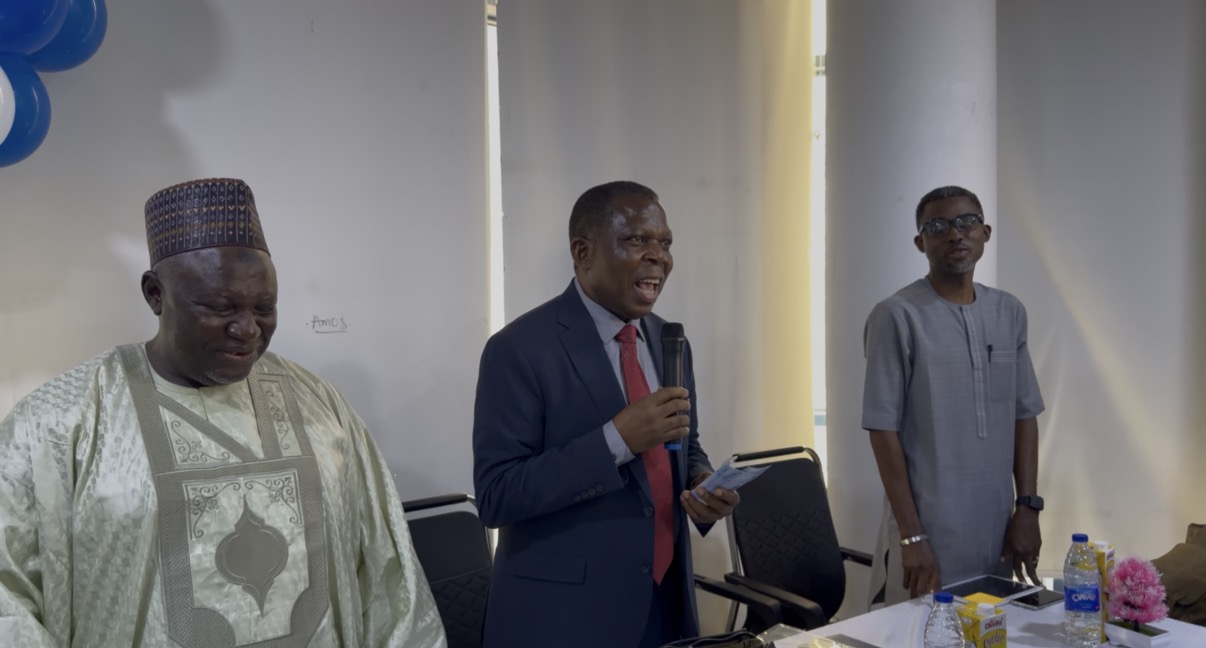
The Federal Government in collaboration with the World Bank and New Horizons Systems Solutions have commenced the third cohort of its training programme aimed at equipping thousands of Nigerian youths with technical and vocational skills to tackle unemployment and bridge the country’s widening skills gap.
The latest beneficiaries are participating in the IDEAS-TVET Initiative training in Hardware and Phone Repair (Digital Sector), organised in Abuja by the Federal Ministry of Education, the World Bank and New Horizons Systems Solutions.
Speaking at the training induction and orientation programme for Cohort 3, the National Project Coordinator of the IDEAS Project, Mrs. Blessing Okwu, represented by the Chief Manager of IDEAS Projects, Prof. Ndem Ayara, said the initiative was designed to provide young Nigerians with practical skills that would make them employable and enable them to generate income.
Okwu said the project’s development objective was not merely to train participants but to equip them with skills that could translate into employment, entrepreneurship and improved livelihoods.
She said, “The reason for developing skills is for the employability of our young ones. Once we are employed, we want to earn income. We are here to train on technical skills in order to become employable, earn income and be able to provide for ourselves, our families and communities, and make our contribution to the Nigerian economy,”.
Okwu explained that the IDEAS Project was conceived by the Federal Government and implemented by the Federal Ministry of Education with support from the World Bank to strengthen technical, vocational education and training (TVET) in Nigeria.

She observed that the project had, over the past four to five years, recorded achievements in infrastructure development, equipment provision, human-capital development and skills training across the country.
Okwu disclosed that about 4,000 technical teachers and instructors had been upskilled under the project, while approximately 80,000 Nigerians were targeted for skills development through training service providers and consultants.
She stated that New Horizons Systems Solutions remained one of the strategic partners of the project, providing training facilities, equipment, instructors and other resources required to deliver the programme.
“This is not just another training programme. It is about creating opportunities, building human capital, strengthening Nigeria’s technical and professional education ecosystem, and equipping our young people with the practical skills they need to participate meaningfully in the Nigerian economy,” she said.
Okwu explained that beneficiaries enrolled in the training would receive a monthly stipend of ₦30,000, subject to meeting the required attendance threshold.
She noted that the participants were expected to maintain at least 60 per cent attendance, with the stipend paid directly into their accounts after attendance verification.
The beneficiaries are also expected to obtain recognised certification in their respective skills upon completion of the programme.
Ayara clarified that the trainees, rather than the training provider, were the direct beneficiaries of the World Bank-supported intervention.
“New Horizons is making available its environment, space, equipment, trainers, time, energy and other resources to support you in this journey. You must take this opportunity very seriously,” she said.
Responding to questions on whether participants would receive equipment to enable them to practise their newly acquired skills after the training, Okwu stated that training kits would be provided before the end of the programme.
She explained that the kits would contain tools relevant to the specific trades being learnt by the beneficiaries, enabling them to continue practising and potentially establish their own businesses.
According to her, the training covers a broad range of occupational areas, including ICT, fashion design, agriculture, hospitality, construction, electrical installation, automotive trades, welding and fabrication, plumbing, solar installation and other market-relevant skills.
Okwu pointed out that the programme also seeks to increase the participation of women and other groups traditionally under-represented in technical and professional occupations.
On the sustainability of the programme, the official said the training phase would last six months, after which beneficiaries would be exposed to industry experience through internships and industrial attachments.
She said the industry component would allow trainees to interact with employers, gain practical experience and familiarise themselves with machines and equipment used in their chosen trades.
“The skill that you acquire is a major source of income for your livelihood. Once you have a skill, it becomes difficult to remain without making use of it to earn income,” .
Okwu added that the initiative was not restricted by political affiliation, employment status or whether a beneficiary worked in the public or private sector, describing it as a partnership involving the Federal Government, development partners and private organisations working together to strengthen Nigeria’s skills-development ecosystem.
Okwu said the IDEAS Project had been implemented in Nigeria for about five years, while the TVET initiative was being mainstreamed into the Federal Ministry of Education’s budget.
She therefore expressed confidence that government support for technical and vocational skills development would continue beyond the current intervention.
Explaining the rationale behind the initiative, Ayara said the programme was designed principally to address the shortage of practical skills in the Nigerian labour market.
She said the Federal Government, through the Ministry of Education and with support from development partners, had invested in upgrading infrastructure and modernising equipment in technical colleges.
Okwu noted that the intervention,was intended to make technical and vocational education a credible pathway to productive employment, entrepreneurship and national development.
Also speaking, the MD/CEO of New Horizons Systems Solutions, Mr Tim Akano disclosed that 1, 200 participants are being trained in the 3rd cohort .
He noted that the participants are learning about 10 skills including telephone repairs, laptops repairs, build battery inverters, build drones, washing machine, projector, television, repairs and anything electronics
Akano observed that the training is designed help the beneficiaries to set up their own micro businesses and earn income in order to be financially independent adding that they will be given Business packs at the end of the training.
He appreciated the IDEAS Project team and admonished the beneficiaries to stop all form of negativity comments about Nigeria.
“Environment blesses those who bless the environment. Therefore to be blessed in Nigeria. You have to fall in love with Nigeria”.
One of the beneficiaries, a graduate of Computer Engineering, Chiamaka Ferguson said she had not been sufficiently exposed to practical knowledge while in university but had gained useful hands-on experience through the programme.
She noted that such experiences demonstrated the importance of strengthening practical training alongside conventional academic education.
Another beneficiary, Destiny Akpan Sunday commended the Federal Ministry of Education, the World Bank and the New Horizons Systems solution for providing opportunity for the youths to learn new skills adding that the knowledge from the training will help her give solutions to problems people are having with their gadgets especially mobile phones and computers .
The beneficiaries will graduate in December , 2026.

