 Follow Us on Google News
 Follow Us on Google Discover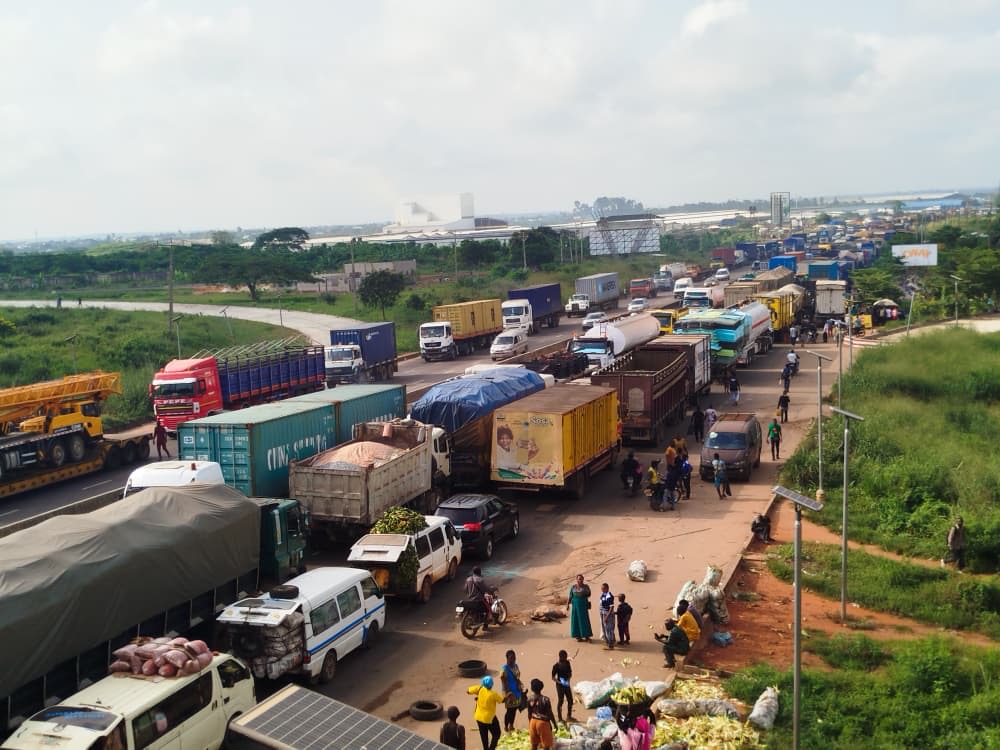
With an estimated two million cars in Lagos State, 75,000 commercial buses (danfos), and over 1.8 million vehicles using the roads yearly, the state is undeniably Nigeria’s busiest city. Consequently, given the high vehicle density (about 224 vehicles per kilometre of road), which is significantly above both national and global averages, TIMOTHY ATOYEBI writes on the need to embrace technology in addressing the recurring issue of traffic snarls, especially as the Yuletide approaches.
Despite efforts to control vehicular traffic in Lagos State, gridlock remains a daily reality. Matters are made worse during festive seasons and rush hours. Limited progress from inter-agency collaboration is overshadowed by reckless driving, poor road infrastructure, and weak compliance.
Without sustained reforms, congestion continues to cripple productivity and the quality of life in Nigeria’s commercial hub. During festive periods, such as Christmas, New Year, and major Muslim holidays, as well as daily rush hours, traffic congestion becomes more than just an inconvenience; it becomes a serious problem that disrupts schedules, impacts livelihoods, and drains the city’s energy as commuters spend countless hours trapped in their vehicles, losing valuable time that could have been spent productively.
They often miss important events, such as family gatherings, business meetings, and medical appointments, due to the slow and frustrating flow of traffic.
Across the state, areas most affected by daily standstills include the Lagos-Ibadan Expressway, Ikorodu Road, Ojodu, Ikeja and its environs, Agege, Ogudu, Oshodi, Funsho Williams Avenue, Iyana-Oworosonki-Gbagada Expressway, Mobolaji-Bank Anthony Way, Lagos-Abeokuta Expressway, Ozumba-Mbadiwe Way, Lekki-Epe Expressway, Ajah, Ikoyi, Oshodi-Apapa Expressway, Lagos-Badagry Expressway, Isolo/Ikotun/Egbe Road, and Eko Bridge, among others. Apapa roads, however, stand out as the worst hit.
Over the years, Apapa has gained an almost infamous reputation for perpetual traffic chaos, whether approaching through the Oshodi-Tin Can route or Wharf Road. For many road users, Apapa traffic symbolises Lagos congestion at its most frustrating height.
Typically, between 3:00 p.m. and 7:30 p.m. on most working days, vehicles moved at a painfully slow pace from Oshodi to Gbagada, with much of the gridlock caused by drivers trying to divert through the Yaba and Anthony axis to avoid traffic, creating even more congestion in those areas.
According to a recent report by the Danne Institute of Research, an estimated two million cars in Lagos State, 75,000 commercial buses (danfos), and over 1.8 million vehicles use Lagos roads yearly. This figure stems from an average commute delay of 2.1 hours per working day per resident, extra yearly fuel costs of N133,978.68 for vehicle owners, additional transport fare costs of N79,039.40 for public transport users, and combined opportunity costs for micro, small, and medium enterprises ranging from N600,054 to N149 million yearly, depending on the size and staffing of the business.
The report identified impatience, poor driving attitudes and traffic management as major factors contributing to Lagos losing about N3.834 trillion yearly to traffic congestion.
The report also points to behavioural factors such as poor road infrastructure, violation of traffic laws, activities of touts (agberos) at bus stops, and buses picking up passengers as primary culprits.
Financially, individuals bear the burden of the extra money they spend on transport or fuelling their cars daily due to traffic congestion.
Car owners report spending an additional N3, 044.97 on fuel weekly, while public transport users spend an extra N1, 796.35 each week due to traffic delays.
In essence, traffic congestion costs Lagosians who use public transport N79, 039.40 each year in extra transport fares and those who own vehicles N133,978.68 yearly in extra fuel costs. Given the poverty levels and income disparity in the state, this money could have been saved or used to support a relative’s education or livelihood.
Lagos Sector Commander of the Federal Road Safety Corps (FRSC), Mr Kehinde Hamzat, explained that some of the root causes of the city’s chronic traffic congestion and emphasised the need for collective action.
According to Hamzat, the dense vehicular and human population in Lagos is a major factor contributing to traffic problems. He described Lagos as a magnet for people from across Nigeria, and beyond, attracted by the opportunities of the country’s commercial hub.
Hamzat noted that many drivers are impatient and have poor attitudes toward traffic officials. He highlighted the challenges that FRSC officers face while working on the roads, stressing the importance of collective responsibility in addressing traffic issues.
According to him: “People are simply impatient, especially when driving. Then the attitude of drivers is not encouraging when it comes to relating with not just road safety officers, but traffic officers generally. They pretend to like us when we are carrying out rescue operations or doing other things, but when it comes to enforcement, nobody wants to be fined. So, in a situation where you see some people trying to work on the obstruction, trying to clear traffic, trying to control traffic, you see a lot of people telling them that even they are the cause of that traffic jam.”
To manage traffic effectively in Lagos, he emphasised the need for coordinated efforts between federal and state agencies, as well as emphasised the importance of technology in traffic management and the role of agencies like the Lagos State Traffic Management Authority (LASTMA) in enforcing traffic regulations at the state level.
While addressing the issue of roadblocks during the movement of Very Important Persons (VIP), like the president and governors, Hamzat clarified that roads are not always completely blocked in such situations. “It is not in all cases that we block all roads. There are times to block roads. The safety and security of the president of a country are paramount. Not as if it supersedes that of every other citizen, but you must ensure that your president is safe. You don’t know who is where, monitoring and wanting to threaten the security of the president.
“We don’t just block roads; traffic moves, but when it’s about three minutes or thereabout for the president to pass, we will definitely give way for the presidential convoy to move.”He also addressed concerns about medical emergencies, particularly when ambulances are caught in traffic due to a presidential convoy.
Using the concept of the “Golden Hour” in emergency medicine (the first hour after a traumatic incident when quick medical attention can make the difference between life and death), he argued that a short delay caused by a convoy is unlikely to endanger a patient’s life if the Golden Hour is properly managed.
A business and financial expert, Dr Muda Yusuf, outlined several solutions to reduce traffic congestion in Lagos, including investing in mass transit systems like the BRT buses, expanding rail coverage, investing in water transportation, and expanding road capacity with more flyovers. He also encouraged citizens to embrace remote work where possible to reduce road congestion.
“Let us embrace online transactions. It’s not everything that we have to be on the road. As citizens, we should also use more online facilities rather than physically moving around.”
Not long ago, the Special Adviser to the Governor on Transportation, Mr Sola Giwa, announced the enforcement of an Electronic Call-Up (e-Call-Up) system for all tankers and articulated vehicles operating along the Lekki-Epe corridor to ease traffic congestion and improve road safety. He noted that Lagosians lose an average of four hours daily due to traffic congestion, resulting in an estimated N4 trillion yearly economic losses.
Giwa, who attributed much of this gridlock to unregulated parking and disorderly loading and unloading activities along major logistics routes, further disclosed that the government had approved seven dedicated truck parks along the Lekk-Epe axis to support the system’s implementation.
The Public Relations Officer of LASTMA, Mr Taofik Adebayo, agreed that population growth is a major driver of congestion. He explained that people migrate into Lagos from other Nigerian states and even neighbouring West African countries, drawn by economic opportunities.
“As a result of that, you have the population of Lagos growing rapidly. As I am talking to you now, Lagos is well over 22 million in population. When you look at the strategic position of Lagos in the country in terms of landmass, it is the smallest state covered by much water, and this land mass is what the government is managing in terms of providing the expansion of roads, providing accommodation, and including a rail transportation system. So, with the mad rush of people coming into Lagos, we discovered that they are overstressing the facilities of Lagos, where the government is expanding these facilities.”
Adebayo said LASTMA manages traffic through a combination of strategies, including enlightenment campaigns before, during, and after festive periods to remind motorists to avoid causing congestion, stationing officers across the 48 zones of Lagos for surveillance and monitoring, and deploying advanced cameras to catch traffic offenders.
“With these cameras, we capture the traffic offenders at a distance of 70-100 meters. If you drove the wrong way, our cameras will capture you from a distance, and it will indicate the location, the time and the date at which you committed this traffic infraction.” He urged the public to call LASTMA’s toll-free numbers when experiencing vehicle breakdowns, especially on expressways.
“Whenever you have issues on the road that make your vehicle not move anymore, quickly make use of the hotline because with the few road networks that we have in Lagos, once a vehicle breaks down, it will affect nothing less than 45 other vehicles that will not be able to move as quickly as possible.
And when you look at this, it will affect the economic turnover of the entire state,” he added. He also advised motorists to use public transport such as BRT buses or rail if they are unfamiliar with a route, and to take advantage of the government’s car lodges and sea transport to reduce road congestion.

