 Get Guardian on Google
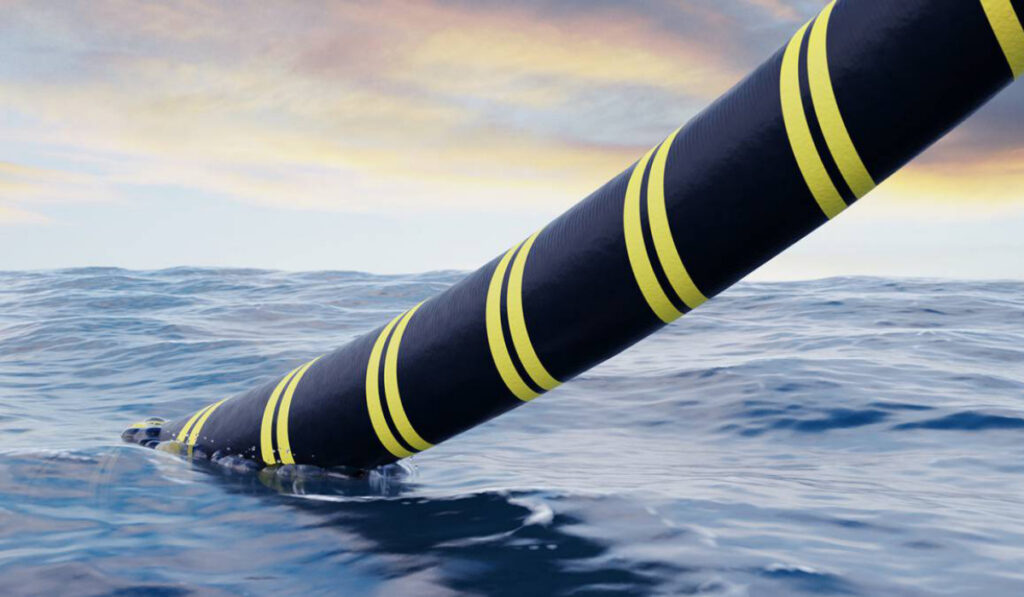
With submarine cables serving as the hidden backbone, carrying over 99 per cent of international data flows, investments in them have surged from $0.8 billion in 2015 to $9.7 billion in 2025, with hyperscale technology companies (Google, Meta, among others) now playing a leading role in financing new infrastructure globally.
The International Telecommunications Union (ITU), which revealed the investment surge, disclosed that the global network comprised over 500 operational systems (1.4 million kilometres), as demand is accelerating, with bandwidth growing 22 per cent yearly since 2021.
Checks by The Guardian showed that as of 2025, Nigeria was a landing point for eight major submarine telecommunications cables carrying over 95 per cent of the country’s international Internet and communication traffic.
The eight cables that landed in Nigeria, primarily in Lagos but now also in other states, are: MainOne Cable, SAT-3/WASC (Owned by Natcom/ntel), GLO-1 (Globacom’s cable), GLO-2 (Globacom’s domestic coastal cable), Africa Coast to Europe Cable System (ACE), West Africa Cable System (WACS) (MTN is a major partner), Equiano (Google’s cable), 2Africa (Meta-led consortium, the world’s largest).
Further checks show that the cables have enabled 50.58 per cent broadband penetration in the country and propelled data consumption to the tune of 1.24 million terabytes.
The attainment of one terabit per second Internet traffic (1Tbps) in Nigeria was achieved in the first quarter of 2025.This 1Tbps attainment implies that there has been an extremely high data transfer rate in the country’s Internet space, with an immense amount of bandwidth usage.
The Chief Executive Officer of IXPN, Muhammed Rudman, had described the 1Tbps attainment as a game changer for Nigeria, explaining that mega video calls, social media content, streaming services, and the influx of data centres had helped in achieving this.