 Follow Us on Google News
 Follow Us on Google Discover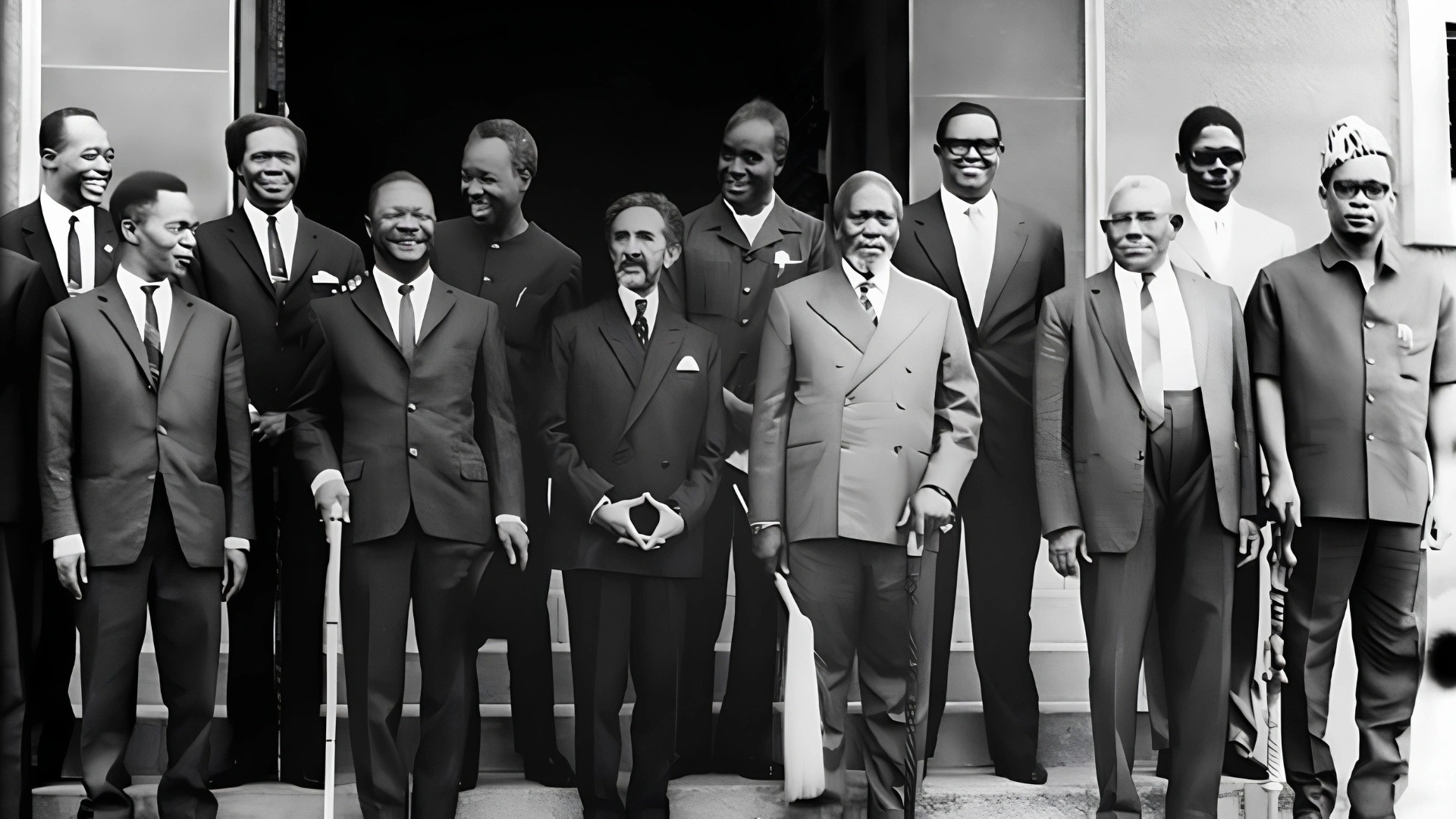
More than sixty years after Addis Ababa, African unity is still remembered as Ghana’s great idea. Yet the deeper story begins in Nigeria, which inspired the dream and voiced its most enduring objection.
By Farida Dzifa Alabo
History has an odd habit of answering political questions from unexpected places.
African unity is usually remembered as Ghana’s great idea, and Kwame Nkrumah as its most commanding prophet. Yet the deeper story begins in Nigeria, which inspired the dream and later voiced its most enduring objection. It also passes through a third Africa, whose formal independence remained sharply limited by monetary arrangements centred on France.
The Nigerian thinker Nnamdi Azikiwe shaped Nkrumah’s Pan-African imagination. Abubakar Tafawa Balewa later exposed the dangers of a hurried federation. The Francophone states revealed the deeper problem: sovereignty could be proclaimed while control over currency and reserves remained elsewhere. Each had grasped part of the truth.
The Spark

In the mid-1930s, as editor of the African Morning Post in Accra, Azikiwe preached a larger unity: Africans and the Black diaspora were one people, divided by conquest but not by destiny. He profoundly influenced Kwame Nkrumah and drew him towards Lincoln University in Pennsylvania, where Azikiwe had studied.
At Lincoln University, and later in wartime London, Nkrumah absorbed the ideas of W. E. B. Du Bois and Marcus Garvey and found an ally in the Trinidadian organiser George Padmore. At the Fifth Pan-African Congress in Manchester in 1945, he helped turn liberation into political strategy.
He returned with a creed Nigerians already recognised as their own: ‘Seek ye first the political kingdom, and all else shall be added unto you.’ Concluding that his party moved too slowly, he formed his own, preached positive action, was imprisoned and won his Accra seat from prison in the 1951 Gold Coast election.
On 6 March 1957, Nkrumah led Ghana out of the British Empire without a war. That night he made the declaration that defined him: ‘Our independence is meaningless unless it is linked with the total liberation of Africa.’ A new head of government had pronounced his own country’s independence insufficient.
To Nkrumah, Africa was not poor. Its tragedy was strategic disorganisation imposed by those who had drawn its borders. The departing empires left dozens of states designed for someone else’s convenience. Gold, cocoa, oil, diamonds, phosphate and bauxite lay across a continent made to negotiate with the world in fragments. Richness had been turned into weakness.
Nkrumah dealt pragmatically with both sides of the Cold War, but his rhetoric served neither: ‘We face neither East nor West; we face forward.’ In Neo-Colonialism: The Last Stage of Imperialism, he argued that Africa lacked not wealth but negotiating power. To him, no African room could call itself safe while the house was burning.
The Three Africas
When thirty-two heads of independent African states assembled in Addis Ababa in 1963, Nkrumah’s vision reached its limits. History generally records two camps. Yet a third Africa, folded into the second, revealed a deeper obstacle to union.
On one side stood Nkrumah’s Casablanca group: Ghana under Kwame Nkrumah, Guinea under Ahmed Sékou Touré, Mali under Modibo Keïta, Egypt under Gamal Abdel Nasser, Morocco under King Hassan II and Algeria under Ahmed Ben Bella. They wanted immediate political union, with a common government, currency and military command. Nkrumah’s blueprint was already in print: Africa Must Unite.
Opposing them was the larger Monrovia bloc, led by Nigeria’s Prime Minister, Abubakar Tafawa Balewa, with Liberia’s President William Tubman among its principal figures. They did not reject unity. They rejected its haste.
Azikiwe had by then become Nigeria’s first President. At Addis Ababa, however, it was Prime Minister Abubakar Tafawa Balewa who articulated Nigeria’s more gradual approach to African unity.
Their caution reflected foresight rather than timidity. The new states had inherited different institutions, laws and political arrangements. Would a continental government protect the independence they had fought to win, or diminish it in the name of unity?
A third Africa was less visible, yet more decisive. Many newly independent Francophone states aligned with Monrovia for reasons as structural as ideological. Several had met at Brazzaville in 1960 and remained bound to France through political, military and monetary arrangements.
The CFA franc represented the monetary afterlife of colonial rule. These states had flags, governments and seats at international tables, but currency, reserves and convertibility remained tied to France. They could not easily enter Nkrumah’s proposed monetary union because the instruments required were not fully theirs to command. The arithmetic constrained them before the speeches began: political independence without monetary sovereignty.
The Compromise
The Organisation of African Unity settled on what the room could deliver. Its charter affirmed the sovereignty and territorial integrity of its members. Nkrumah signed, judging an imperfect union preferable to none. At Cairo the following year, African states pledged to respect the borders inherited at independence.
The inherited map had won, or at least survived. Julius Nyerere, an advocate of federation beginning regionally, later admitted that his generation had not pursued African unity with sufficient determination.
The compromise left the deeper question unresolved. Political union was postponed, but imperial monetary structures remained. Across much of Francophone Africa, the CFA franc continued to define the limits of economic sovereignty. The debate had ended. Its conditions had not.
The Cost at Home
There was a price, and it must be set beside the cause. As Nkrumah preached liberation abroad, his grip tightened at home. Detention without charge, a one-party state by 1964 and a President surrounded by the language of destiny revealed the other side of his urgency.
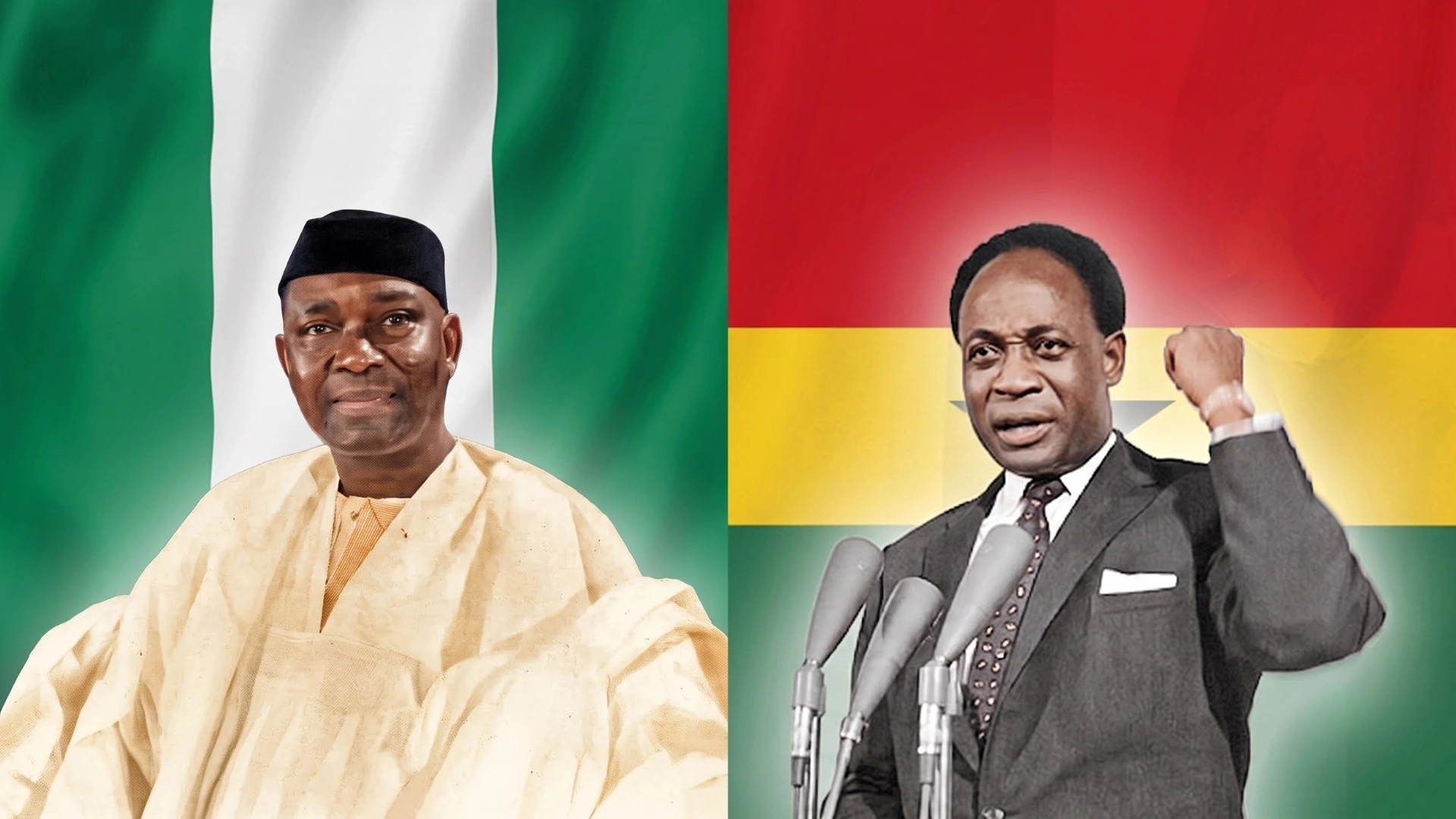
The visionary and the autocrat were the same man, convinced that history offered a single window and impatient with those who counselled otherwise. In February 1966, while he was abroad, the military seized power. He died in exile in 1972, having carried a continent in his mind, an impossible mission for any one man.
The Modern Echo
The dream did not die with him. The African Continental Free Trade Area, headquartered in Nkrumah’s Accra, pursues through gradual integration what he sought through political union. Legalistic, commercial and imperfect, it combines something of the Monrovia method with the Casablanca ambition.
Yet the third Africa remains inside the question. A continent cannot negotiate fully as one while some states lack command over monetary and economic policy. The failure lay not simply in choosing between immediate union and gradual cooperation, but in the fact that some states were never entirely free to choose.
The Answer No One Foresaw
The final answer did not come from governments.
Africans themselves began to recover the unity that colonial borders, divided institutions and inherited monetary systems had weakened. They found it in shared history, family lines crossing frontiers, cultural memory and ancestry. People taught to regard one another as foreign began to recognise how much language, faith, food, struggle and memory they shared.
The Arts, shared history and, ultimately, African individuals became the continent’s conscience. They shared that conscience across borders first imagined by empire and then fixed in ink. The internet did not create the awakening. It gave it reach, speed and scale.
Music crossed frontiers. Writers rediscovered one another. Artists reimagined a common inheritance. Fashion carried traditions across continents. Film made distant histories familiar. Culture began to do what treaties had not.
A Neo-African consciousness is emerging from that recognition, shaped less by inherited borders than by shared history, ancestry, the Arts, commerce and connection. It does not erase nations. It places them within a wider belonging.
Borders still exist. Currencies still divide markets. Governments still negotiate sovereignty in fragments. Yet these distinctions carry less authority over the imagination. Africans are increasingly proud of what binds them, and more conscious of the systems that made those connections appear weaker than they were.
Nkrumah imagined governments uniting first so that their peoples might follow. History chose the opposite route. Africans began finding one another first. Politics is still trying to catch up.
The African dream did not fail in Addis Ababa. It chose another route, leaving the conference hall for millions of ordinary lives, where maps matter less than memory, imagination and shared inheritance. Nkrumah believed politics would create African consciousness. History answered differently. African consciousness is now creating the politics.
Farida Dzifa Alabo is a business strategist and writer whose work explores power, memory and ownership. Of Ghanaian and Moroccan heritage, she lives in Accra. Her forthcoming novel, The Gold Paradox, examines how systems of ownership can keep a people divided long after the colonisers have gone.

