 Follow Us on Google News
 Follow Us on Google Discover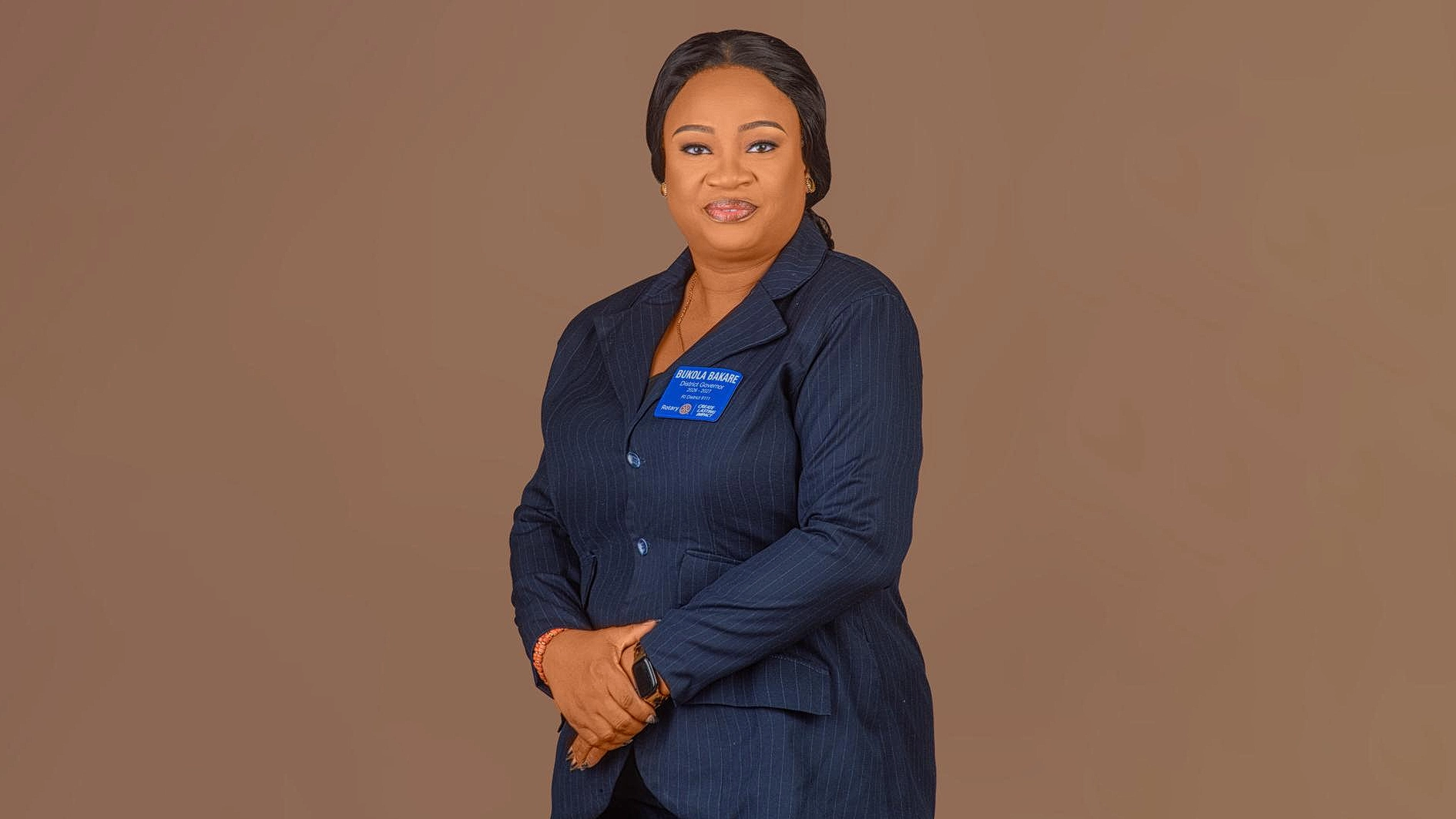
Bukola Olabisi Bakare is the first female District Governor of Rotary International District 9111. A charismatic and transformational leader, she will be steering one of the nation’s most active districts in Rotary Year 2026-2027. In this interview with SUNDAY AIKULOLA, Bakare shares her Rotary journey since 2013, her vision and plans for women and youths.
What are you going to do differently during your tenure?
What I want to change is the way we think about impact in District 9111. Right now, Rotary is doing incredible work, but a lot of it happens in pockets, very strong individual club projects, but not always connected in a way that creates national or even regional visibility and scale. So, what I want to do differently is simple – bring everything together into a more coordinated, bigger-picture approach.
For example, instead of 10 separate clubs doing similar health outreaches in different places, we can design one well-structured district wide programme, attract stronger partners, and actually measure what we are doing in a way that government and corporate partners can trust and plug into.
I also want to reposition Rotary more clearly as a development partner, not just a charity. So when we walk into conversations with government or private sector, it is not just “support us,” it is “let’s build this together.” That shift changes everything – funding, scale and credibility. Internally, I also want to break solos, so clubs don’t feel like they are working alone. We are stronger when we operate as one district with shared priorities.
Our district is divided into five geographical zones, each with a minimum of 15 clubs, and these zones will collaborate deliberately to execute impactful projects, initiatives that are not just for a tenure but are designed to outlive leadership and create lasting community impact.

And then finally, visibility. We are not always good at telling our story. So, we will be more intentional about showing impact, not for applause, but because when people actually see what Rotary is doing, support becomes easier and stronger. At the end of the day, I want people to look at District 9111 and say: “This is a district that delivers real transformation, not just activities.”
What is your flagship project?
We actually have a cluster of flagship interventions, but they are all anchored on one clear goal: balancing long term structural impact with urgent humanitarian response. The anchor is the Rotary Wellness Centre at the Federal Neuropsychiatric Hospital, Yaba, a 60-bed mental health facility. Mental health remains deeply underserved, yet it affects families every day, often silently. This project is about increasing capacity, improving care, and restoring dignity and hope for patients and families.
Alongside this, we are delivering a Mega Medical Outreach across Lagos and Ogun states, jointly with District 9112. This is a large-scale intervention providing consultations, surgeries and specialist care for underserved communities, but with a structured delivery model that brings together local doctors, Diaspora professionals, and Rotary volunteers for coordinated impact and proper follow up. Beyond these two anchors, we are expanding impact through complementary programmes, 5,000 prescription eyeglasses and 1,000 cataract surgeries under Mission for Vision, a Peace Ambassadorial Certification Programme for 250 participants, the Train the Teachers Initiative for public and low-cost schools, a Vocational Skills Empowerment Programme for women and youth with starter packs for livelihoods, and Ability Without Limits, which supports persons living with disabilities with mobility aids and empowerment opportunities.
Taken together, these are not isolated projects. They form a connected system – healthcare, education, peace-building, inclusion and economic empowerment designed to deliver both immediate relief and long term transformation.
Can you share your Rotary journey and experience so far?
My Rotary journey began in 2013 when Ade Akinfolurin, who was then President of the Rotary Club of Ikeja GRA invited me to attend a Rotary meeting. At the time, I saw it as an opportunity to learn more about an organisation that was widely respected for its humanitarian work and commitment to community development.
However, what convinced me to join was not networking or status; it was the culture of service. I was impressed by the fact that Rotary was not just discussing societal challenges but actively addressing them through well-planned and sustainable projects.
My Rotary journey was, therefore, not driven by ambition but by exposure to service. I discovered an organisation where people from different professional backgrounds came together to use their time, resources, expertise and influence to improve lives. That resonated deeply with me. What kept me committed over the years was the consistency of Rotary’s impact.
Whether through education, healthcare, youth development, disease prevention or economic empowerment initiatives, I saw first-hand how collective action could bring about meaningful and lasting change.
Beyond the impact on communities, Rotary has also changed me personally. It has broadened my perspective, strengthened my leadership skills, deepened my sense of empathy and taught me the value of putting service above self. It has challenged me to think beyond my own success and focus more on how I can use my experience, resources and influence to create opportunities for others. I was also inspired by the quality of leadership within Rotary.
The organisation continuously encourages growth, responsibility and lifelong learning. As I became more involved, I progressed from participation to leadership at both club and district levels. Each role gave me a deeper appreciation of Rotary’s ability not only to transform communities but also to transform the people who serve within it. Today, after more than a decade in Rotary, my commitment remains as strong as ever because I have witnessed the difference Rotary makes.
It has enriched my life, expanded my horizons, built lifelong friendships and provided a platform to make a meaningful impact. Rotary has shaped me into a better leader and a better person and that is what continues to inspire my commitment to the organisation.
Specifically, what are your plans for the youth?
For me, youth is not a “programme,” it is the future of Rotary and young people are at the very centre of our agenda. If Rotary is to remain relevant and impactful for generations to come, we must continue investing in young people.
We are strengthening Rotary Youths Leadership Academy (RYLA), Rotaract and Interact because leadership development must start early. Through these programmes, young people learn leadership, teamwork, ethics, service and personal responsibility. One initiative I am particularly excited about is our plan to sponsor selected outstanding RYLarians to participate in RYLA programmes in Canada, the United Kingdom and Ghana. These programmes will expose them to different leadership environments, cultures and perspectives while helping them build international friendships and professional networks. We are also investing in vocational skills development and entrepreneurship because leadership alone is not enough. Young people also need economic opportunities. Our objective is to raise a generation of confident, globally minded, socially responsible leaders who will contribute positively to Nigeria and the world.
As regards gender inclusion and women empowerment, what are your plans?
This one is very personal to me, but it is also very practical. Being the first female District Governor in District 9111 is meaningful, but I don’t want it to end with representation. The real work is ensuring systems change so more women can actually rise without barriers. So, what we are doing is deliberate: more women in leadership roles, more structured mentorship and more access to capacity-building opportunities so that women are not just present but prepared and confident to lead.
We are also linking this to community impact, maternal health, girl-child education, vocational training and economic empowerment programmes that actually change lives at the grassroots. The truth is, when women are empowered, communities stabilise faster and grow stronger. It is not a slogan. It is something we see repeatedly in development work. So, for us, gender inclusion is not a side agenda. It is central to how we define progress.
Concerning short-term and long-term plans, what should we be expecting from District 9111?
In the short term, I am very focused on execution. We need stronger club coordination, better engagement and more visibility of what Rotary is already doing. But most importantly, we need to deliver our flagship projects properly with no delays, no fragmentation and full accountability. We are also strengthening partnerships, because the scale we are aiming for cannot be done alone. We need corporate partners, development agencies and government to see Rotary as a serious implementation partner.
In the long term, I want District 9111 to be known as one of the most impactful Rotary districts in Africa, not just in numbers, but in visible transformation. That means stronger leadership pipelines, more sustainable funding, better access to global grants, and a district that can consistently deliver large-scale humanitarian projects. But beyond structure, what matters most to me is consistency. I want people to say: “When District 9111 takes on a project, it is delivered well, it is impactful, and it is trusted.” That is the reputation I am working towards upholding.

