 Follow Us on Google News
 Follow Us on Google Discover
Welcome, friend. Pull up a chair, because this one took a while.
If you have ever sat in Lagos traffic beside a gleaming G-Wagon and wondered how many millionaires live in Nigeria, you are asking the question I have spent months chasing through wealth reports, bank disclosures and central bank tables. After years of writing about Nigerian money, I can tell you the answer is smaller than most people expect. Roughly 7,200 Nigerians meet the global definition of the label wealth managers apply to this group, which is someone holding a million United States dollars or more in investable assets, and that count has been falling for a decade.
Seven thousand two hundred people. In a country of well over 230 million.
That figure stopped me cold the first time I saw it properly, and I suspect it will do the same to you. It means that if you filled the Teslim Balogun Stadium with Nigeria’s dollar millionaires, you would not come close to filling it. You would rattle around in there.
So let us take this apart carefully, because the confusion around this question is not accidental. Nigerians talk about millionaires constantly, and almost always mean something completely different from what the wealth reports mean.
Am I a millionaire if I have 1 million naira?
Right. Let us handle the awkward one first, because it is the question that sits underneath every other question in this article.

If you have ₦1 million in your account, are you a millionaire?
Technically, in the plainest sense of the word, yes. You have a million of something. In everyday Nigerian speech, plenty of people would call you a millionaire and mean it as a compliment. There is nothing dishonest about that usage.
But in the language of global wealth reporting, no. Not remotely.
Here is why. At the official rate published daily by the apex bank, the naira has been trading in the region of ₦1,363 to the dollar through early August 2026, with the parallel market quoting closer to ₦1,425. Run the arithmetic and ₦1 million converts to somewhere around $730. That is not a millionaire in any international sense. That is roughly the price of a decent secondhand laptop in Ikeja Computer Village.
To reach one million dollars at today’s rate, you need approximately ₦1.36 billion. Not million. Billion. With a b.
Sit with that gap for a moment, because it explains almost every argument Nigerians have about wealth. When your uncle says his neighbour in Magodo is a millionaire, he means the man has ₦1 million, or perhaps ₦50 million, and lives well. When Henley and Partners says Nigeria has 7,200 millionaires, it means people with $1 million in liquid investable wealth, which is ₦1.36 billion and does not include the value of the house they actually live in.
Those two sentences describe entirely different populations. One is fairly large. The other could fit in a few Lagos wedding halls.
I learned this the hard way, incidentally. Early in my career I filed a piece describing a Lagos businessman as a millionaire based on his naira holdings, and an editor sent it back with a single line: “In which currency, and says who?” It was a fair question, and it has stayed with me ever since.
Rather like the difference between a village champion and an Olympic qualifier, the word is the same but the standard is not.
Some quick practical measurements to anchor yourself:
The national minimum wage stands at ₦70,000 a month, unchanged since the 2024 amendment, though Lagos and a handful of other states pay above it. The median monthly income across the country sits somewhere near ₦100,000, with the average dragged upwards to roughly ₦339,000 by a small number of very high earners. Inflation, having spent 2024 and much of 2025 above 30 per cent, has cooled into the mid teens according to figures published by the national statistics office, which is progress, though your market basket may disagree.
Against that backdrop, ₦1.36 billion is not merely a large number. It is a different universe.
How many millionaires live in Nigeria, counted properly?
Now for the direct answer, stated as plainly as I can manage.
Nigeria is home to approximately 7,200 dollar millionaires, according to the most recent Africa Wealth Report produced by Henley and Partners with New World Wealth. That same body of research counts 20 Nigerian centi-millionaires, meaning individuals holding $100 million or more, and three resident dollar billionaires under its particular methodology. Nigeria ranks fourth on the continent for millionaire population, behind South Africa, Egypt and Morocco, and just ahead of Kenya. Lagos, unsurprisingly, holds the largest concentration of that wealth, with roughly 3,400 resident millionaires, which places it among Africa’s wealthiest cities but well behind Johannesburg and Cape Town.
Those are the closely related entities worth holding in your head as you read on:
- Dollar millionaires (about 7,200 nationally)
- Centi-millionaires with $100 million or more (about 20)
- Dollar billionaires, three by Henley’s count and four by Forbes’s
- Lagos as the primary wealth hub (roughly 3,400 millionaires)
- Naira millionaires, an entirely separate and far larger group not tracked in these reports
Here is the part that genuinely troubled me during the research. Nigeria’s millionaire population has not grown. It has collapsed. The count has fallen by around 47 per cent over the past decade, and by a harsher 53 per cent when measured across a slightly different window. Nigeria had roughly 15,000 dollar millionaires in the middle of the last decade. It now has 7,200, and forecasters expect further erosion.
Why? Three forces, mostly.
The naira lost enormous value against the dollar, which mechanically demoted thousands of wealthy Nigerians below the dollar threshold without a single one of them losing a naira of local purchasing power. Inflation then chewed through savings. And a meaningful number of wealthy Nigerians simply left, taking their capital to Dubai, London and Toronto.
Nigeria is not alone in this. Angola and Algeria have suffered similar contractions. But it is a sobering counterpoint to the national story of hustle and abundance, and it deserves to be said out loud rather than buried in a footnote.
Nigeria’s millionaire count against Africa’s biggest wealth markets
| Country | Dollar millionaires | Share of Africa’s total | Change 2015 to 2025 | Africa rank |
|---|---|---|---|---|
| South Africa | 41,100 | 33.6% | Down 6% | 1 |
| Egypt | 14,800 | 12.1% | Down 20% | 2 |
| Morocco | 7,500 | 6.1% | Up 40% | 3 |
| Nigeria | 7,200 | 5.9% | Down 47% | 4 |
| Kenya | 6,800 | 5.6% | Not published | 5 |
| Mauritius | 4,800 | 3.9% | Up 63% | 6 |
The table tells a story the headline number hides: Nigeria’s problem is not that it sits fourth, it is that it arrived at fourth while falling. Morocco and Mauritius, both far smaller economies, grew their millionaire populations over the same decade in which Nigeria lost nearly half of its own.
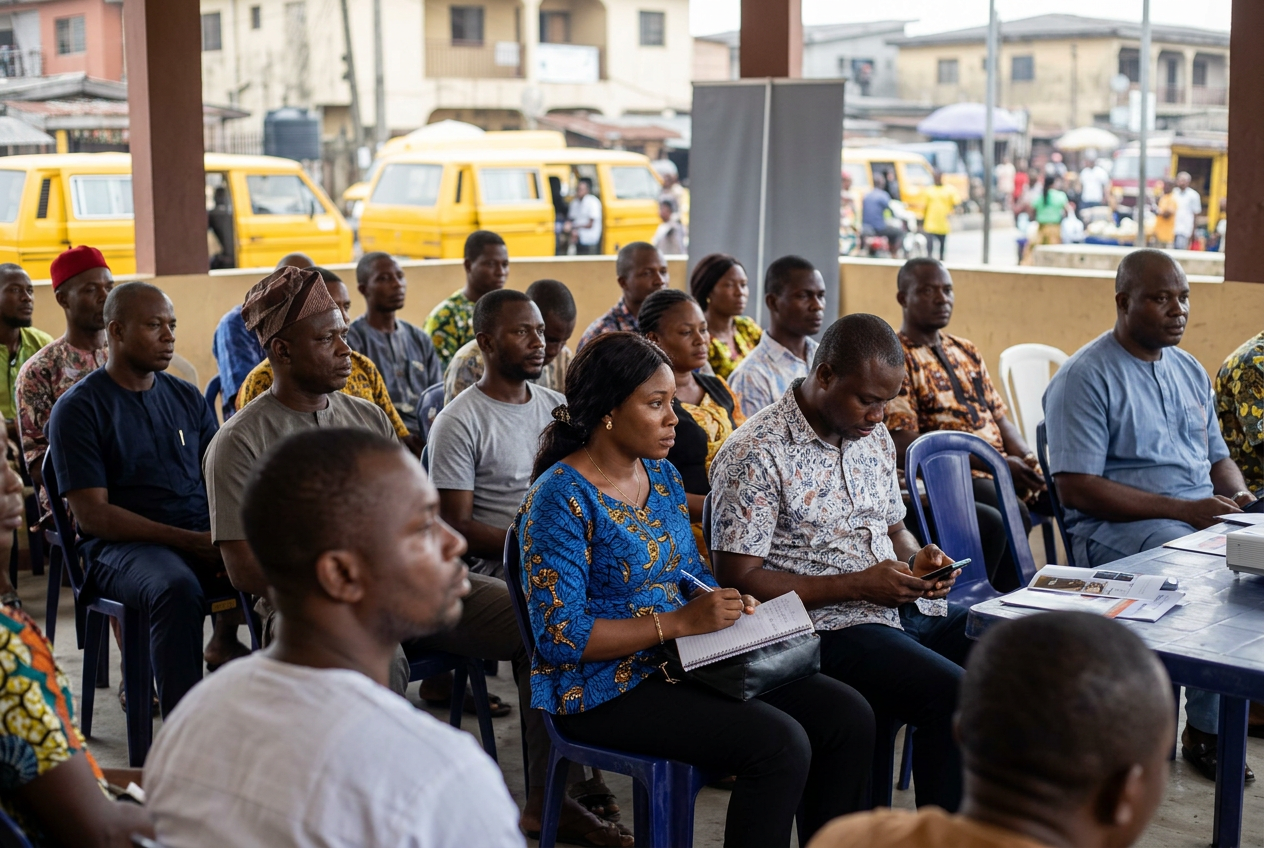
How many people have 500k in their account in Nigeria?
This is my favourite question in the whole set, because it has an unusually precise answer, and it comes from a source most people never think to check.
The Nigeria Deposit Insurance Corporation publishes coverage statistics whenever it reviews its insurance limits. When the deposit insurance regulator lifted its cover to ₦5 million in May 2024, it disclosed something quietly extraordinary. Under the previous ₦500,000 ceiling, 89.2 per cent of deposit money bank customers were fully covered. Raising the limit to ₦5 million pushed full coverage to 98.98 per cent.
Read that backwards and you have your answer.
If 89.2 per cent of accounts held ₦500,000 or less, then only about 10.8 per cent of Nigerian bank accounts contained more than ₦500,000. Roughly nine in ten sit below half a million naira. And by the time you reach ₦5 million, you are inside the top one per cent of account balances.
The Guardian’s business desk covered the corporation’s latest update, reporting that more than 281 million depositors across 914 licensed institutions now fall under the expanded protection. Set against total active bank accounts of over 320 million, and a Bank Verification Number database that has grown past 69 million enrolments, you begin to see the shape of the thing. Many accounts, many of them thinly funded, concentrated wealth at the very top.
A caveat I want to be honest about, because it matters. These are account-level figures, not person-level figures. One individual can hold five accounts across five banks, and a wealthy Nigerian almost certainly does. So the true proportion of people with more than ₦500,000 available to them is somewhat higher than 10.8 per cent, though nobody publishes a clean number for it. Treat the figure as a strong indicator rather than a census.
Still. Nine in ten accounts under half a million naira. That is the country you actually live in, whatever Instagram suggests.
And it explains something I have watched for years: why a ₦500,000 owambe aso ebi contribution can quietly bankrupt a family that appears comfortable. The buffer simply is not there.
Who are the four billionaires in Nigeria?
Right. The names everybody actually came for.
Forbes named four Nigerians on its 2026 Africa Billionaires ranking. They are, in order of wealth:
Aliko Dangote, at approximately $28.5 billion, remains Africa’s richest person and the wealthiest Black person on earth. His fortune added roughly $4.6 billion over the year, driven largely by Dangote Cement’s performance on the Nigerian Exchange, alongside the refinery complex at Lekki that has reshaped the country’s fuel economy.
Abdulsamad Rabiu, the BUA Group founder, produced the most dramatic move on the entire continental list. His net worth roughly doubled to about $11.2 billion after BUA Cement shares climbed around 135 per cent, lifting him from sixth place to third in Africa.
Mike Adenuga, at roughly $6.5 billion, holds steady through Globacom and his oil interests at Conoil Producing. His figure slipped marginally from the previous year, which in a market this volatile counts as stability.
Femi Otedola, chairman of Geregu Power, sits at approximately $1.4 billion after a decline of around $200 million, following the sale of a majority stake at a discount.
Together these four sit inside a continental group of 23 billionaires whose combined wealth passed $126 billion in 2026, up 21 per cent year on year. The Guardian reported on an earlier edition of the same ranking, noting how the quartet held their places even as currency devaluation reshaped the dollar value of Nigerian fortunes, which remains the single most underappreciated force in Nigerian wealth measurement.
Two things worth noticing, and neither gets enough attention.
The concentration is severe. Dangote alone is worth more than the other three Nigerian billionaires combined, roughly a factor of one and a half. And every one of these fortunes traces back to heavy industry, energy or telecoms, which is exactly what you would predict if you have looked closely at where the country’s economic weight actually sits.
Not one of them made it primarily through tech, entertainment or finance. Cement, fuel, power, phone networks. The unglamorous stuff.
How many billionaires are in Nigeria in 2026?
Four, if you follow Forbes. Three, if you follow Henley and Partners.
Both are correct, which is maddening until you understand why.
Forbes counts total net worth, including illiquid holdings such as controlling stakes in listed and private companies, and its Africa list includes billionaires who reside on the continent or run their primary businesses from it. Henley and New World Wealth build their country counts around residency and investable wealth, applying a stricter test to what qualifies. Otedola sits close enough to the billion-dollar line that a modest share price move or a methodology difference decides whether he appears.
So when a Nigerian argues with a cousin about whether the country has three or four billionaires, both parties are usually right and neither is listening.
Widen the frame and the number changes again. Adebayo Ogunlesi, the Nigerian-born infrastructure investor behind Global Infrastructure Partners, appeared on the 2026 Forbes list of the world’s Black billionaires at roughly $2.5 billion. He is Nigerian. He does not live in Nigeria, so he does not appear on the resident count. Include the diaspora and Nigeria’s billionaire tally rises.
This is not pedantry. It goes to the heart of the wealth question in this country. A great deal of Nigerian capital is Nigerian in origin and foreign in residence, which is precisely why the resident millionaire count keeps falling while Nigerian business families keep getting richer.
It also puts the banking numbers in perspective. Nigeria contributes about 8.7 per cent of African banking revenue, placing it a distant third behind South Africa and Egypt, and The Guardian’s coverage noted that the continent’s banking earnings remain concentrated in a handful of markets despite Nigerian lenders being unusually profitable. Profitable banks, shrinking millionaire count. Both true at once.
If you want the fuller continental picture of how these fortunes were assembled and who sits above whom, I traced the whole hierarchy in a separate piece on the continent’s wealthiest individuals and how their empires were built.
Seven steps to place yourself honestly on Nigeria’s wealth ladder
Enough theory. Here is the practical exercise I run whenever somebody asks me where they actually stand, and I would encourage you to work through it with a pen rather than in your head. It takes about twenty minutes and it is unfailingly clarifying.
- Add up every liquid asset you hold. Bank balances, mutual funds, treasury bills, shares on the Nigerian Exchange, dollar savings, cooperative contributions, cryptocurrency if you hold any. This total is your starting figure and it is the one the wealth reports care about.
- Exclude your primary residence entirely. Global wealth reporting counts investable assets, and the flat you sleep in does not qualify. Painful, but it is the standard, and applying it inconsistently is how people talk themselves into imaginary net worths.
- Add investment property, but value it honestly. Not what a neighbour claims his identical duplex fetched, and not the figure your agent quotes to flatter you. Use what a buyer would pay this quarter, in cash, without a two-year wait.
- Subtract every liability. Mortgage balance, car loan, cooperative debt, the ₦4 million you borrowed from your brother in 2023 and have been carefully not mentioning at family gatherings. Debt is not a rounding error.
- Convert the net figure to dollars at the official rate, and then again at the parallel rate. The two answers will differ by around five per cent at present, and knowing both keeps you honest about which number you are quoting to whom.
- Compare against the thresholds. Roughly ₦1.36 billion for dollar millionaire status, ₦136 billion for centi-millionaire status. Then compare against the domestic markers too, because ₦5 million in a bank account already places you inside the top one per cent of Nigerian account balances.
- Repeat the whole exercise every six months, and record the dollar figure alongside the naira figure each time. This is the step most people skip and the one that teaches the most, because it shows you exactly how much of your apparent progress is real growth and how much is currency movement wearing a disguise.
That final step is the entire lesson of the past decade in Nigerian wealth, compressed into one habit.
Final Thoughts on how many millionaires live in Nigeria
So, where does all of this leave us?
Nigeria has roughly 7,200 dollar millionaires, four billionaires by the most widely quoted count, and around nine in ten bank accounts holding less than ₦500,000. The millionaire population has fallen by nearly half in a decade, mostly through currency depreciation and emigration rather than through business failure. Lagos concentrates the wealth. Cement, fuel, power and telecoms produced nearly all of it.
But I want to end on something other than the arithmetic, because I do not think the arithmetic is the point.
The gap between the naira millionaire and the dollar millionaire is not a technicality to be cleared up. It is the single most useful economic fact a Nigerian household can understand, because it determines whether your savings are actually growing or merely being restated in a currency that keeps shifting beneath you. The families I have watched build durable wealth over the past fifteen years are not the ones who earned the most. They are the ones who measured honestly, held some assets outside a single currency, and kept score in a way that could not flatter them.
Start there. Work through the seven steps this weekend. Write down both numbers, the naira one and the dollar one, and put the paper somewhere you will find it in six months.
Then go again.
- Run the seven-step audit this month, and record your net worth in both naira and dollars so currency movement cannot disguise your actual progress.
- Treat ₦5 million in accessible savings as a meaningful first milestone, since it already places you inside the top one per cent of Nigerian bank balances, and build from there rather than chasing the dollar millionaire threshold directly.
- Study how the four Nigerian billionaires actually built their fortunes, in cement, fuel, power and telecoms, because the sectors that create wealth here are consistently duller and more capital-hungry than the ones that get talked about.
Related Articles
If the billionaire section left you wanting the full continental hierarchy, my piece on Africa’s wealthiest individuals and the empires behind their fortunes takes the ranking apart name by name, including where Forbes and Bloomberg disagree and why. And since every Nigerian fortune in this article traces back to heavy industry rather than headline-friendly sectors, you may find my breakdown of the sectors that carry the most economic weight in this country a useful companion, particularly if you are trying to work out where the next generation of fortunes will come from.
Key Takeaways
- Nigeria has approximately 7,200 dollar millionaires, a figure that has fallen by around 47 per cent in a decade, driven mainly by naira depreciation and the emigration of wealthy households.
- Holding ₦1 million does not make you a dollar millionaire, because the threshold currently sits near ₦1.36 billion, while about 89 per cent of Nigerian bank accounts hold ₦500,000 or less.
- Four Nigerians appear on Forbes’s 2026 Africa billionaire ranking, led by Aliko Dangote at roughly $28.5 billion, with every one of the four fortunes built on cement, fuel, power or telecoms.
Frequently Asked Questions about how many millionaires live in Nigeria
How many millionaires live in Nigeria?
Nigeria is home to approximately 7,200 dollar millionaires, meaning people holding at least $1 million in investable wealth, which places the country fourth in Africa behind South Africa, Egypt and Morocco. That population has contracted by roughly 47 per cent over the past decade, largely because of naira depreciation and the emigration of wealthy households.
Am I a millionaire if I have 1 million naira?
In everyday Nigerian speech you would be called one, and there is nothing wrong with that usage. In the language of international wealth reporting you are not, because ₦1 million converts to roughly $730 at current rates, while the recognised threshold sits near ₦1.36 billion.
How many people have 500k in their account in Nigeria?
Deposit insurance data indicates that about 89 per cent of bank accounts held ₦500,000 or less under the previous coverage ceiling, leaving roughly 10.8 per cent above that mark. Because one person can hold accounts at several banks, the share of individuals with more than ₦500,000 available is somewhat higher than the account-level figure suggests.
Who are the 4 billionaires in Nigeria?
Forbes named Aliko Dangote, Abdulsamad Rabiu, Mike Adenuga and Femi Otedola on its 2026 Africa billionaires ranking. Their fortunes rest on cement and refining, cement and food manufacturing, telecoms and oil, and power generation respectively.
How many billionaires are in Nigeria in 2026?
Forbes counts four resident Nigerian billionaires in 2026, while Henley and Partners counts three under a stricter investable-wealth methodology. Both figures are defensible, and the discrepancy comes down to how each organisation treats illiquid company stakes and borderline fortunes.
How much is one million dollars in naira today?
At the official rate of roughly ₦1,363 to the dollar in early August 2026, one million dollars converts to approximately ₦1.36 billion. At parallel market rates nearer ₦1,425, the same sum works out closer to ₦1.43 billion.
Why has Nigeria’s millionaire population fallen so sharply?
The naira’s depreciation demoted thousands of wealthy Nigerians below the dollar threshold without any of them losing local purchasing power, and sustained inflation eroded savings on top of that. A steady outflow of wealthy households to the United Arab Emirates, Britain and Canada removed further millionaires from the resident count.
Which Nigerian city has the most millionaires?
Lagos holds by far the largest concentration, with roughly 3,400 resident dollar millionaires, which ranks it among Africa’s wealthiest cities. Abuja follows at a considerable distance, with wealth there tied more closely to government contracting, property and professional services than to industry.
Does owning property in Lagos make you a dollar millionaire?
Not for the purposes of the wealth reports, because global methodology excludes the value of your primary residence and counts investable assets instead. Investment property does count, though it must be valued at what a buyer would genuinely pay today rather than at an aspirational asking price.
How does Nigeria rank against other African countries for millionaires?
Nigeria sits fourth on the continent with 7,200 dollar millionaires, behind South Africa on 41,100, Egypt on 14,800 and Morocco on 7,500, and just ahead of Kenya on 6,800. The more revealing comparison is directional, since Morocco and Mauritius grew their millionaire populations over the same decade in which Nigeria’s fell by nearly half.
Are naira millionaires counted in global wealth reports?
No, and this is the most common source of confusion around Nigerian wealth statistics. Global reports count only dollar-denominated investable wealth, so the far larger population of Nigerians holding ₦1 million or more never appears in these figures at all.
What is the fastest route to becoming a dollar millionaire in Nigeria?
There is no fast route, and anybody selling you one is selling you something else entirely. The pattern across Nigeria’s genuinely wealthy is ownership of productive assets in unglamorous sectors, held for a decade or more, with a portion of the wealth denominated outside the naira to protect against currency erosion.

