 Follow Us on Google News
 Follow Us on Google Discover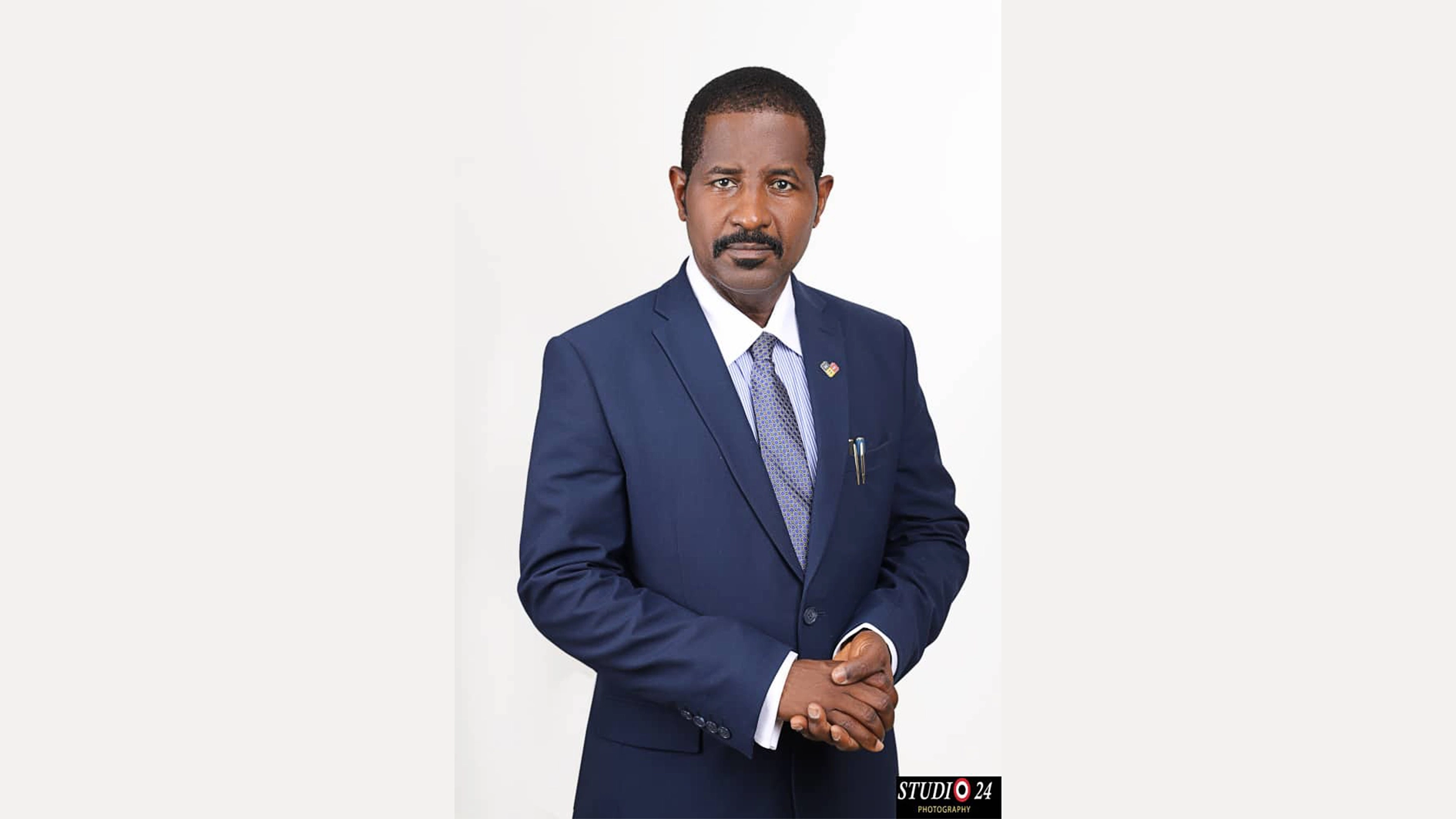
AS the global telecommunications community prepares for the International Telecommunication Union (ITU) World Radiocommunication Conference (WRC-27) in Shanghai, China, Dr Bashir Gwandu, has renewed his call for African telecommunications experts and spectrum administrators to work together to secure the allocation of the 600MHz spectrum band for mobile services across the continent.
Gwandu, a former Executive Vice Chairman of the Nigerian Communications Commission (NCC) and National Agency for Science and Engineering Infrastructure (NASENI), stated this during a keynote address at the 2026 Spectrum Management Conference in Tunis, Tunisia, urged African countries to push for the allocation and identification of the 600MHz band for International Mobile Telecommunications (IMT), arguing that the frequency would significantly improve affordable 4G and 5G connectivity in rural areas.
The yearly Spectrum Management Conference brings together regulators, policymakers, operators, and industry stakeholders from across Africa and beyond to discuss strategies for efficient spectrum utilization and the advancement of telecommunications.
Gwandu, now an Independent telecom expert, emphasised that telecommunications regulators and spectrum managers hold their positions in trust for the public and must ensure that underserved rural communities are not left behind in the digital era.
According to him, allocating the 600MHz frequency band to mobile services would enable operators to provide wider coverage at lower deployment costs. He noted that the band can also be aggregated with other sub-1GHz spectrum resources, including the 700MHz, 800MHz, and 900MHz bands, to enhance network capacity and user experience.
Citing the GSMA Spectrum and Rural Connectivity Report, Gwandu noted that rural users spend nearly twice as much time connected to low-band spectrum compared to urban users. He highlighted findings showing that an additional 50MHz of sub-1GHz spectrum is associated with a seven-percentage-point increase in 4G coverage and an 11-percentage-point increase in 5G coverage.

He added that since the 700MHz band currently serves as the primary low-band spectrum for 5G deployment in many countries, the 600MHz band would naturally become an important additional resource for expanding rural coverage and improving service quality.
Gwandu warned that more than 135 million people in rural Africa remain unconnected, stressing that without sufficient low-band spectrum, many countries will continue to struggle to bridge the digital divide.
“Despite substantial investment in mobile infrastructure, large parts of Africa remain effectively unconnected,” he said. “We must ask ourselves whether delays in making critical spectrum allocation decisions are contributing to the persistence of poor rural coverage.”
The telecommunications expert stressed that spectrum managers have a responsibility to maximize the socioeconomic value of spectrum resources for the benefit of all citizens, particularly those in underserved communities.
He urged policymakers to align spectrum policy with broader national development objectives, including digital inclusion, education, local content creation, cultural participation, and economic empowerment.
“Connecting the unconnected is not merely a telecommunications objective,” he said. “It is a foundation for economic growth, social inclusion, and sustainable development across Africa.” Gwandu also encouraged regulators and policymakers to make bold decisions in pursuit of the public good rather than avoid difficult policy choices.
Highlighting the strategic significance of the UHF spectrum range, Gwandu said low-band frequencies below 1GHz remain critical to addressing connectivity challenges across Africa because of their superior propagation characteristics, which allow signals to travel longer distances and penetrate buildings more effectively.
He noted that these characteristics make low-band spectrum particularly valuable for countries with large rural populations, where network deployment costs are often prohibitive. “The 600MHz band remains one of the most valuable spectrum assets for the future evolution of mobile broadband services, especially in regions requiring extensive rural coverage,” he said.
To support his argument for a primary allocation of the 600MHz band for mobile services, Gwandu referenced several ITU Radio Regulations footnotes adopted at previous World Radiocommunication Conferences. He noted that Footnote 5.295A allocated portions of the 470–694MHz band to mobile services on a secondary basis in 42 European countries, as well as Türkiye and Uzbekistan.
Similarly, Footnote 5.307B provides secondary mobile allocations in the 600MHz band for Gambia, Mauritania, Namibia, Nigeria, Senegal, Somalia, Tanzania, and Chad. Footnote 5.300 also provides allocations in parts of the band covering several countries in the Middle East and North Africa.
According to Gwandu, African countries seeking a primary mobile allocation for the 600MHz band during WRC-23 faced significant opposition, while a number of Arab administrations successfully secured primary mobile allocations and IMT identification in the 614–694MHz range through Footnote 5.307A.
He further observed that countries in ITU Regions 2 and 3 have already secured various forms of mobile allocations and IMT identifications in portions of the 470–698MHz spectrum range. Gwandu drew attention to Resolution 235 adopted at WRC-23, which directs the ITU Radiocommunication Sector to conduct studies ahead of WRC-31 on spectrum use within the 470–694MHz band.
However, he noted that the scope of these studies currently applies only to countries listed under Footnote 5.295A, which predominantly includes European nations to the exclusion of Africa.
As a result, most African countries, including those identified under Footnote 5.307B, are excluded from the sharing and compatibility studies associated with Preliminary Agenda Item 2.14 of WRC-31.
He therefore urged African administrations to advocate for an expansion of the study scope to include African countries, enabling them to participate fully in the technical and regulatory discussions that will shape future spectrum policy decisions.
In his concluding remarks, Gwandu called on African countries to prioritize joining Footnote 5.307A, which provides a primary allocation and IMT identification for the 600MHz band. Where this may not be immediately achievable, he recommended pursuing inclusion under Footnote 5.307B as an interim measure while working collectively toward broader regional objectives.
He also urged African nations to coordinate closely with neighboring countries to avoid regulatory objections that could hinder efforts to secure new spectrum allocations.
Additionally, he called for amendments to Resolution 235 (WRC-23) to extend the scope of WRC-31 Agenda Item 2.14 to African countries, ensuring that the continent has a pathway toward securing future 600MHz mobile allocations and advancing affordable broadband connectivity for rural populations.
“Africa must speak with one voice on spectrum policy,” Gwandu said. “The decisions we make today will determine how effectively we connect the unconnected and unlock the continent’s digital future.”

