 Follow Us on Google News
 Follow Us on Google Discover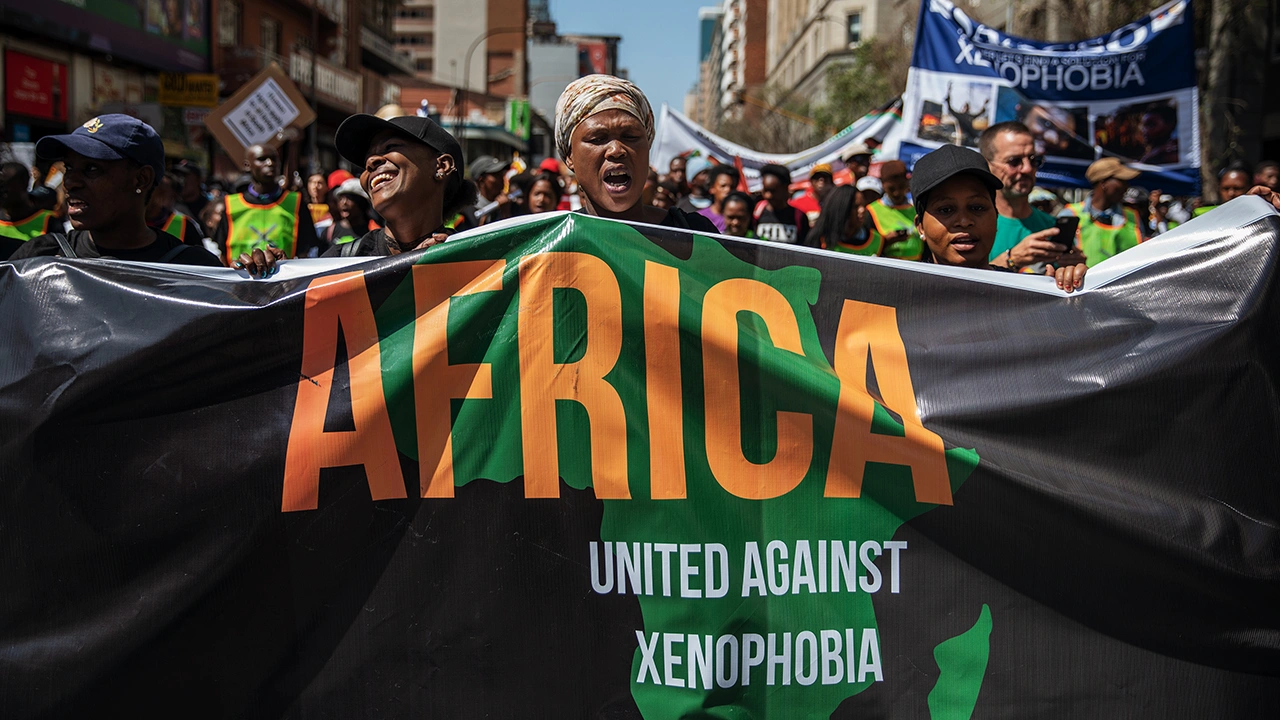
A Nigerian-born South African don and Professor of International Relations, Ambassador Adegoke Taiwo Ogunlade, has condemned discrimination and social exclusion against African migrants in South Africa, saying such treatment undermines the ideals of African unity.
Ogunlade spoke at the Global Empowerment and Inclusion Summit 2026, held at the Palais des Nations, United Nations Office at Geneva, Switzerland.
Speaking as an International Observer representing Sub-Saharan civil society and Principal Panel Adjudicator representing the African Carer Association of South Africa, the don challenged African governments, international institutions and human rights organisations to confront what he described as growing discrimination, exclusion and social hostility experienced by African migrants in South Africa.
He said the issue went beyond migration policy, raising fundamental questions about the meaning of African solidarity in the 21st century.
“If Africans are discriminated against by fellow Africans, what does African unity truly mean?” he asked.
Ogunlade argued that the treatment of African migrants should be viewed within the broader framework of human dignity, continental integration and the universal application of human rights.

According to him, African migrants in South Africa continue to experience exclusion, discrimination and social segregation, with reported cases and public discussions raising concerns over access to healthcare, education, social protection and other essential services.
He also warned against stereotyping African migrants as undocumented foreigners or associating them with criminality, saying such narratives could deepen social isolation, fear and humiliation while undermining the principles of equality and human dignity.
“Families are being separated. Children are growing up in fear and uncertainty. Many migrants feel voiceless, abandoned, and forgotten despite living within the African continent among fellow Africans,” he said.
On recent tensions in Kenya, where African migrants were given a window to regularise their stay, a Lagos-based migration governance expert, Mr. Olusoji Ajao, said the challenges confronting African migrants should not be viewed as isolated incidents or peculiar to any single country.
Rather, he said they reflected deeper structural pressures arising from population growth, limited economic opportunities and increasing movement of people across the continent.
Ajao said developments in Kenya had again highlighted the difficulty governments faced in managing migration in environments where populations were growing while employment opportunities remained constrained.
He argued that migration debates must move beyond the narrow question of whether migrants were documented or undocumented and address the underlying economic conditions that often fuel tensions between host communities and foreign nationals.
“As long as the population of Africa is increasing at geometric rates while job creation is increasing at arithmetic rates, host countries, whether dealing with regular or undocumented migrants, will continue to face significant pressures and challenges,” he said.
Ajao stressed that migration governance should not be treated solely as a matter of border control, documentation or national security, but fundamentally as an economic governance challenge.
He called for greater investment in large-scale businesses, industries and productive sectors capable of generating employment at scale, arguing that Africa could not sustainably manage migration tensions without expanding economic opportunities for both citizens and migrants.
“Migration will continue to be part of Africa’s reality,” Ajao noted, adding that the critical policy question was whether governments were creating economies capable of absorbing growing populations and mobile labour forces.
He maintained that expanding employment and productive opportunities would improve livelihoods and reduce the perception that migrants were competing with citizens for scarce economic resources.
According to him, such measures would also help ease resentment and migration-related tensions across the continent.

