 Follow Us on Google News
 Follow Us on Google Discover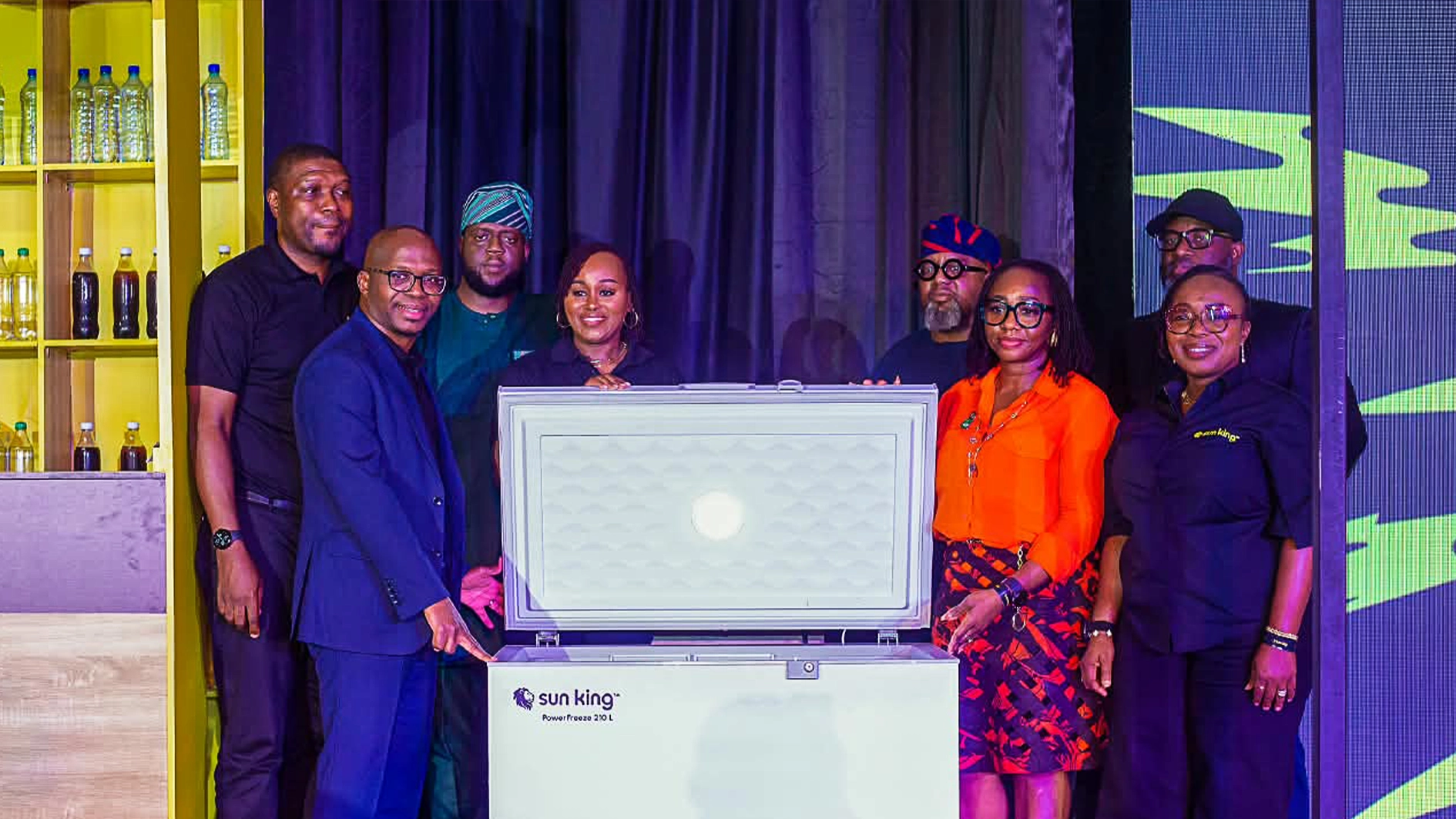
…Unveils expandable 30kVA Power Hub Pro, introduces flexible payment plan to boost access
Sun King, a leading off-grid solar energy company, has launched a 5kVA solar inverter and a 210-litre solar-powered freezer in Nigeria, expanding its product range as households and businesses grapple with unreliable electricity supply and rising energy costs.
The products, Power Hub Pro and Power Freeze, were unveiled at an event in Nigeria, with the company targeting homes, businesses, schools, hospitals and other users seeking alternatives to conventional electricity sources.
Speaking at the launch, Sun King’s Vice President for Pay-As-You-Go “PAYGO”, Western Central Africa, Omoyemi Tuga, said the new Power Hub Pro was an upgrade from the company’s existing 2kVA and 3.3kVA inverters.
According to him, the 5kVA system could be expanded to 30kVA, enabling customers to increase their electricity capacity as their needs grow.
He said the inverter could power homes, businesses, schools and hospitals, among other facilities.
The Power Freeze, he explained, was designed to operate on solar energy during the day and battery power at night, allowing users to keep the 210-litre freezer running throughout the day.
Tuga said the product would be particularly useful to households and businesses that depend on refrigeration for their livelihoods.
On affordability, he said Sun King was offering customers the option of acquiring its products through EasyBuy, the company’s pay-as-you-go financing model.
He explained that customers could make an initial down payment and spread the balance over weekly or monthly installments for between one and two years, depending on the product.

“It’s very difficult for a customer to buy the product at once, to pay for it outrightly. That’s why we have our in-house financing, which we call EasyBuy,” Tuga said.
He disclosed that customers could acquire the 5kVA Power Hub Pro with a down payment of about N340,000, while the Power Freeze was expected to be available commercially at a monthly payment of between N120,000 and N130,000.
The launch comes as Nigeria continues to face electricity supply challenges, prompting households and businesses to seek alternative power sources.
Speaking on the country’s electricity access gap, the Technical Lead for Mission 300 in Nigeria, Dayo Olowoniyi, said distributed solar energy remained one of the fastest ways to provide electricity to underserved communities.
He mentioned that Mission 300 seeks to connect 300 million Africans to electricity, noting that more than 70 million Nigerians still lacked access to electricity.
He disclosed that over five million new off-grid connections had been achieved in Nigeria between 2025 and 2026, excluding on-grid connections.
Olowoniyi attributed part of the progress to the Distributed Access through Renewable Energy Scale-up (DARES) programme, implemented by the Rural Electrification Agency and supported by a $750 million World Bank facility.
He said the programme provided capital subsidies to companies deploying solar equipment in rural and low-income communities, helping to reduce the cost of electricity access.
“The government, through a programme, a World Bank programme called DARES, provides some level of capital subsidy to companies like Sun King, which then reduces the burden and the cost to Nigerians,” he said.
Olowoniyi said public-private partnerships were essential to expanding solar adoption, noting that government funding alone could not reach every consumer, while private companies needed support to make systems affordable to low-income households.
Meanwhile, Country Business Leader and Manager for Sun King Nigeria, Lisbon Ogunsanmi, said Nigeria remained one of the company’s fastest-growing markets.
Ogunsanmi said the company had expanded from selling basic solar lighting products to offering systems capable of powering homes and businesses.
He said the company’s growth had been driven by partnerships with distributors, dealers, retailers, installers and financial institutions.
“We do not sell panels. We sell confidence,” he said.
Ogunsanmi said the company would continue to deepen partnerships with government and private-sector stakeholders to close the affordability gap and make solar energy more accessible to Nigerians.

