 Follow Us on Google News
 Follow Us on Google Discover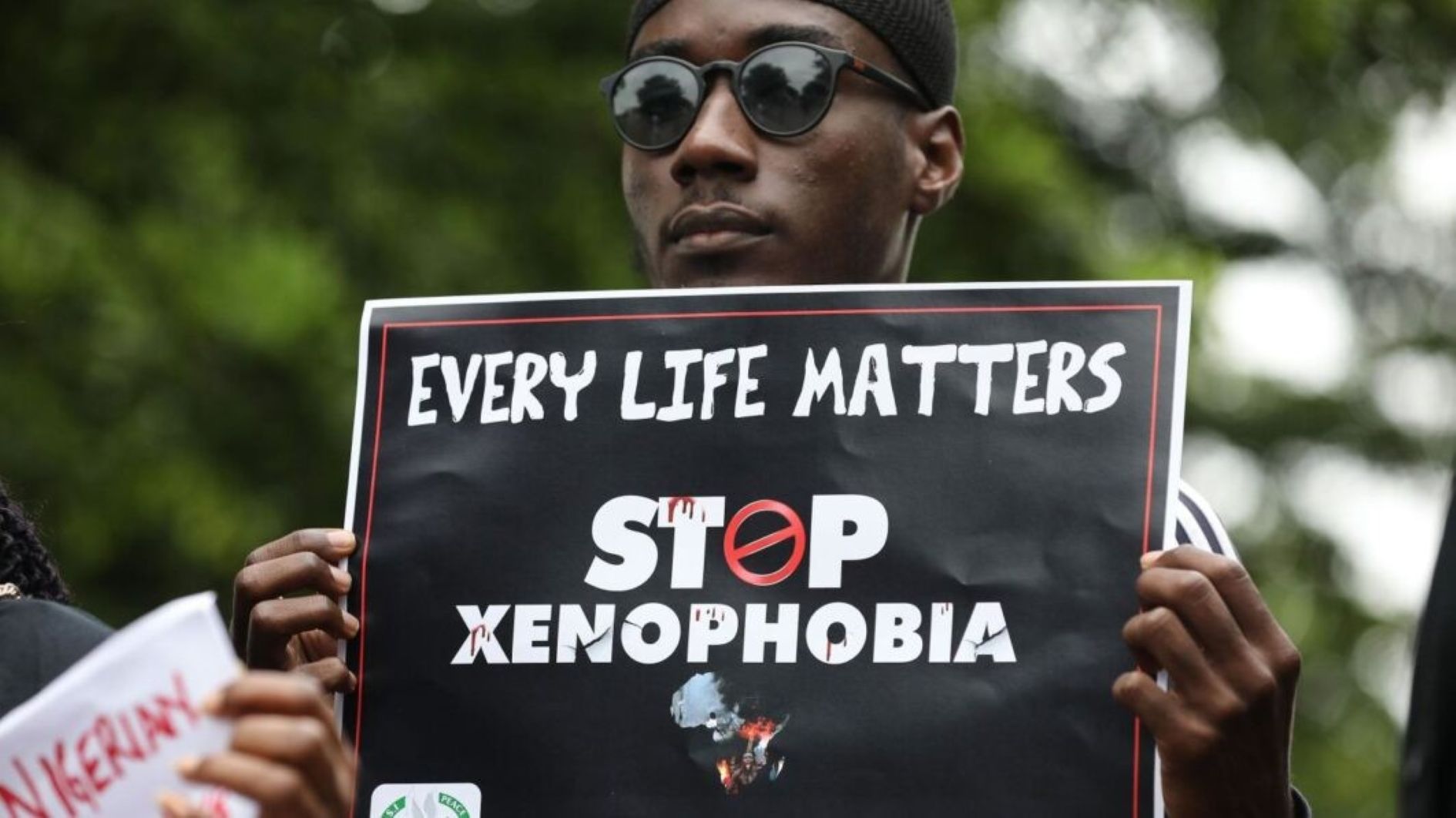
By Adekeye Adebajo
In 2026, a wave of Afrophobia swept through South Africa’s higher education sector, reflecting trends in wider society. The scourge of xenophobic attacks has been a perennial feature of post-apartheid South Africa. Between 1994 and 2025, Wits University’s African Centre for Migration and Society recorded over 935 verified xenophobic incidents that led to more than 384 deaths. In 2025, the Human Sciences Research Council noted that 42 per cent of South Africans polled voiced outright hostility towards immigrants.
Briefing South Africa’s parliamentary portfolio committee on higher education and training, Buti Manamela, minister of higher education and training, noted in February, that foreign academics (including non-Africans) constituted just 12 per cent of permanent academic staff in the country’s 26 public universities: a figure that has remained stable for many years, even as the overall number of black academics in public universities has increased to 45 per cent.
Manamela reassured the committee that there was “no evidence of systematic displacement of South Africans in permanent academic posts.” The portfolio committee – chaired by the McCarthyite Walter Tebogo Letsie – however, continued to insist that foreign nationals only be employed in “critical or scarce skills,” revealing the fundamental lack of understanding – as South African academic, Sioux McKenna, eloquently noted – of the cosmopolitan mission of universities to cross geographical, cultural, and disciplinary boundaries, and attract a mix of diverse experiences. British universities, for example, have 32 per cent foreign academics. Ivory towers are clearly not factories.
The parliamentary committee threatened to unleash the country’s Special Investigative Unit (SIU) on universities to ferret out the “real” figures. Meanwhile, the number of international students in the country’s universities dropped from 7.4 per cent in 2010 to 4 per cent by 2024.
McKenna further observed that this belligerent approach actually contradicts South Africa’s own internationalisation policy pledging to promote staff and student mobility, with a view to becoming “a hub for higher education and training in the region.” This is all occurring in a situation in which whites still constitute 56 per cent of faculty in the 10 historically white universities, while only around half of South African academics have doctorates.

Anonymous internet warriors recently cited false figures of over 80 percent foreign academics at Wits, before the university provided the correct figure of 9 per cent. As South African academic, David Maimela, cautioned “Everyone should be concerned about the growing assault against the university and knowledge itself….what is terribly concerning is the degeneration of these questions to the level of populism, recklessness and mindlessness.”
Just as with the Afrophobic mob vigilantism in the streets incited by March and March and Operation Dudula, this animosity in ivory towers – fuelled largely by black South African academic entrepreneurs – has been directed solely at African academics from the rest of the continent, rather than at the numerous white North American and European academics. As McKenna, put it: “…the framing of the [parliamentary] committee’s concerns reveals a conflation of immigration compliance with something else, something closer to a suspicion that foreign academics are a problem.”
I personally experienced some of this Afrophobia in running a Pan-African institute at the University of Johannesburg (UJ) for five years, frequently being asked by senior black colleagues to hire more South Africans to a seven-member unit committed to intellectual and geographical diversity.
In my time at UJ, I also had supervisors whom I felt had no genuine commitment or understanding of what constituted a Pan-African vision. Earlier, a prominent black South African scholar told me that non-South Africans should not comment on South African politics. The widespread failure to construct an African identity in post-apartheid South African society has helped to create an environment in which Afrophobic academic entrepreneurs have flourished within the country’s ivory towers.
Professor Adebajo is a Senior Research Fellow at the University of Pretoria’s Centre for the Advancement of Scholarship in South Africa.

