
 Get Guardian on Google
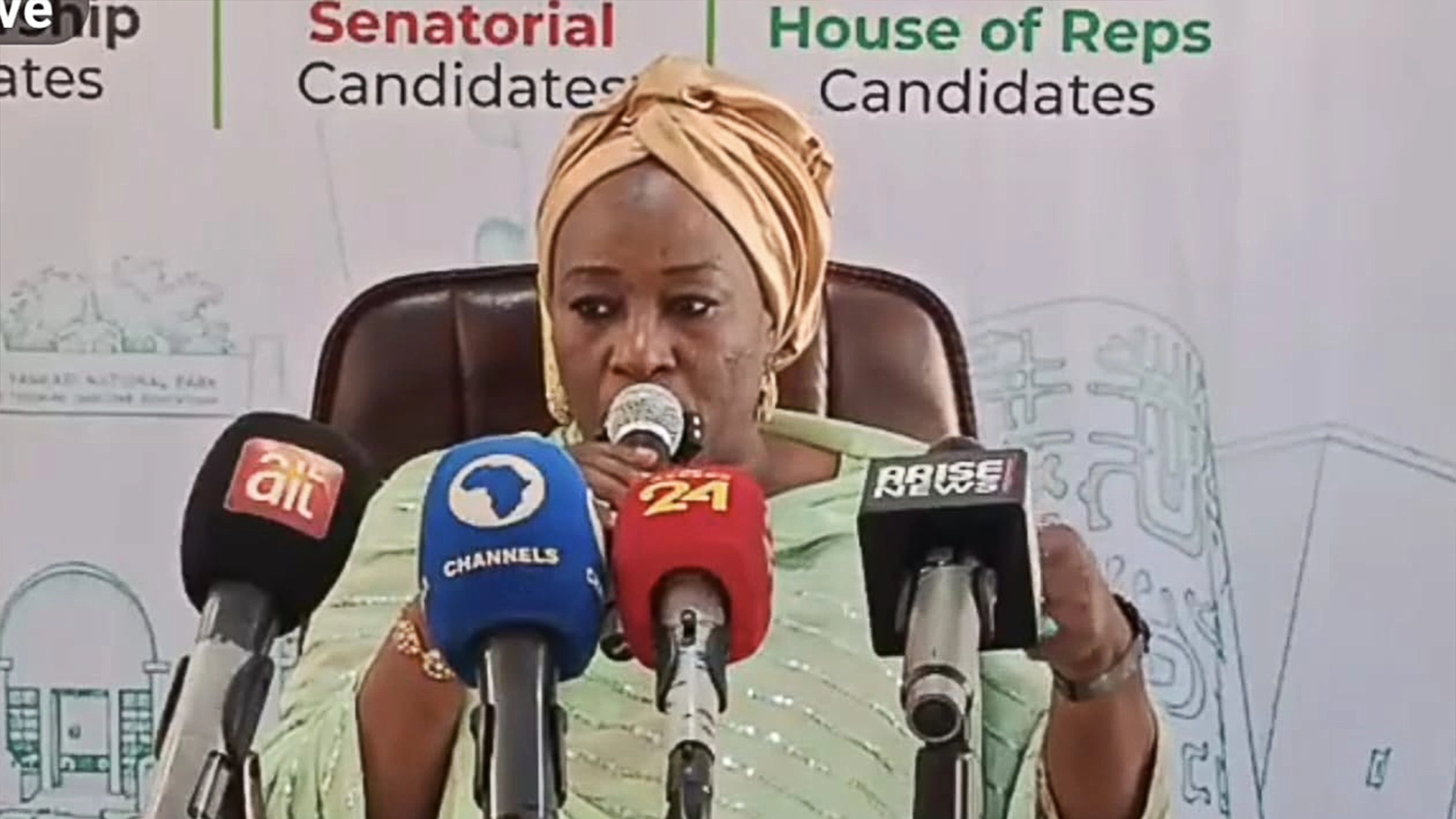
A Peoples Democratic Party (PDP) candidate for House of Representatives, Hon Maryam Garba Bagel, contesting for Dass/Tafawa Balewa/Bogoro Constituency in Bauchi State has identified inadequate financial support, religious stereotypes and societal restrictions as major obstacles confronting women seeking elective positions ahead of the 2027 general elections.
The female politician, who is seeking election into the House of Representatives, said this during the ‘2027 Elections Interview Series’ organised by the Correspondents’ Chapel of the Nigeria Union of Journalists (NUJ) Bauchi State Council, said that financial constraints remain the biggest challenge for women in politics, arguing that many potential female candidates struggle to attract the financial backing and political investments available to their male counterparts.
Speaking during an interview, she dismissed the perception that women do not support fellow women in elections, describing the narrative as misleading and a deliberate attempt to discourage female participation in politics.
She argued that women’s voting decisions were often influenced by political affiliations and male-dominated societal structures, including husbands, fathers and other political gatekeepers who sometimes dictate candidates their female relatives should support.
“Women support women. But when women do not support a particular candidate, there may be reasons, including political party differences and the influence of gatekeepers,” she said.
According to her, it is hypocritical to blame women for failing to support female candidates when similar accusations are rarely directed at men over their support for fellow men.
She explained that financial constraints often make it difficult for women to compete effectively, particularly as political campaigns require substantial resources for logistics, publicity materials, posters and billboards.
Bagel, who was a member of the Bauchi State House of Assembly between 2015 and 2019 noted that campaign billboards, which previously cost about N4,000, now cost approximately N40,000, raising questions about how women without strong financial backing could sustain competitive campaigns.
She, however, clarified that her concern was not about money for vote-buying but the legitimate financial requirements of organising and running an effective political campaign.
The PDP candidate also identified religious and societal stereotypes as challenges women encounter during electioneering, saying such prejudices could be overcome through proven leadership records and performance in public office.
She cited her experience in the Bauchi State House of Assembly, arguing that her legislative record compared favourably with that of some male lawmakers who had served before and after her.
The aspirant maintained that women seeking elective positions should not rely on sympathy but demonstrate competence, confidence and the capacity to deliver on their responsibilities.
“Whatever it takes a man to run for office, you have it too. Don’t dwell on sympathy. You should run because you believe you can do it and because you have the right to do it,” she said.
On her party’s chances in the 2027 elections, despite the PDP being outside the ruling party in Bauchi State, she expressed confidence that the opposition party could reclaim the federal constituency.
She described Bauchi as a politically conscious state where voters could distinguish between candidates based on their credibility and records, irrespective of the political platforms on which they contested.
She argued that the PDP’s development record in the state, particularly in infrastructure and human capital development, would remain a major consideration for voters.
“I don’t have any fear that because PDP is in opposition, I cannot win this seat. Because we are in the opposition, that is why we will even win,” she declared.
The aspirant also expressed optimism about the emergence of a more independent-minded legislature in 2027, saying lawmakers should be prepared to prioritise the interests of their constituents.
She explained that effective lawmaking requires extensive consultation, lobbying and public sensitisation before bills and motions are presented on the floor of the Assembly.
According to her, lawmakers must build consensus among colleagues, incorporate useful contributions and engage the public to secure acceptance for proposed legislation.
She added that public understanding and support were essential to ensuring that well-intentioned bills were not rejected before reaching the legislative stage.
The candidate pledged to pursue advocacy and constructive engagement to advance people-oriented legislation if elected into the National Assembly in 2027.