 Follow Us on Google News
 Follow Us on Google Discover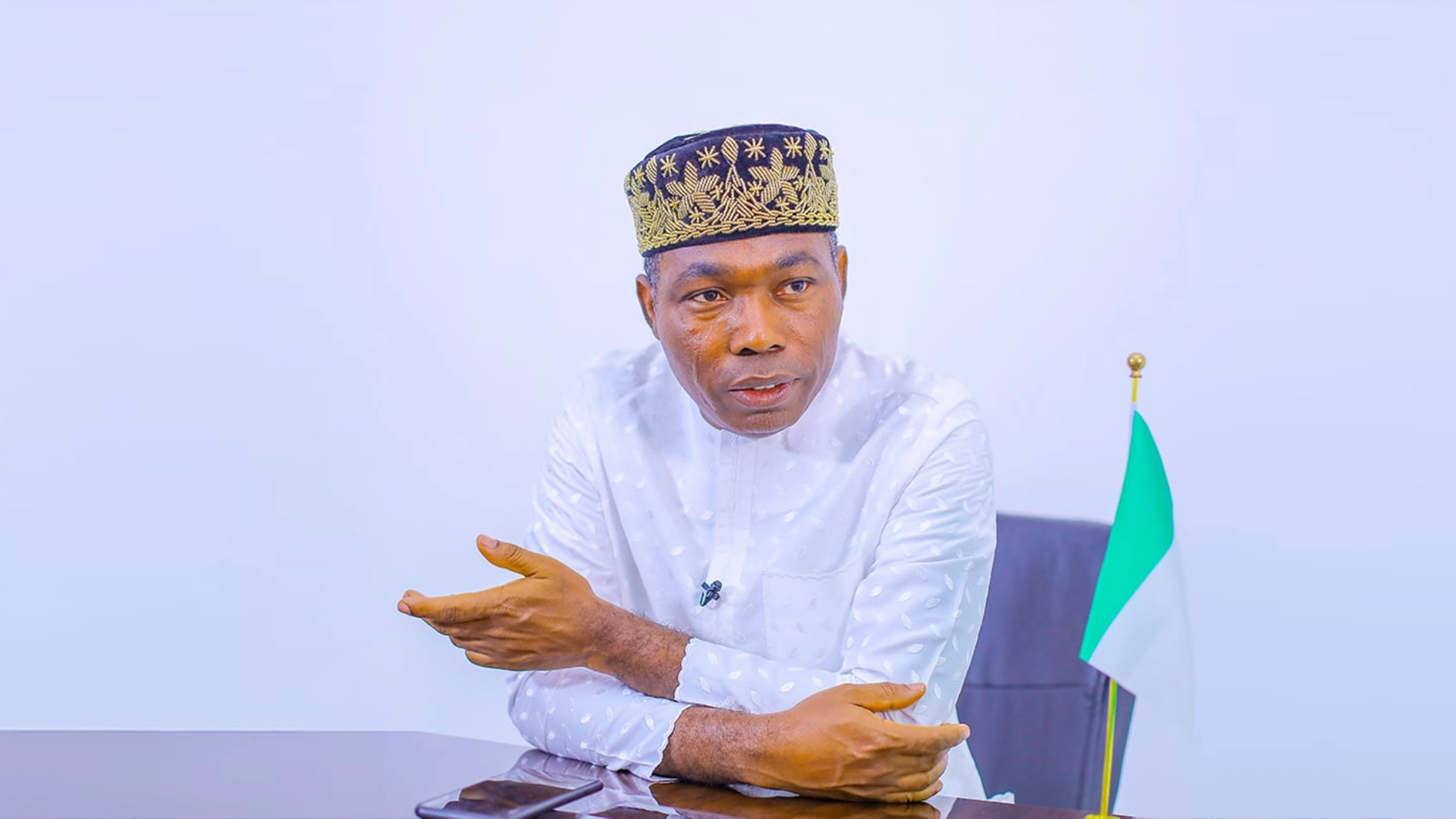
A lawyer and presidential candidate of the Social Democratic Party (SDP) for the 2027 presidential election, Adewole Ebenezer Adebayo, in this interview with LEO SOBECHI, traces what he describes as the moral crisis in Nigeria’s leadership recruitment and argues that Nigerians should be presented with clear alternatives to enable them to make informed choices.
Unlike 2023, things seem to be looking up in your aspiration to be president of Nigeria. How does that make you feel?
I feel challenged that we still have more to do. I feel responsible for the outcome of elections when the outcome is because you did not push hard enough.
After the last experience, many people I meet say, “If I had known about you, or understood you better, I would have voted for you.” So, I discovered that we did not reach out well enough. Even now, we are still striving to reach out because, overall, Nigerians want a good country, and they yearn for a good leader.
But with the vision the media presents, they are left with limited options. It is like someone going to a buffet but not seeing the rest of the menu, and being told to choose between garri and bread when he actually wants protein.
That is how people feel. We therefore have a responsibility to reach out and let people see that we have solutions to Nigeria’s problems. God being on our side, we should be able to transform the country quickly, without people regretting that they were born or raised here.

The Southwest, formerly Western Nigeria, contributed immensely to Nigeria’s socio-political development. Many believe that anybody from the region who knows what the late leader of the Action Group (AG), Chief Obafemi Awolowo, and the acclaimed winner of the June 12, 1993, Presidential Election, Chief M.K.O. Abiola, promised to do, should also understand the best principles of statecraft. How do you rate the past four years?
Every society has to remain vigilant. There is no part of Nigeria without its own spark of greatness. We have had great leaders from every part of the country.
Awolowo was an icon of leadership excellence. So were Nnamdi Azikiwe, Michael Okpara, Ahmadu Bello, Aminu Kano and many others. But there has been a general degeneration.
There is a rise of people who want to take us into ethical degeneration and normalise stealing, robbery, forgery, falsification and impersonation. They seek to recruit people of questionable character into dominant positions because an unethical person at the top of an ethical system will feel threatened. That is why one robber does not rob a bank alone; he goes with his gang. Bad leaders need backup to normalise their conduct.
The danger is that when people who do not merit leadership buy, lie, bribe or force their way into authority, they do not stop there. They begin to undermine the institutions around them. They influence traditional institutions, promote inept or corrupt officials, weaken professional standards and fight excellence.
It becomes like a disease attacking the entire body politic. Checks and balances are destroyed, the legislature is weakened, the judiciary is intimidated and law enforcers can become facilitators of lawlessness.
The Southwest is facing this despite its abundance of quality leadership. Once standards are lowered and questionable leadership is accommodated, those who benefit from the system begin to suffocate those demanding accountability.
Money is then placed above everything. Public officials become revenue collectors for individuals who raid government resources and use the proceeds as a war chest to confront the ultimate custodians of democracy—the people. They buy their conscience and, ultimately, their votes.
The media is also affected because accountability is one of its primary functions. But if poverty becomes widespread and journalists and media organisations become financially dependent, truth becomes difficult to sustain.
Before the immune system of our democracy collapses, we need to restore regular order. That is the challenge.
Many Nigerians wonder why, amid the so-called Emi l’okan tendency in the Southwest, Adebayo is not being pushed to the front burner. How do you feel about that?
I do not know. It depends on where you are. I have always believed that power comes from the people. Of course, power comes from God, and God has given people the sovereignty to make choices.
So, it is up to the people whether they want to contract out that right, surrender it or exercise it themselves. It is not my style to push myself into political arrangements based on retribution or personal interests. I would rather take the solution to the people.
I also do not want to be a regional or religious representative. I am a prince of the Ondo Kingdom and I am proud of my heritage, but that is not my calling card in politics.
My calling card is that I am a Nigerian citizen who is concerned and highly motivated about the challenges in my country. I want to find solutions that give us the quickest way to do the greatest good for the greatest number of people.
Where the discussion is about how to solve Nigeria’s problems, we will feature. But when it becomes about settling scores, teaching people lessons, retaliation or showing who is stronger, we do not feature there.
We want a conversation about who can be the best president, provide the best solutions and do justice to all Nigerians. That is where people point to us, and that is satisfactory.
I will continue to work hard to ensure that the discussion about leadership in Nigeria is based on merit and what we need to do, rather than negative politicking.
Nigeria is supposed to be a welfare and social justice state and a diverse home for black people. If any black person is in trouble anywhere in the world, I want Nigeria to be the country people point to and say, “Why don’t you go to Nigeria?” That is how I want it to be, and that is how it will be, by the grace of God.
If we trace the origin of stomach infrastructure, many Nigerians point to the PDP. If we talk about hate-mongering and propaganda during campaigns, the APC is often accused of taking the lead. Where does the SDP flag fly highest?
Our flag flies highest in saying farewell to poverty. The SDP was created to address poverty and injustice. When you address poverty and injustice, you unify people because people love justice.
Everybody wants to be treated fairly and as a complete human being with rights in society. People also hate poverty. Every Nigerian wants their children to live a better life.
The richest Nigerians want their children to be richer than they are, while the poorest want their children to become prosperous. Nigerians want to live life more abundantly, as Awolowo put it.
That was the philosophy behind the struggle for emancipation. People sometimes underrate the contribution of Nnamdi Azikiwe. Zik helped make Nigerians believe in themselves. He told the black man that he was equal to the white man and capable of greatness.
The late Herbert Macaulay was part of that intellectual foundation; Zik was the philosopher, while Awolowo was the practitioner. They pursued the same broad mission of emancipation.
Awolowo understood that education was a tool for emancipation. But emancipation is not complete when people are living in poverty. You cannot claim to have an independent society when citizens cannot eat, live well or provide for their families.
As long as Nigerians are unable to live decent lives and international organisations and others continue to speak about assisting us to overcome poverty, we still have a fundamental problem.
A man has not truly built a home if his family has to go next door to eat. That is why we are here, and that is what the SDP stands for.
Not long ago, the Governor of Oyo State cried out that barely 24 hours after he declared his presidential ambition, mass kidnapping of schoolchildren occurred. In terms of stone throwing, how many stones did you receive trying to retain the SDP presidential ticket?
If you do an X-ray, you will see broken bones, but I knew there would be challenges and prepared for them.
The problem the Tinubu administration is facing is not simply that someone may take power from it. Power is also their livelihood, the source of the empire they are building and, potentially, a shield against the consequences of what they have done. Therefore, they do not take the contest as a joke.
Anyone contesting against Tinubu who thinks he is facing an opponent who will necessarily play according to the rules is wasting his time.
President Tinubu wants to win the FIFA World Cup with rugby players. He wants to win a boxing match by wrestling. That is what I have understood.
You have been particularly critical of President Tinubu. Do you believe previous Nigerian leaders had qualities that are missing today?
If you look at our history, you can identify at least one virtue in most of our previous leaders. Former President Shehu Shagari was personally honest, even if his government had its shortcomings. Erstwhile President Olusegun Obasanjo, whatever his mistakes, demonstrated a strong commitment to the country.
In Goodluck Jonathan, you saw humility and humaneness. In Umaru Yar’Adua, there was sincerity of purpose. If confronted with a problem, he was prepared to ask what could be done and act on it.
Ex-Military President Ibrahim Babangida was sensitive to public opinion and sought to be inclusive, while Military Head of State, Abdulsalami Abubakar understood the need to put Nigeria first and hand over power quickly in order to avoid instability.
You could say about Gen. Sani Abacha that he was decisive on security. Muhammadu Buhari was predictable; he knew his limits, and people could form an expectation of what he would or would not do.
Former Head of State, Gen. Yakubu Gowon was focused on developing infrastructure. Gen. Aguiyi Ironsi was fearless and rose through the ranks on merit. President Tafawa Balewa was a clear communicator and respected the rules.
The point is not that these leaders were perfect. It is that you could identify virtues in them.
Even among regional leaders, there were individuals who represented exceptional standards. Michael Okpara was a great leader, but Akanu Ibiam was regarded by many at an almost saintly level. Awolowo was hard-working and iconic, while Adesoji Aderemi represented another level of traditional and public authority.
That is the tragedy of our present moral crisis. We have combined too many responsibilities and expectations in political office without maintaining the standards that should accompany leadership.
My concern is not simply about Tinubu. It is about how someone of his type got there. Every time we mock his background, we should also ask ourselves: how did he get here? How are we not scandalised by what that says about us as a society?
That is why I do not join anybody in mocking Tinubu’s background. It is also self-mockery. The real question is: how did we allow our system to produce this?
You appear to believe that the problem is bigger than one individual. What, then, should Nigerians be looking for in 2027?
We must return leadership recruitment to merit, competence, integrity and a clear understanding of what Nigeria needs.
Nigerians are not asking for too much. They want security, food, education, healthcare, jobs, justice and an opportunity for their children to live better lives.
The country has enormous resources and human capacity. What has been missing is the quality of leadership required to bring those resources together for the common good.
The people must be presented with clear choices. They should not be told that their only options are two candidates or two political establishments when there are other people with ideas and solutions.
The 2027 election should therefore be about the future of Nigeria, not merely about which political faction defeats another.
If we get leadership right, we can transform the country rapidly. Nigeria can become a prosperous, just and secure nation and a country that gives hope not only to Nigerians but to black people everywhere.
That is the Nigeria I want to help build.

