 Follow Us on Google News
 Follow Us on Google Discover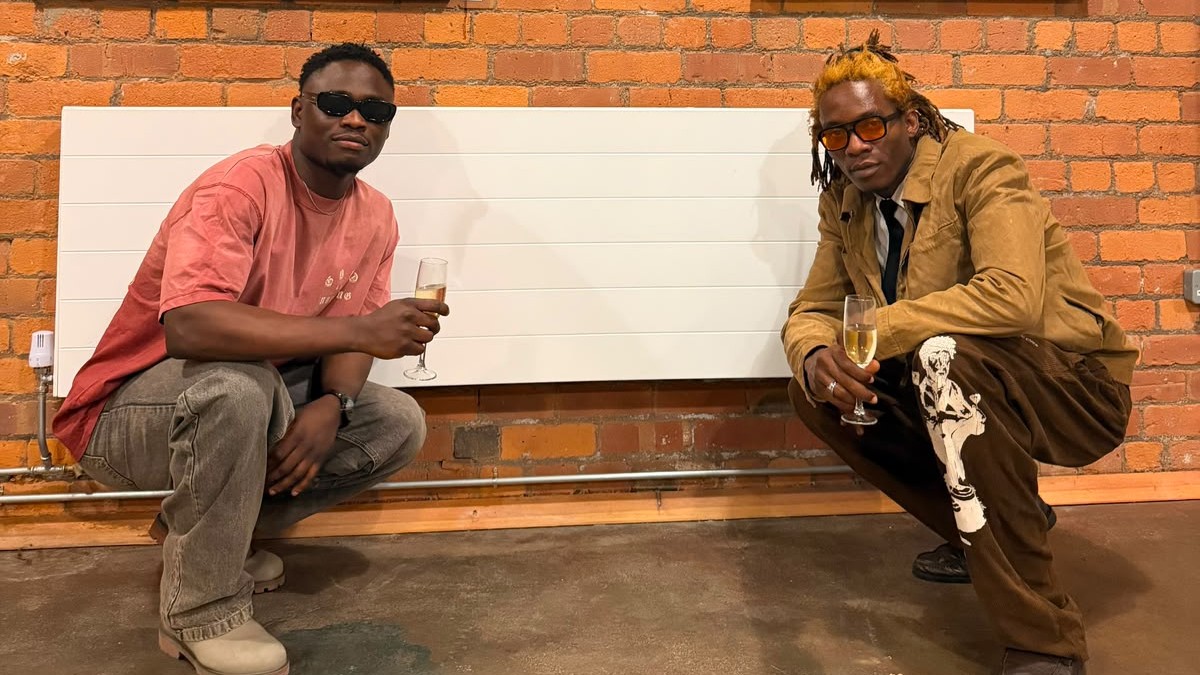
By Oyedele Alokan
Between the 16th to 17th of July, 2026, attendees would have counted themselves lucky to witness Eli The Great and Lart’s sprawling and colourful manifestos in an exhibition titled “Two Kings.” Here, we are treated to a barrage of mediums, acrylic on canvas, mixed media that extends to fabric, newspapers and even sculptures. There is no shortage of skill here, and it is no wonder why this event remains a memorable one for the good people at Seasaw Space in Manchester, United Kingdom.
This exhibition, Two Kings features two artists– real names, Amaremo Elaebi and Lawal Ibrahim Ayinla, both in the intermediate stage of their careers flex artistic sensibilities and prowess while touching on dynamic social issues in a way that each artist’s body of work stood as its own story yet derived fuller meaning in the larger context of sharing a space with another set of brilliant and insightful works. Think Yin-Yang, psychology and sociology, push and pull— such is the story of Eli and Lart.
The two artists connected in the most 21st century way ever, over Instagram as mutual fans of one another. Lart can’t quite recall the specifics of how the friendship began, only that, like so many creative bonds forged online today, it started with admiration from behind a screen. What drew him in was Eli’s style — raw, yet layered with meaning, and the sheer range of mediums he moved through with ease.
For over two years, the two stayed in touch, trading thoughts on art and life the way only true admirers of a craft do. But it took much longer for them to meet in person, plans to sit down and talk art kept falling through, more often than not because Lart, by his own admission, kept standing Eli up. “I tend to see myself as a socially distant person,” he says, a facet of himself he wasn’t always ready to confront. It wasn’t until the two began planning this very exhibition that they finally met face to face. Proof that sometimes it takes a shared vision to turn an online friendship into something tangible.
Eli’s works have a visceral touch to them, his strokes are jagged, imprecise. They sometimes bleed outside the borders retaining a sketch-like quality to them. His subject matters as well are brash– the themes maintain a figurative, surrealist nature. They involve human beings and objects familiar to humans, but meanings are never as plain as the images appear. Eli prefers to immerse himself in metaphors, his use of deep shades borders on florid. They are vivid, but not ostentatious.

In fewer words, Eli’s works are emblematic and chaotic– you can tell with “Time heals”, one of the exhibited works which features a young black boy sitting with a pocket watch in his hand, wrapped around his arms through to his shoulder is a white snake with red eyes, and what seems like a gathering pool of blood close to the boy’s neck. Another striking work from his collection “Life is War”, a portrait of a middle aged woman wearing a Hijab, on her shoulder hangs the African Black Card, an AK47– the woman, her clothing and the gun are all shaded black, with only a wedding band popping out on her ring finger. This figure is painted on a yellow backdrop, dotted by big red sun which helps frame the woman’s face. This is extremely striking commentary on Northern Nigerian insecurity, but that’s only one way to look at it.
Lart on the other hand takes a more measured approach to his works. His style is a mix of mediums from pen, to acrylic to fabric and newspapers, the results are these mixed bag of stimulating works that touch on hyperrealism and surrealism. His painting may feature a hyperrealistic figure, but the face and other select features of that humanoid figure would be drawn with neat, simple pen lines– all against a busy eye-catching patterned background made of Nigerian traditional fabric. These may be created from ankara or any other fabric that may carry an interesting pattern that strikes the artist.
This style, which Lart has coined ‘Aprosopi’ places less emphasis on the face as a way of interrogating the importance of human facial features. This line of thinking challenges societal standards that guide conversations around racism, colorism, pretty privilege, class and status. In “Harmony in Hues 1”, one of the works in this exhibition involves a subject on a stool, facing the viewer directly, one can see its skin, glistening and detailed. Yet, the subject’s outfit seems to be a blank slate, just single sketch lines to show how the imaginary fabric is supposed to fold on itself. The head has been replaced by what seems like a paper cutout, with eyes that bulge across both temples. All in front of a colorful background. Through this lens, Lart is able to make profound statements on societal issues whilst creating visually appealing works that can as well fit aesthetically in any collection.
Two Kings ultimately stands as proof of what happens when two distinct visions are allowed to share a room rather than compete for one. As the curator behind the exhibition put it, the pairing was about synergy: two different art styles overlapping “like a treasure map that is incomplete without its other bits.” The story doesn’t end with this exhibition. Eli is already looking ahead to more sculptures in his sunflower boy series, while Lart continues working quietly behind the scenes, developing a body of work that reflects just how far he’s evolved in the months since. If Two Kings proves anything, it is that order and chaos are forces that naturally balance out one another, and that Eli The Great and Lart are very unique visual artists with much more still to give.

