 Follow Us on Google News
 Follow Us on Google Discover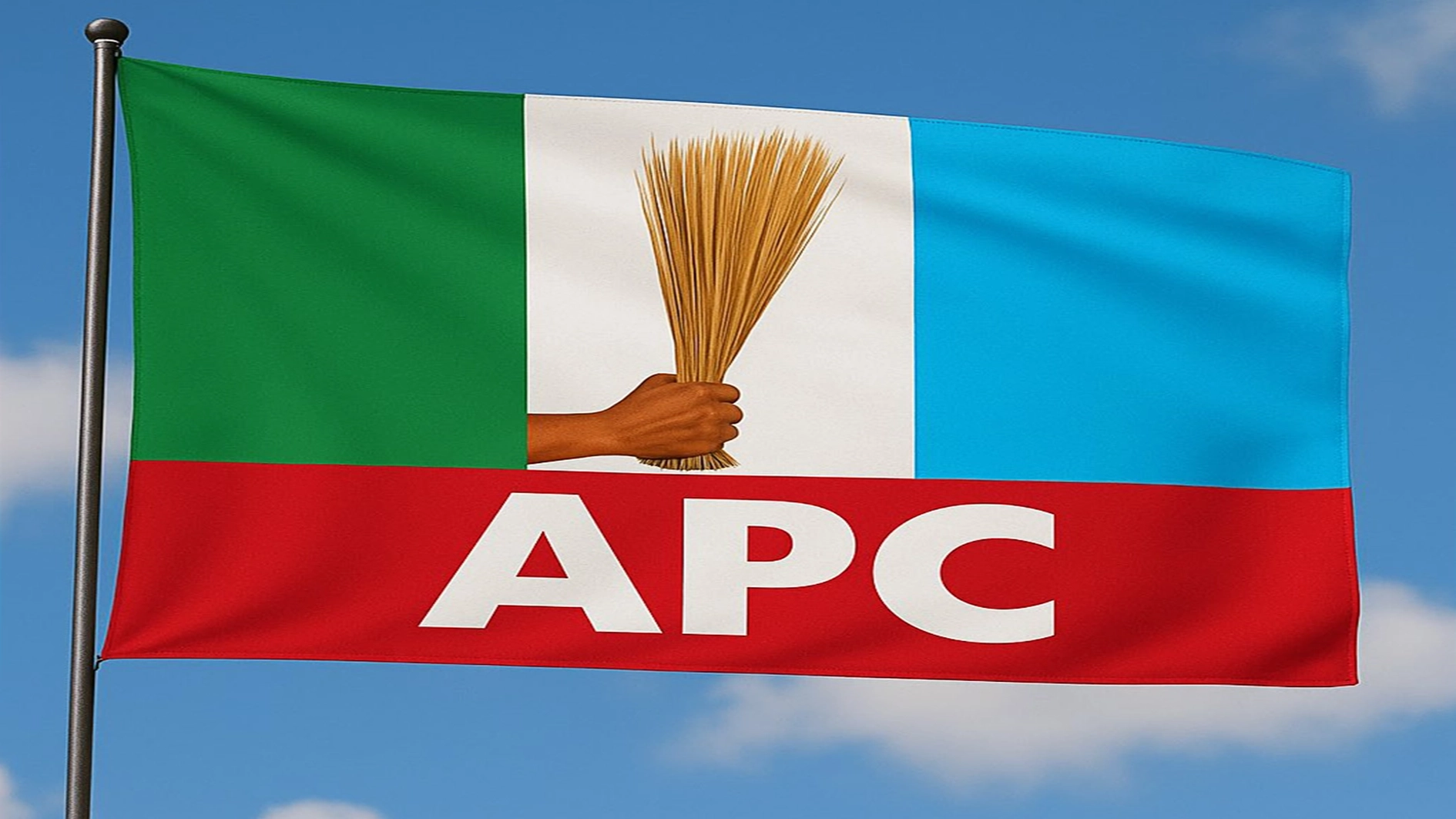
OPPOSITION parties failed to match the performance of the ruling All Progressives Congress (APC) in Saturday’s legislative bye-elections, as the ruling party won four of the five seats contested across Gombe, Kano, Bauchi and Delta states.
The results, declared by the Independent National Electoral Commission (INEC) after voting and collation, saw the APC retain or capture seats across the North-East, North-West and South-South, while the Allied Peoples Movement (APM) produced an upset in the Sakwa State Constituency of Bauchi.
The five polls comprised the Gombe/Kwami/Funakaye Federal Constituency in Gombe State, Dawakin Kudu State Constituency in Kano, Disina and Sakwa State Constituencies in Bauchi, and Udu State Constituency in Delta.
In Gombe, APC candidate Usman Maijama’a Kallamu won the Gombe/Kwami/Funakaye Federal Constituency seat with 41,121 votes.
He was followed by the Labour Party (LP) with 3,553 votes, while the Allied Peoples Movement (APM) polled 872 and the New Nigeria Democratic Party (NDP) secured 707 votes.
INEC said 47,301 votes were cast, with 46,551 valid votes and 750 rejected votes. The election covered 903 polling units across Gombe, Kwami and Funakaye local government areas.

The result came amid reports of uneven turnout across some polling units. While voting was generally described as peaceful and orderly, reports from parts of the constituency indicated relatively low voter participation.
In Kano, Hussaini Yusuf-Datti of the APC won the Dawakin Kudu State Constituency election with 22,890 votes.
The Peoples Redemption Party (PRP) came second with 270 votes, while the Peoples Democratic Party (PDP) scored 108 votes.
The Action Democratic Party (ADP) polled 89 votes, the All Peoples Party (APP) secured 53, and the Labour Party received 39 votes.
The Kano contest was also notable for the absence of two opposition parties.
The African Democratic Congress (ADC) and Nigeria Democratic Congress (NDC) did not participate in the poll amid internal issues and strategic considerations ahead of 2027.
The NDC’s Kano chairman said the party had decided to conserve resources for the general election, while the ADC cited its unresolved leadership crisis.
Bauchi produced contrasting outcomes in the two constituencies.
In Disina State Constituency, APC candidate Yakubu Ali won with 5,846 votes.
The APM came second with 5,225 votes, while the PRP secured 3,701 votes.
But in Sakwa State Constituency, the APC’s winning run was halted by the APM.
Adamu Yakubu of the APM won with 8,515 votes, defeating the APC, which scored 3,771 votes. The PDP polled 2,076 votes, while the PRP recorded 727 votes.
Bauchi Deputy Governor Auwal Jatau commended voter turnout and the conduct of electoral officials but alleged that three persons believed to be APM supporters had been arrested and intimidated by security personnel.
In Delta, Okolosi Ator of the APC won the Udu State Constituency bye-election with 8,724 votes. His closest challenger, George Biatere Orugbo of the PDP, scored 214 votes.
The result followed the declaration of the Udu seat vacant after its former occupant, Collins Egbetamah, defected from the APC to the Nigeria Democratic Congress (NDC).
The APC’s victory returned the seat to the party after the defection that triggered the vacancy.
The outcome has already generated reactions, particularly over what, if anything, the bye-elections indicate about the political landscape ahead of the 2027 general elections.
Aviation and Aerospace Development Minister, Festus Keyamo, described the APC’s four victories as significant, pointing to the spread of the wins across three geopolitical zones.
Reacting on social media, Keyamo drew attention to the constitutional requirement for a presidential candidate to secure at least 25 per cent of votes in two-thirds of the states of the federation and the Federal Capital Territory.
The minister said the constitutional provision reflected the heterogeneous nature of the country.
He said he would reserve a fuller analysis of what he described as the significant factor in presidential elections until after the 2027 election.
“Let me keep our gunpowder dry for now. A fuller analysis of this significant factor in Presidential elections will follow on January 19th or 20th, 2027 when President Bola Ahmed TInubu is declared winner of the Presidential election by the power of the people of Nigeria and the usual wailings begin,” he said.
He, however, said he would reserve a fuller analysis of the presidential implications of the results until after the 2027 election.
When contacted on what the results meant for the opposition ahead of the 2027 general elections, Phrank Shaibu, spokesperson for the ADC presidential candidate, Atiku Abubakar, promised to respond but had not done so as of press time.
Messages and calls sent to the National Publicity Secretary of the African Democratic Congress (ADC), Bolaji Abdullahi, seeking the party’s reaction were not responded to.
But the National Publicity Secretary of the Peoples Redemption Party (PRP), Muhammad Ishaq, said the party was still awaiting reports from its state chapters before taking a position.
Ishaq said: “We are currently awaiting reports from our state chapters. Once we receive and thoroughly review the election reports, we will formalise and communicate our official stance accordingly.”
Reacting to the conduct of the poll, INEC Chairman, Prof. Joash Amupitan, said the elections were important tests for its preparations for 2027.
Amupitan who monitored the elections from the commission’s National Situation Room in Abuja, described the bye-elections as an opportunity to examine the commission’s operational preparedness.
According to hime, the elections would provide indispensable operational lessons as INEC charts its roadmap towards the 2027 general election.
He said the commission would use the experience to audit its logistics, stress-test its technological deployment and evaluate administrative readiness in the field.
He added that challenges that arose before election day had been addressed through the commission’s monitoring and crisis-resolution mechanisms, while promising continued refinement of the electoral process.

