 Follow Us on Google News
 Follow Us on Google Discover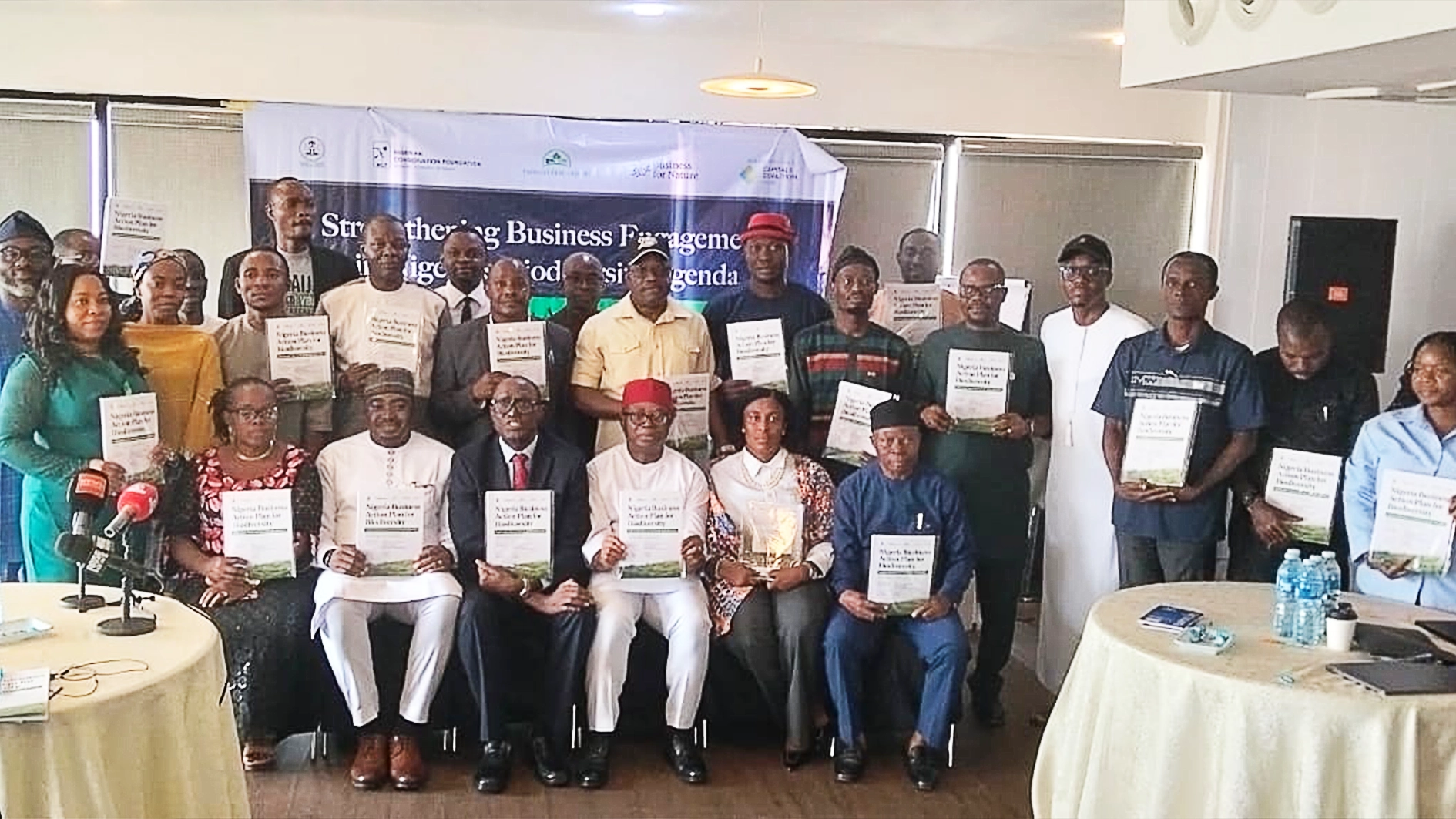
Experts in environmental conservation and sustainable development have called for stronger private sector leadership and innovative financing to protect Nigeria’s biodiversity and drive nature-positive economic growth.
They make the call in Abuja at the official launch of Nigeria’s National Business Action Plan (BAP) for Biodiversity, a new framework designed to translate the country’s National Biodiversity Strategy and Action Plan (NBSAP) 2025–2030 into concrete actions by businesses.
The initiative, being developed by the Nigerian Conservation Foundation (NCF) and Natural Eco Capital (NEC), in collaboration with the Federal Ministry of Environment and with support from Business for Nature, seeks to move biodiversity conservation beyond government-led interventions by placing businesses and financial institutions at the centre of efforts to protect ecosystems and natural resources.
With the theme, “Mobilising Private Sector Leadership and Finance for Nature-Positive Growth in Nigeria,” the high-level event attracted representatives of the Global Legislators Organisation for a Balanced Environment (GLOBE), the Small and Medium Enterprises Development Agency of Nigeria (SMEDAN), the Nigeria Economic Summit Group (NESG), other private sector organisations and the Federal Government, through the Ministry of Environment.
In his remarks, the Director-General, Nigeria Conservation Foundation (NCF), Dr Joseph Onoja, warned businesses that nature would eventually present them with an “invoice” for environmental damage, urging them to put biodiversity at the heart of their operations.
Onoja, who cited the devastation recently witnessed in Nepal as a warning, said: “When nature decides to act, when nature gives us her invoice, it destroys whatever we have made.”

He stressed that it was therefore in the interest of businesses to factor nature into their policies, processes and operations, noting that the approach was fast becoming a global norm.
He said Nigeria’s commitment to the Kunming-Montreal Global Biodiversity Framework, which it had domesticated through the Nigeria National Biodiversity Strategy and Action Plan (NBSAP), also required businesses to play a greater role in protecting biodiversity.
According to him, the NCF, Natural Eco Capital, Business for Nature and other partners were working with the Federal Ministry of Environment, through the Department of Forestry, to provide an implementation plan that would help businesses identify practical steps to ensure their activities do not harm nature.
Onoja said the initiative was the country’s first Business Action Plan for Biodiversity, adding that its launch marked the beginning of the implementation phase.
He urged businesses to adopt the plan as a toolkit for mainstreaming biodiversity into their operations, stressing that the objective was to move beyond commitments to concrete actions that would make business activities more nature-positive.
Also, the Chief Executive Officer, Natural Eco Capital, Dr Eugene Itua, said the newly unveiled Biodiversity Action Plan for the private sector would provide businesses with a clear pathway to participate in the implementation of the Plan.
Itua said the initiative became necessary because, while businesses had become increasingly familiar with climate change, biodiversity had received comparatively little attention despite its importance to their operations.
According to him, “The private sector wasn’t really doing anything in this sphere, and we saw that as a need.”
“The plan will support the private sector in being part of those implementing the National Biodiversity Action Plan,” Itua said, adding that the document “creates an easy route for entering this and, indeed, for integrating it into their business institutions.”
He stressed that businesses could no longer afford to treat biodiversity as a peripheral environmental issue, given their dependence on nature for raw materials and other resources.
Dr Itua said the action plan would also help businesses understand their “impacts and dependencies on nature” and manage the risks associated with biodiversity loss.

