 Follow Us on Google News
 Follow Us on Google Discover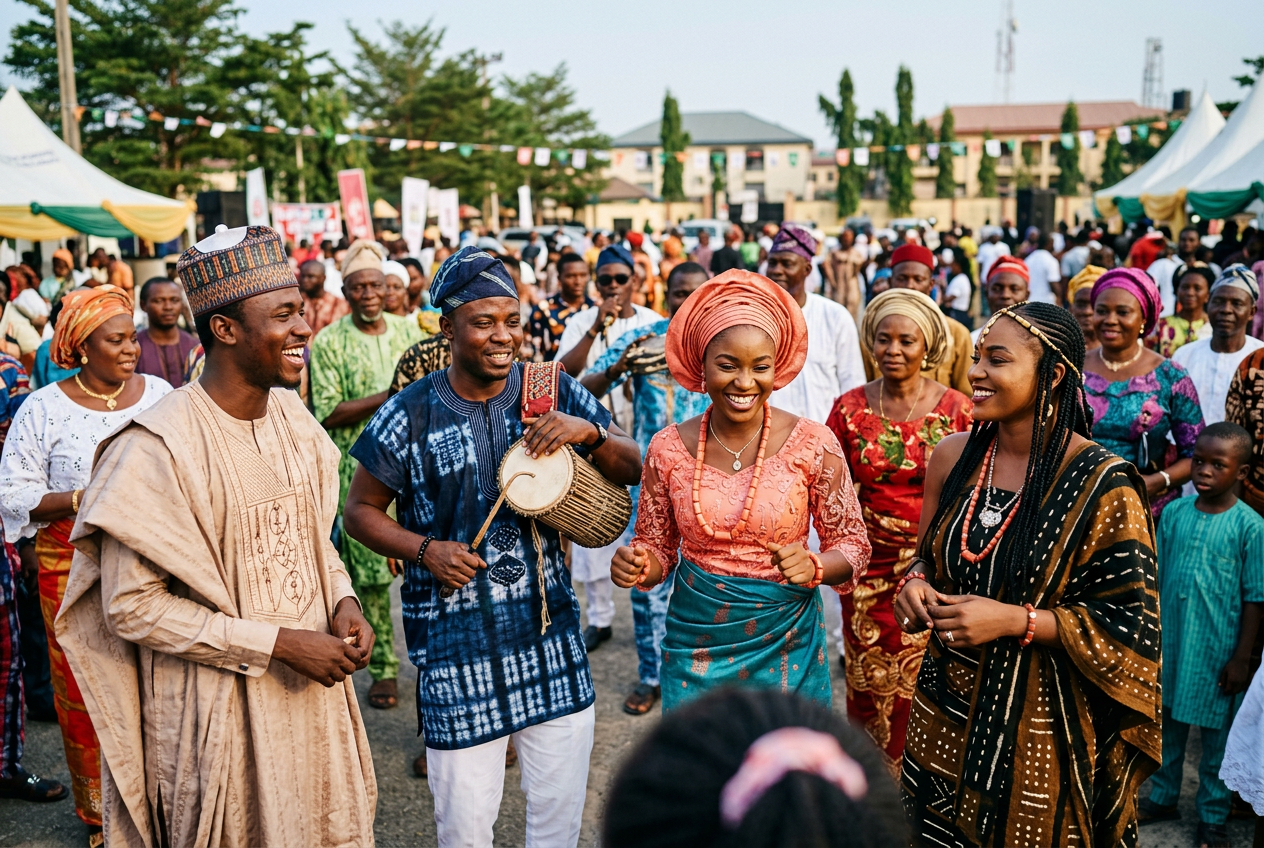
Welcome, and thank you for stopping by. This article is the conclusion of months of research through census archives and modern demographic estimates, resting on years of experience travelling, eating and arguing my way across this country, from Kano’s dye pits to the creeks of Yenagoa. So when somebody asks me what is the largest ethnic group in Nigeria, I no longer give the quick answer I used to offer at weddings. I give the right one, and it arrives with a few honest footnotes about the extraordinary patchwork of peoples we call home.
Here is the short version before we go wandering. The Hausa are the largest single ethnic group, at roughly 30 per cent of the population by the most widely used estimate, and if you fold in the Fulani (as most Nigerians do when they say “Hausa-Fulani”), that northern bloc climbs past a third of the country. The Yoruba and the Igbo follow, almost neck and neck.
Simple? Not remotely.
Nigeria has not asked its citizens about ethnicity in a census since 1963. Every figure you will read in this piece, mine included, is therefore an estimate built on surveys, projections and a fair amount of educated guesswork, and I would rather tell you that now than have you discover it later. It is rather like checking the mudu at the market before you pay for your rice: the measure matters as much as the price.
Over the next few thousand words I will walk you through the five largest groups, the state that holds the most of them, the ten biggest tribes side by side in one table, the five cultures that shape how Nigeria looks, dresses and celebrates, and a practical seven-step guide for anyone who wants to experience all of this properly rather than through a tour bus window.
What Are the Top 5 Ethnic Groups in Nigeria?
I will start with a confession. The first time I drew up a list of Nigeria’s five largest ethnic groups for a newsroom style sheet, I ended up in a forty-minute argument with a subeditor from Uyo who insisted the Ibibio had been cheated. He was not entirely wrong, and I will explain why in a moment.

The most frequently quoted ranking comes from 2018 estimates used by international reference works. It runs like this: Hausa at about 30 per cent, Yoruba at 15.5 per cent, Igbo at 15.2 per cent, Fulani at 6 per cent, and then a dead heat between the Tiv and the Kanuri at roughly 2.4 per cent each.
Our own government tells the story a little differently. The Ministry of Foreign Affairs profile of the Nigerian people describes Nigerians as coming from more than 250 ethnic groups, and says the Hausa in the north, the Yoruba in the south-west and the Igbo in the south-east each account for around a fifth of the population.
Notice the gap? One framing makes the Hausa nearly twice the size of the Yoruba. The other makes the big three roughly equal. Both sound official, and both are in circulation right now on classroom walls and in embassy brochures.
So why can nobody agree? Because the question has not been asked properly in more than sixty years, and the last time it was asked, the country very nearly came apart over the answer. The National Population Commission’s history of census-taking in Nigeria records how the 1962 count was cancelled after a heated and prolonged row over inflated regional figures, with northern and southern politicians each rejecting the other side’s numbers. The 1963 re-run did record ethnicity, and it put the combined Hausa and Fulani at about 29.5 per cent, the Yoruba at 20.3 per cent and the Igbo at 16.6 per cent. After that, ethnicity became too hot to handle. The 1991 and 2006 censuses deliberately left both ethnicity and religion off the questionnaire, because in Nigeria a headcount decides revenue shares, constituency boundaries and, let us be honest, bragging rights.
With that caveat on the table, here is how I rank the top five, and why.
The Hausa come first. Their homeland stretches across the north-west and into the north-east, from Sokoto and Kebbi through Zamfara, Katsina, Kano and Jigawa to Bauchi, and their language is the great trading tongue of the Sahel, spoken as a second language by millions of people who are not Hausa at all. That is one reason the group’s cultural footprint feels even larger than its numbers.
The Yoruba come second, rooted in Lagos, Ogun, Oyo, Osun, Ondo and Ekiti, with large communities in Kwara and Kogi. Their towns are old, dense and royal (Ile-Ife, Oyo, Ibadan, Abeokuta), and their diaspora stretches from Peckham to Salvador da Bahia.
The Igbo come a very close third, centred on Abia, Anambra, Ebonyi, Enugu and Imo, with substantial populations in Delta and Rivers. Whatever the percentages say, walk into almost any big market in Nigeria, from Sabon Gari in Kano to Alaba in Lagos, and you will find Igbo traders holding the fort.
The Fulani are fourth. Historically cattle herders, they are spread across nearly every northern state and far beyond our borders, in a belt that runs all the way to Senegal. After the jihad of Usman dan Fodio from 1804, a Fulani ruling class married so thoroughly into Hausa society that millions of northern families now simply call themselves Hausa-Fulani.
Fifth place is where my Uyo subeditor sharpened his pencil. On the 2018 figures it is a tie between the Tiv of Benue and the Kanuri of Borno and Yobe. The Ijaw and the Ibibio sit just behind at around 1.8 per cent each, and if you merge the Hausa and Fulani into a single bloc, as the 1963 census did, the whole list shuffles up a place and a new group slips into the top five.
Neither list is wrong. They simply count differently, rather like two families arguing over whether the cousins who moved to Abuja still belong to the compound.
Those numbers carry real weight in everyday politics, too. When one columnist wrote about the ultimatums and online threats that followed the 2024 protests, the pattern was painfully familiar: a sense of majority status being used as a licence to tell other Nigerians where they may live and trade. Remembering that the percentages are estimates, not scripture, is a small but useful antidote to that kind of talk.
Which Nigerian State Has the Highest Number of Ethnic Groups?
A few years ago I took a battered Toyota Hiace from Jalingo up towards the Mambilla Plateau. In the space of a single afternoon, the language of the conversations around me changed at least four times. At one fuel stop the attendant greeted us in Jukun, at the next a woman selling roasted maize answered in Mumuye, and by the time the road began its long climb, the passenger beside me had switched to Fulfulde to haggle with a herdsman over a goat. I remember thinking that I had crossed more linguistic borders in six hours than a traveller would cross driving from London to Rome.
That bus was crossing Taraba State, which is the answer most researchers give to this question.
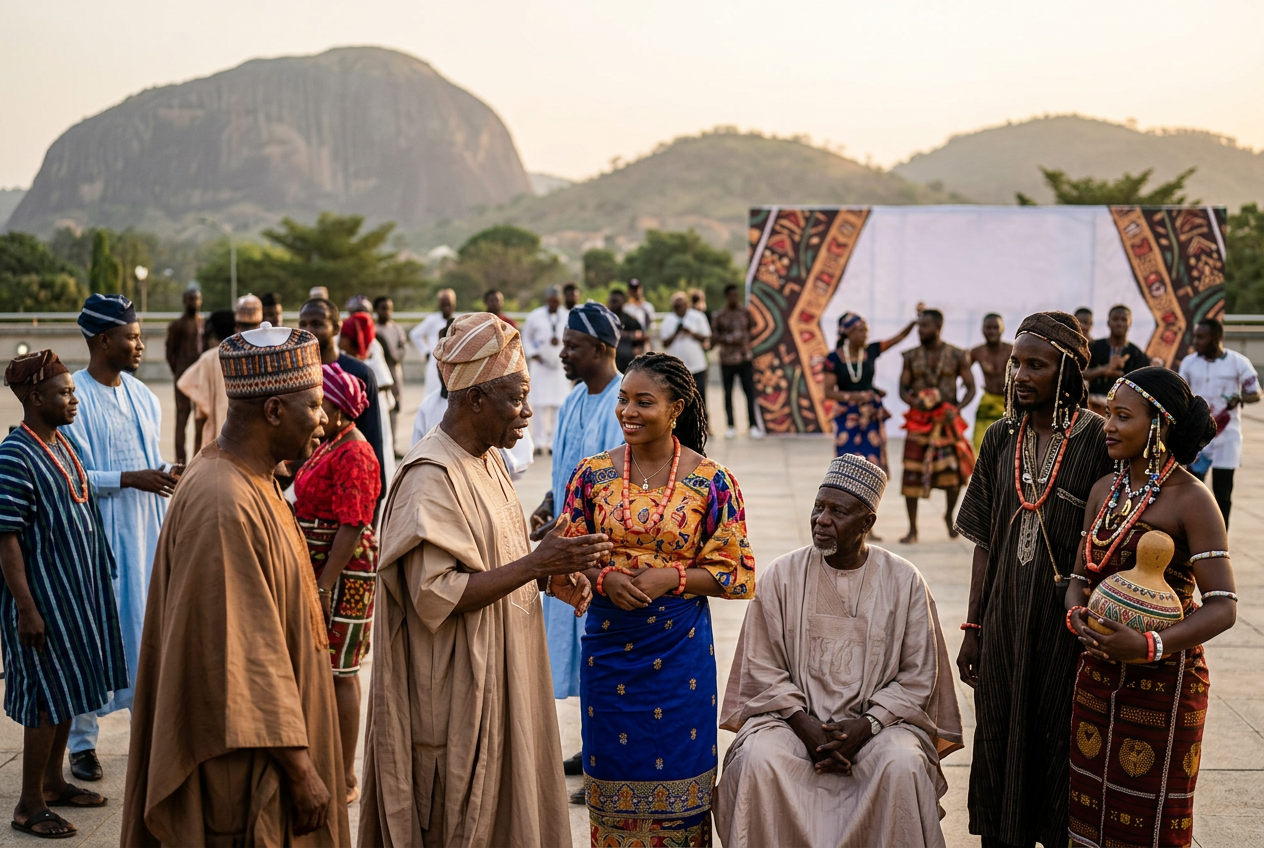
Taraba is commonly credited with around 80 distinct ethnic groups and languages inside a territory of about 54,000 square kilometres, which makes it the third largest state by area but only around the thirtieth by population. The Taraba State Government presents that blend of cultures, traditions and communities as one of the defining features of the state, and it is not boasting. Jukun, Chamba, Mumuye, Kuteb, Mambilla, Wurkum, Ichen, Tiv and Fulani are only the best-known names on a very long list.
Taraba does not stand alone, though. Plateau State is usually counted at more than 40 ethnic groups, with some local tallies running past 50: Berom, Afizere, Anaguta, Ngas, Mwaghavul, Goemai, Tarok and many more. Adamawa, southern Kaduna, Bauchi, Benue, Nasarawa, Niger and Cross River each hold dozens of groups as well. Together they form what Nigerians call the Middle Belt (plus its eastern and southern fringes), the most ethnically fragmented stretch of land in Africa’s most populous country.
Why there? Three reasons stand out from my reading and my travels. First, geography: hills, plateaus and river valleys gave small communities places to settle and defend, and highland refuges shielded many of them from slave raids in the eighteenth and nineteenth centuries. Second, language families meet here, with Chadic, Benue-Congo, Adamawa and other branches pressing up against one another within a few dozen kilometres. Third, no single empire ever swallowed the region whole in the way the Sokoto Caliphate absorbed much of the far north.
The result is a zone where identity is layered and often misread. An Igala writer from Kogi once described in these pages how his southern friends kept calling him Hausa simply because he came from somewhere north of the Niger, and I have heard the same complaint from Tiv, Idoma, Berom and Nupe friends more times than I can count.
One more thing before we move on. If you measure diversity by who actually lives in a place today rather than who is indigenous to it, Lagos wins by a street. Nearly every Nigerian ethnic group is represented somewhere between Ikorodu and Epe, but that is migration, not ancestral variety. Taraba’s diversity grew from the soil. Lagos’s arrived on the danfo.
What Are the Top 10 Tribes in Nigeria by Population?
A word on vocabulary first. Most Nigerians say “tribe” without a second thought, while academics and diplomats prefer “ethnic group” because “tribe” carries colonial baggage. I use both in conversation and I will use both here, because the point is to be understood, not to win a seminar.
Beyond the top five, the ranking gets looser with every step down. The Ibibio of Akwa Ibom and the Ijaw of the Niger Delta sit at around 1.8 per cent each. The Ijaw are spread across Bayelsa, Rivers and Delta, and they are among the oldest settled peoples of the delta, having fished its creeks for centuries before anyone struck oil there. The Ibibio, along with their close Annang and Efik cousins, gave the south-south its striking masquerade traditions and one of Nigeria’s great kitchen cultures (afang soup, edikang ikong and the rest).
Places nine and ten are where every published list parts company. On most estimates the Edo of Benin City and the Nupe of Niger and Kwara come next, each at roughly 1 per cent, but the Urhobo, Igala, Idoma and Ebira all have serious claims, and I would not argue with anyone from Warri who put the Urhobo ahead of both. Once you get this far down, the margin of error is bigger than the gap between the groups.
Nigeria’s Ten Largest Tribes Compared at a Glance
| Rank | Ethnic group | Estimated share | Approx. people (millions) | Main homeland states | Cultural marker |
|---|---|---|---|---|---|
| 1 | Hausa | 30% | 70.5 | Kano, Katsina, Sokoto, Kebbi, Jigawa, Zamfara | Durbar horse parades |
| 2 | Yoruba | 15.5% | 36.4 | Lagos, Oyo, Ogun, Osun, Ondo, Ekiti | Osun-Osogbo festival |
| 3 | Igbo | 15.2% | 35.7 | Anambra, Imo, Enugu, Abia, Ebonyi | Iri ji (New Yam) festival |
| 4 | Fulani | 6% | 14.1 | Adamawa, Gombe, Bauchi, Sokoto and across the north | Sharo coming-of-age contest |
| 5 | Tiv | 2.4% | 5.6 | Benue, Nasarawa, Taraba | Kwagh-hir puppet theatre |
| 6 | Kanuri | 2.4% | 5.6 | Borno, Yobe | Court of the Shehu of Borno |
| 7 | Ibibio | 1.8% | 4.2 | Akwa Ibom | Ekpo masquerade |
| 8 | Ijaw | 1.8% | 4.2 | Bayelsa, Rivers, Delta | Canoe regattas |
| 9 | Edo | about 1% (est.) | about 2.4 | Edo | Igue festival and bronze casting |
| 10 | Nupe | about 1% (est.) | about 2.4 | Niger, Kwara | Bida brass and glass-bead craft |
Ranks one to eight follow the 2018 shares, and the headcounts are my own conversion at a population of 235 million, so treat them as ballpark rather than census fact. The clearest conclusion is how steep the drop is: the top three hold roughly six in ten Nigerians, yet the Tiv and Kanuri alone each outnumber the entire population of The Gambia.
So, What Is the Largest Ethnic Group in Nigeria? The Direct Answer
Right. Here is the paragraph you came for.
The largest ethnic group in Nigeria is the Hausa, who make up roughly 30 per cent of the population. On current projections of somewhere between 230 and 240 million Nigerians, that works out at around 70 million people, concentrated in the north-west and north-east in states such as Kano, Katsina, Sokoto, Kebbi, Jigawa, Zamfara, Kaduna and Bauchi. When the Hausa are counted together with the Fulani (about 6 per cent), who share their faith, much of their language and two centuries of intermarriage under the Sokoto Caliphate, the Hausa-Fulani bloc reaches roughly 36 per cent of the country, making it the single largest demographic force in both northern Nigeria and national politics. The Yoruba (about 15.5 per cent) and the Igbo (about 15.2 per cent) rank second and third, and together the big three account for well over 60 per cent of all Nigerians.
The entities that travel with that answer are worth knowing:
- Language: Hausa, a Chadic language of the Afro-Asiatic family, and one of Nigeria’s three recognised national languages alongside Yoruba and Igbo.
- Faith: overwhelmingly Muslim, with Islam arriving through trans-Saharan trade roughly a thousand years ago.
- Historic states: the seven original Hausa kingdoms (Kano, Katsina, Zazzau or Zaria, Gobir, Rano, Daura and Biram), later drawn together under the Sokoto Caliphate founded after 1804.
- Traditional institutions: the emirates, headed by emirs under the spiritual leadership of the Sultan of Sokoto.
- Cultural signatures: the Durbar horse parades held at the two Eid festivals, the embroidered babban riga, tuwo with miyan kuka, and suya grilled over an open flame.
Two objections come up whenever I give this answer. “Surely the Yoruba are bigger?” Not within Nigeria on any modern estimate, although Yoruba people across Nigeria, Benin, Togo and the global diaspora form one of the largest ethnic populations on the continent. And “Is it fair to treat Hausa and Fulani as one?” Culturally, in much of the far north, yes. Linguistically and historically, no, because millions of Fulani still speak Fulfulde and live a pastoral life with little in common with Kano’s merchant families.
The honest answer, then, has two layers. Hausa on its own. Hausa-Fulani if you count the way most Nigerians actually talk.
What Are the Top 5 Cultures in Nigeria Today?
Population and culture are not the same thing. A group of two million can shape how an entire nation dresses for weddings, while a group of fourteen million can remain almost invisible on television. So when people ask me for Nigeria’s top five cultures, I rank them by national footprint: how far their dress, food, festivals and art travel beyond their own homeland. By that measure, my five are the Hausa-Fulani, the Yoruba, the Igbo, the Edo of Benin, and the riverine cultures of the Niger Delta.
Let me take them one at a time, with a few styling notes for anyone who wants to wear them well.
Hausa-Fulani culture is the culture of the walled city, the emir’s palace and the long-distance caravan. Its architecture (the earth-built entrance halls called zaure, the pinnacled rooftops of old Kano and Zaria) is some of the most distinctive in West Africa, and the Durbar parades, where hundreds of horsemen in quilted armour charge towards the emir and pull up at the last possible second, were recognised by UNESCO as intangible cultural heritage in December 2024. The signature garment is the babban riga, a wide flowing gown over a kaftan and trousers. An adult man usually needs about 6 to 7 yards of fabric, and hand embroidery around the neck and pocket can take a craftsman two to four weeks, which is why a properly worked piece runs anywhere from ₦80,000 to ₦500,000. My styling tip: keep the fabric plain and let the embroidery do the talking, and pair it with a matching cap rather than a contrasting one.
Yoruba culture is the culture of the crowned town, the talking drum and the coordinated party. Aso ebi (matching outfits worn by a family or friendship group at an event) is arguably the most influential Nigerian fashion idea of the last half-century, and it has spread well beyond Yorubaland. A full three-piece agbada in aso oke or damask typically needs 8 to 10 yards for a man of average height, and a ready gele (the head tie) is usually around 2 yards long. If you want to see the whole wardrobe at full volume, read a lively preview of the Ojude Oba parade in Ijebu-Ode, where the Ijebu turn out in their finest to honour the Awujale. And the Osun-Osogbo festival every August, held in a sacred grove that has been a UNESCO World Heritage Site since 2005, remains the most spiritually charged date on the south-western calendar. Styling tip: match your gele to the aso ebi colour, but let the ipele (the shoulder sash) contrast slightly, because a head-to-toe single colour can look like a school uniform.
Igbo culture is the culture of the market, the masquerade and the new yam. The Iri ji festival, held between August and October in community after community, gives thanks for the harvest before anyone is permitted to eat the new crop, and the towering Ijele masquerade of Anambra is one of the largest masks in Africa. Men’s dress centres on the isiagu, a pullover top printed with lion heads, worn with trousers or a wrapper. Women’s formal dress often uses a double wrapper, two lengths of roughly 2 yards each, frequently in heavy George fabric with coral beads. Expect ₦20,000 to ₦60,000 for a ready-made isiagu and anything from ₦50,000 to ₦400,000 for good George. Styling tip (and this one matters): the red cap is a mark of a titled man, so do not wear one unless you have earned it, however good it looks with your outfit.
Edo culture is the culture of the kingdom and the foundry. Benin City’s bronze casters on Igun Street still work in a guild tradition that reaches back centuries, and the slow return of looted Benin bronzes from European museums has put this heritage back in the headlines. The Igue festival each December renews the Oba’s spiritual authority, and red coral is the colour of royalty and ceremony. Edo brides traditionally wear a coral bead headpiece and collar, and a quality set can cost anywhere from ₦150,000 to well over ₦2 million. Styling tip: buy fewer, better beads, because plastic imitations fool nobody at close range, and a single strand of real coral carries more dignity than a heap of fake ones.
The riverine cultures of the Niger Delta, led by the Ijaw and including the Kalabari, Okrika and Nembe, are cultures of the creek and the canoe. Water masquerades, boat regattas with dozens of paddlers moving in rhythm, and a kitchen built on fish, plantain and palm oil define the region. The classic men’s outfit is the etibo, a knee-length collarless shirt that needs roughly 3 yards of fabric, worn over a wrapper with a hat and a walking stick. Styling tip: the etibo should sit loose and fall straight, so tell your tailor to resist the temptation to cut it slim.
A last general note on design. If you are invited to a wedding outside your own tradition, the aso ebi you are asked to buy is an obligation of friendship rather than an optional extra, and in 2026 a single guest’s fabric typically costs between ₦30,000 and ₦150,000 before tailoring. Budget for it early.
How to Experience Nigeria’s Ethnic Diversity Respectfully: Seven Practical Steps
Reading about all of this is a fine start. Seeing it is better. Here is the approach I give to friends, colleagues and the occasional nervous visitor from abroad.
- Learn a greeting in the dominant language of the place you are visiting before you arrive. Ten minutes a day for two weeks is enough to handle “sannu” in Kano, “e kaaro” in Ibadan and “kedu” in Enugu, and a private tutor in Lagos or Abuja typically charges ₦5,000 to ₦15,000 an hour if you want to go further.
- Plan around the festival calendar rather than your own. The Argungu fishing festival usually falls in February or March, Osun-Osogbo in August, New Yam celebrations between August and October, Durbar parades at Eid-el-Fitr and Eid-el-Kabir, and Ojude Oba on the third day after Eid-el-Kabir, so book transport and rooms at least six weeks ahead.
- Budget honestly for the trip. As a rough 2026 guide, allow ₦25,000 to ₦60,000 a night for a clean mid-range hotel in a festival town, ₦10,000 to ₦20,000 a day for local transport and food, and a separate ₦20,000 to ₦50,000 for fabric or crafts, because you will buy something.
- Dress for the place, not for your photographs. Loose clothing covering shoulders and knees is the respectful norm across the Muslim north, and titled regalia (the Igbo red cap, Edo royal coral, emirate turbans) should never be worn casually by someone who has not earned it.
- Eat the regional staple in its home region. Tuwo shinkafa with miyan kuka in Katsina, amala with ewedu and gbegiri in Ibadan, ofe onugbu in Enugu and fisherman soup in Yenagoa each tell you more about a people than a museum placard can, and a full local plate rarely costs more than ₦3,000 to ₦6,000 at a good buka.
- Visit a museum and a working craft quarter on the same day. The National Museum at Onikan in Lagos, the Benin City museum a short walk from the bronze casters of Igun Street, and the museum complex in Jos all charge modest entry fees, and twenty minutes watching a caster pour molten brass will teach you more than any textbook.
- Ask people what they call themselves and use that name. Not every northerner is Hausa, not every Akwa Ibom indigene is Efik, and not every Rivers person is Ijaw, so a simple “Which people are you from?” asked with genuine curiosity opens doors that assumptions slam shut.
That last step is the one I would underline twice. I once watched a well-meaning visitor greet a Berom elder in Jos with a cheerful “sannu”, and the polite, slightly weary smile he got back said everything.
Final Thoughts on What Is the Largest Ethnic Group in Nigeria
So there we are. The Hausa are the largest ethnic group in Nigeria, at around 30 per cent and something like 70 million people, and the Hausa-Fulani bloc stretches that to roughly a third of the country. The Yoruba and Igbo follow so closely that the order between them is almost a coin toss. Beyond the big three, the Fulani, Tiv, Kanuri, Ibibio, Ijaw, Edo and Nupe complete a top ten that thins out fast, while Taraba and Plateau hold more distinct peoples within their borders than many entire countries.
But if months in the archives and years on the road have taught me one thing, it is this: the percentages are the least interesting part of the story. What makes Nigeria remarkable is not that one group is bigger than another. It is that a Jukun farmer, a Kano cloth merchant, a Yenagoa fisherman and an Onitsha trader all carry the same green passport and shout at the same Super Eagles. (Loudly, and usually at the referee.)
My advice is simple. Hold the numbers loosely, because they are estimates. Hold the people firmly, because they are not. Learn a greeting, attend a festival outside your own tradition, and the next time someone at a wedding tells you confidently which group is biggest, you will be able to smile, agree in part, and add the footnote.
- Quote the Hausa as the largest group at around 30 per cent, but always mention that the figure is an estimate and that the Hausa-Fulani combined reach about 36 per cent.
- Plan one trip this year to a festival outside your own tradition, booking at least six weeks ahead and budgeting roughly ₦100,000 to ₦250,000 for a long weekend.
- Ask people which group they belong to rather than guessing, especially across the Middle Belt, where Taraba and Plateau alone hold well over a hundred distinct peoples.
Related Articles
If this piece has left you wanting to spend more time with the big three themselves, my longer study of the three ethnic groups in Nigeria looks at how the Hausa-Fulani, Yoruba and Igbo each built their own systems of government long before the British arrived, and why those systems still shape our politics today. And if the census history caught your attention, my piece on the racial mix of Nigeria goes further back still, tracing origin stories from Ile-Ife to the seven Hausa city-states and explaining why “race” means so little inside our borders and so much the moment a Nigerian lands abroad.
Key Takeaways
- The Hausa are Nigeria’s largest ethnic group at about 30 per cent, rising to roughly 36 per cent when combined with the Fulani, followed by the Yoruba and Igbo at around 15 per cent each.
- Taraba State, with around 80 ethnic groups, is the most ethnically diverse state, ahead of Plateau and the wider Middle Belt, while Lagos is the most mixed by migration.
- Every ethnic percentage in Nigeria is an estimate, since no census has asked about ethnicity since 1963, so treat precise figures with healthy caution.
Frequently Asked Questions: What Is the Largest Ethnic Group in Nigeria?
What is the largest ethnic group in Nigeria?
The largest ethnic group in Nigeria is the Hausa, who make up roughly 30 per cent of the population, or around 70 million people, mainly in the north-west and north-east. Counted together with the Fulani as the Hausa-Fulani, the bloc reaches about 36 per cent of all Nigerians.
What are the top 5 ethnic groups in Nigeria?
On the most widely used estimates, the top five are the Hausa at about 30 per cent, the Yoruba at 15.5 per cent, the Igbo at 15.2 per cent, the Fulani at 6 per cent, and the Tiv and Kanuri tied at roughly 2.4 per cent each. If the Hausa and Fulani are merged into one bloc, the Ijaw or Ibibio often move into the fifth slot instead.
What are the top 5 cultures in Nigeria?
The five cultures with the widest national footprint are the Hausa-Fulani, Yoruba, Igbo, Edo of Benin, and the riverine cultures of the Niger Delta such as the Ijaw and Kalabari. Each is recognisable through its own dress, festivals, food and art, from the Durbar parades of Kano to the bronze casters of Benin City.
Which state in Nigeria has the highest number of ethnic groups?
Taraba State is widely credited with the highest number of ethnic groups in Nigeria, at around 80, including the Jukun, Chamba, Mumuye, Kuteb and Mambilla. Plateau, Adamawa, southern Kaduna and Bauchi follow closely, each home to dozens of distinct peoples.
What are the top 10 tribes in Nigeria?
The top 10 tribes by estimated population are the Hausa, Yoruba, Igbo, Fulani, Tiv, Kanuri, Ibibio, Ijaw, Edo and Nupe. Positions nine and ten are contested, with the Urhobo, Igala, Idoma and Ebira all having reasonable claims.
Are the Hausa and Fulani the same ethnic group?
No, the Hausa and Fulani are distinct peoples with different languages and origins, although centuries of intermarriage after the 1804 jihad created a merged Hausa-Fulani identity across much of the far north. Millions of Fulani still speak Fulfulde and maintain a pastoral way of life separate from Hausa urban society.
How many ethnic groups are there in Nigeria?
The Ministry of Foreign Affairs describes Nigerians as coming from more than 250 ethnic groups, while many scholarly and popular lists put the figure at around 370. The difference comes down to whether closely related communities are counted separately or grouped together.
Why does Nigeria not record ethnicity in its census?
Ethnicity was dropped from the 1991 and 2006 census questionnaires because earlier headcounts in 1962 and 1973 collapsed amid disputes over inflated regional figures. Population numbers influence revenue sharing and political representation, so any official ethnic count would be fiercely contested.
Is the Yoruba or Igbo population bigger?
The Yoruba are slightly larger on most estimates, at about 15.5 per cent against roughly 15.2 per cent for the Igbo. The gap is so narrow that it falls well within the margin of error of any current estimate.
Which ethnic group is the largest in southern Nigeria?
The Yoruba are the largest ethnic group in southern Nigeria, dominating the six south-western states of Lagos, Ogun, Oyo, Osun, Ondo and Ekiti. The Igbo are the largest group in the south-east, while the Ijaw and Ibibio lead in parts of the south-south.
Which state has the largest Hausa population?
Kano State has the largest Hausa population in Nigeria and is the historic heart of Hausa commerce and scholarship. Katsina, Kaduna, Jigawa and Sokoto also have very large Hausa populations.
What language does the largest ethnic group in Nigeria speak?
The Hausa speak Hausa, a Chadic language that is also one of Nigeria’s three recognised national languages alongside Yoruba and Igbo. It is widely used as a trade language across northern Nigeria and neighbouring countries such as Niger, Chad and Cameroon.

