 Follow Us on Google News
 Follow Us on Google Discover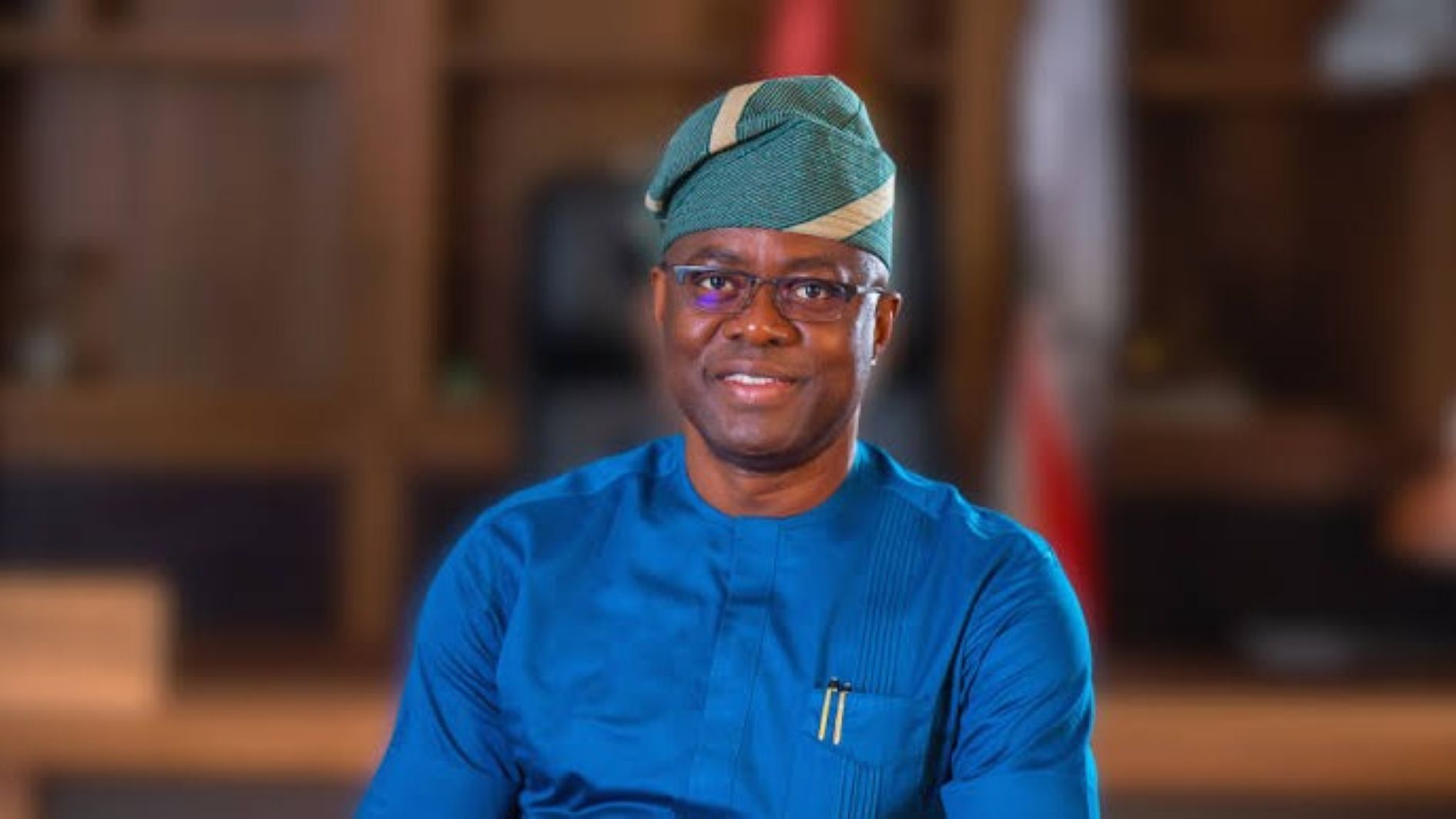
The emergence of two prominent South-West contenders, Governor Seyi Makinde of the Allied Peoples Movement (APM) and Adewole Adebayo of the Social Democratic Party (SDP), presents a potential challenge to President Bola Ahmed Tinubu. Whether they can turn the January 16 presidential election into a referendum on his performance and political dominance could determine the strength of his home advantage, LEO SOBECHI reports.
Disregarding arguments to the contrary, the real battle for the 2027 presidency may well be fought in the South-West geopolitical zone. President Bola Ahmed Tinubu, the incumbent, governed Lagos State for eight years and subsequently emerged as one of the dominant political figures in the South-West before becoming President.
As a leading figure in the opposition during the Peoples Democratic Party’s (PDP) 16-year hold on federal power, Tinubu played a central role in the political struggle that eventually produced the All Progressives Congress (APC) victory in 2015.
By May 2027, the APC will have been at the helm of Nigeria’s federal government for 12 years, four years short of the period the PDP dominated national politics. The challenges confronting both the APC and President Tinubu as the country approaches the eighth presidential election of the Fourth Republic are therefore many-sided.
Beyond seeking a second term, Tinubu must also contend with two presidential contenders from his own region, giving the South-West contest historical, partisan and socio-political dimensions.
Like the North-West, where no major political party selected its presidential standard-bearer from the zone, the South-West could emerge as a major battleground.

What makes the region particularly significant is not only that the incumbent hails from it, but also its historical role in the struggle for democracy, restructuring and good governance. How its electorate votes could therefore reinforce or challenge that political tradition.
The South-West was at the forefront of demands for restructuring, fiscal federalism and state police. Tinubu, who spent much of the Fourth Republic as a leading opposition figure, must now defend his record in office and his political choices as voters decide whom to support on January 16, 2027.
It is against this background that the candidacies of Makinde and Adebayo on the platforms of the APM and SDP, respectively, could provide a significant test of Tinubu’s political dominance in the region.
Voting backwards
SHORTLY after the hotly contested Osun State governorship election, in which incumbent Governor Ademola Adeleke, running on the Accord platform, defeated the APC, he declared his support for President Tinubu’s re-election.
Adeleke said his support, despite their different party platforms, was largely based on the fact that Tinubu was a son of the soil. While denying that any quid-pro-quo agreement with the Presidency preceded the Osun governorship contest, he argued that, as fellow Yoruba men with ancestral roots in Osun State, the South-West should support its own and help consolidate the reforms initiated by Tinubu.
Whether Adeleke was expressing a genuine regional sentiment or the political calculation of an incumbent governor fresh from an electoral victory, his position highlights one of the factors that could shape presidential voting in the South-West: regional identity.
But the question is whether such identity will automatically translate into votes for Tinubu or whether voters will distinguish between regional solidarity and their assessment of his performance.
Tinubu’s political influence in the South-West is substantial, particularly in Lagos, where he served as governor and built a political structurr that has remained influential for more than two decades. His network has produced governors, legislators and other political leaders and helped the APC consolidate its position across much of the region.
Yet that dominance has never been absolute.
Tinubu’s political career has been marked by periodic challenges from within and outside his political camp. In Lagos, the activities of AbdulAzeez Olajide Adediran, popularly known as Jandor, and the Lagos4Lagos movement demonstrated the existence of internal opposition to the established political order.
Similar tensions have surfaced in other South-West states, where disagreements over candidates, primaries and political succession have periodically created divisions within the Tinubu camp.
Some former allies and APC members who have become critical of the President now argue that his current political dominance should not be mistaken for permanent regional acceptance. They point to past disagreements over governorship and other political contests in Lagos and Ondo as evidence that political alliances in the region have always been fluid.
Tinubu’s supporters, however, see his political record differently. They argue that his ability to build and sustain a formidable political network across Lagos and the wider South-West remains one of his greatest strengths.
One of his associates, Tunji Bello, once explained how Tinubu developed that network, saying the President built an effective communication structure and maintained relationships with leaders across constituencies and communities.
According to Bello: “Asiwaju built an excellent communication team unrivalled by any standard till today. He used both formal and informal means of communication with dexterity. His network with leaders in all designated constituencies and communities throughout the state remains a model.”
Senator Opeyemi Bamidele also described Tinubu as an ideologue, stressing that during his eight-year tenure in Lagos, he promoted intellectual debate within his administration.
The contrasting assessments illustrate the central question confronting the South-West in 2027: whether Tinubu’s political network and regional identity remain sufficiently strong to withstand the emergence of credible challengers from within the region.
Grand dissension
IF Tinubu values political debate as a democrat, the presence of Makinde and Adebayo on the presidential ballot presents another test of that tradition. Dissent, rather than weakening democracy, can widen the choices available to voters.
Shortly after emerging as the presidential standard-bearer of the APM, Makinde said Nigerians should be allowed to choose their leaders, arguing that democracy is strengthened by a variety of options.
Speaking at the launch of his presidential campaign office in Abuja, Makinde also criticised the manner in which the petroleum subsidy was removed. He argued that because Nigeria produces crude oil and supplies it to domestic refineries, “we cannot continue to price that crude as though Nigeria does not produce crude oil.”
While rejecting calls for a reversal of Tinubu’s subsidy removal, the APM presidential candidate argued that Nigeria’s petroleum resources must benefit its citizens. He also said his presidential aspiration should not be judged by the size of his party but by the number of Nigerians who believe in his vision for the country.
“The government must show its working,” he stated, adding that he was seeking to “build a citizen-driven movement capable of engaging Nigerians across different sectors rather than relying solely on conventional political structures.”
Makinde’s position received support from the presidential candidate of the Nigeria Democratic Congress (NDC), Peter Obi, who attended the event in solidarity with him. Obi condemned what he described as the imposition of candidates on Nigerians rather than allowing citizens to determine who should lead them.
“What we are doing today is to show you, for us, it’s not desperation. We want the people of Nigeria to make their choice… Nigeria could no longer afford to continue along its current path,” Obi said, arguing that Nigerians were facing hunger, poverty and illness.
For his part, Adebayo told The Guardian that Tinubu was neither a moral champion of the South-West nor the region’s consensus choice. He argued that if there were an Olympics for good behaviour and performance, the President would not emerge as the consensus choice of the Yoruba.
While contending that Tinubu was only one individual among millions of Nigerians, Adebayo said voters would reject the President at the polls. He attributed the movement of governors to the APC to what he described as the transactional nature of Nigerian politics.
“For the entire state governors to defect to the APC is a natural consequence of the politics we play. There’s no ideological standing sorting people out,” he said.
The SDP presidential candidate also argued that Tinubu and the APC would be rejected at the polls because, in his view, “it’s an elite that is united behind power and money. And politics is about how to get money, and when they get money, they have to retain power. It’s not the purpose.”
He maintained that defeating the ruling party would create room for the development of ideological politics, accusing the political class of abandoning leadership for the pursuit and retention of power.
The contrasting positions of Adeleke, Makinde and Adebayo capture the competing forces that could shape the South-West vote in 2027. Adeleke’s appeal to regional solidarity suggests that Tinubu may retain a strong emotional and political advantage as a son of the region.
Makinde, however, is offering voters an alternative from within the South-West while framing his candidacy around policy and citizen participation. Adebayo is taking the argument further by directly challenging the idea that Tinubu represents a regional consensus.
For the President, the significance of the contest therefore extends beyond the numerical value of South-West votes. It is also a test of whether the political structure he painstakingly built over decades can withstand an election in which regional identity, performance, party loyalty and the desire for political alternatives may pull voters in different directions.
The outcome could determine whether the South-West remains Tinubu’s political fortress or becomes the region where his dominance is most seriously tested in the 2027 presidential election.

