 Follow Us on Google News
 Follow Us on Google Discover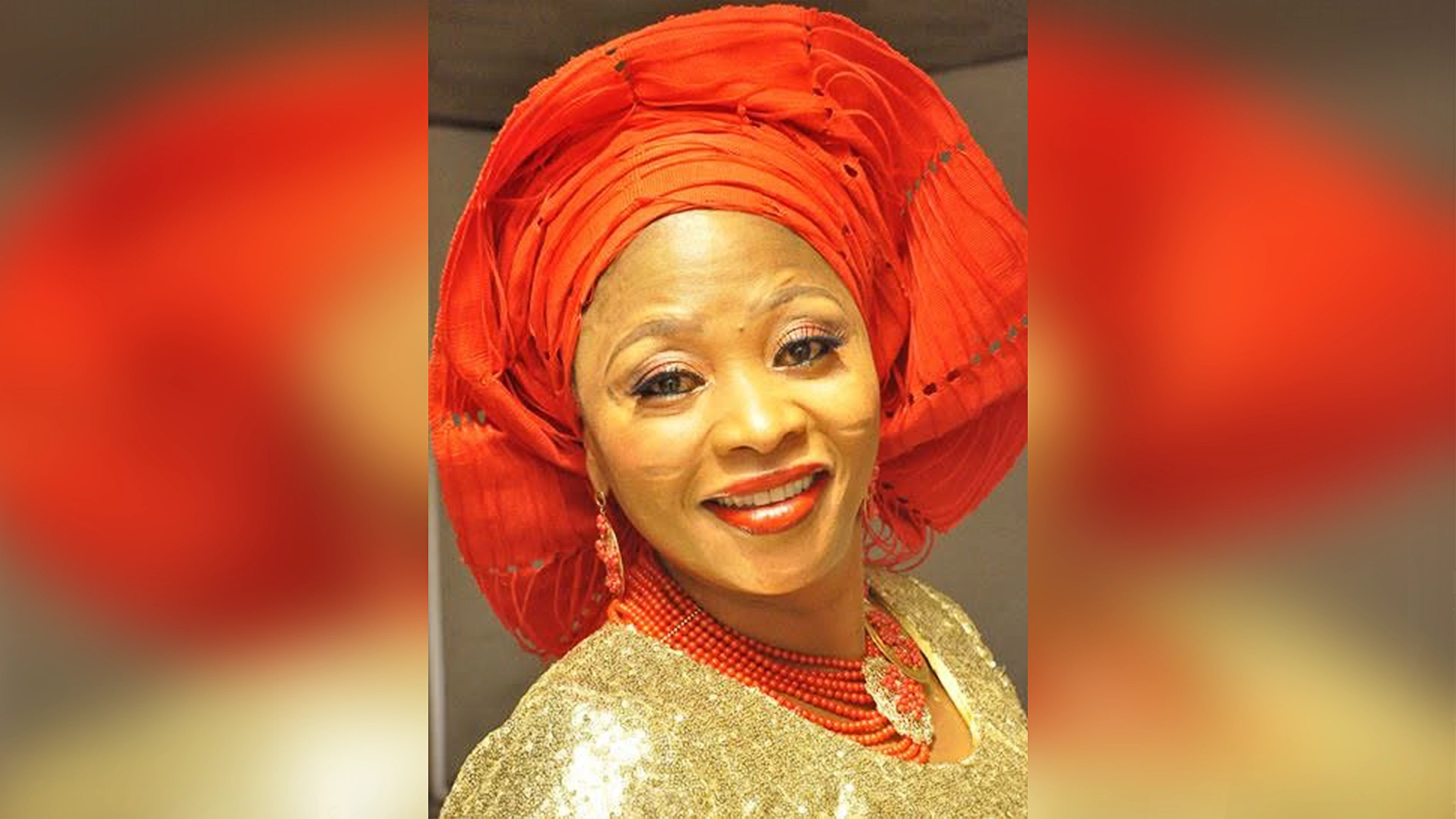
From school visits and reading clubs to a teenage reality show, Olori Bukola Ladoja has spent nearly two decades trying to rekindle Nigeria’s reading culture.
Before she became an Olori in one of Nigeria’s oldest traditional institutions, Bukola Ladoja had already spent years trying to give children something she believed the country was gradually losing: an appetite for books. Her approach has changed over the years. She has stood before schoolchildren, distributed books, organised competitions, established reading clubs and even created a television reality show in which teenagers competed through debates, essays, quizzes and public speaking. The objective, however, has remained the same. Get Nigerian children to read.
In January 2007, Ladoja established the Reading Awareness Society for Development in Africa (RASDA), after noticing the poor performance of Nigerian students in secondary school examinations. Nearly two decades later, the campaign continues. But the woman behind it now occupies a different public space. In September 2025, her husband, former Oyo State governor Rashidi Ladoja, became the 44th Olubadan of Ibadanland, making Bukola Ladoja an Olori.
It began with examination results
THE figures that caught Ladoja’s attention in the mid-2000s were alarming to her. She had been following the results of the West African Senior School Certificate Examination (WASSCE) and was troubled by the proportion of students obtaining the credits required to continue their education.
According to figures she cited in a 2021 interview with a national daily, only about seven per cent of candidates achieved the required credits in 2005 and 2006. The figure rose to about 15 per cent before dropping again to between 10 and 12 per cent in 2007. Ladoja did not see the numbers just as an education problem, she saw a problem that could eventually affect the country’s workforce.
“I saw them as the next generations of leaders,” she said. “Doctors, engineers, accountants, lawyers and every professional stratum will arise from them.” Her concern was that if large numbers of young people were unable to progress academically, Nigeria would eventually feel the consequences in the number of professionals it produced. For Ladoja, part of the explanation was that children were not reading enough. So she decided to do something about it. RASDA was born.
The woman behind the campaign
Ladoja’s interest in books did not begin with RASDA, It goes back to her childhood. She grew up as the eldest of 20 children in a family where her parents had no formal education. As a child, she sometimes held a book and pretended to be reading so that her father would believe she was studying. Then she actually began reading. A novel from the popular Pacesetters series became a turning point. “After I finished reading it, I was hooked,” she recalled.
The books did more than entertain her. They became a source of lessons about life and character. She has singled out The Director, one of the novels she read, as a book that taught her about corruption. That experience would later influence the way she spoke about reading.
According to Ladoja, books are not merely academic tools. They can introduce children to ideas, shape their imagination and expose them to possibilities beyond their immediate surroundings. That philosophy became the foundation of RASDA.
Taking books to the children
There was no grand launch strategy at the beginning. Ladoja and her team went to schools. They travelled across Oyo State, including communities in the Oke-Ogun area such as Saki, Tede, Ago-Are and Ago-Amodu. They spoke to pupils about reading and encouraged them to think beyond examinations. The organisation also organised workshops involving teachers and parents, distributed reading materials and put up posters and billboards promoting reading.
But there was a problem. The more schools they visited, the more obvious it became that the approach was difficult to sustain. “I was getting weary about moving from one school to the other,” Ladoja said. She began looking for a way to take the message beyond individual classrooms. That search produced one of the most ambitious parts of the RASDA experiment. Television.
When reading became a reality show
In 2012, RASDA launched Read to Lead Africa, a reality television programme for secondary school students. It was deliberately designed to borrow from the popularity of programmes such as Big Brother Africa, but with a very different competition. The teenagers lived together for 30 days. They were tested on their ability to debate, write, speak publicly, think critically and answer questions based on their school syllabus. One contestant would be eliminated after another until a winner emerged.
For Ladoja, it was an attempt to prove that education did not have to be presented to young people as punishment. “It was like Big Brother Africa,” she said. “We housed them and we eliminated them one by one until the winner emerged, but in a cerebral way.”
The competition also had an incentive that would attract students and their families: money. The winner received a scholarship worth ₦2 million. The first runner-up received ₦500,000, while the second runner-up received ₦250,000.
Ladoja has described the financial rewards as bait. “We instituted some baits because we discovered that they are a generation that loves money,” she said. The programme was also intended to reach students who might otherwise have been excluded from such opportunities. Its first season was held at Olashore International School in Iloko-Ijesha, Osun State.
RASDA worked with the Osun State government and later with Rivers State to bring public-school students into the programme. One of the students left a particularly lasting impression on Ladoja.
The boy had lost both parents and was living with his grandmother. A teacher who had been helping him brought him for the entrance examination. Ladoja remembered him as one of the most disadvantaged students selected. He did not win the competition. But after viewers heard his story, people reportedly contributed money to support him. By 2021, Ladoja said he was studying law at Obafemi Awolowo University, Ile-Ife. Stories like that helped reinforce her belief that a reading programme could become something larger than a competition.
The price of keeping the dream alive
There was, however, a reality that could not be ignored: television was expensive. Read to Lead Africa lasted for three seasons — 2012, 2013 and 2014. Ladoja estimated that each season cost between ₦60 million and ₦70 million. The money went into everything required to keep a television production running for a month: examination materials, television airtime, cameras, lighting, editing, accommodation and feeding. It was a costly experiment in trying to make reading popular.
And, according to Ladoja, corporate sponsorship proved difficult to secure. She said companies that might have supported the programme were more interested in projects connected to entertainment and sports. Eventually, the show stopped. More than a decade later, it has not returned to television, although Ladoja has spoken about the possibility of reviving it on social media. The end of the programme did not mean the end of RASDA. It simply meant returning to smaller, more sustainable interventions.
One book at a time
Among RASDA’s programmes is the Book Clinic, where children meet at weekends and borrow books to read during the week. The idea is deliberately simple. Rather than waiting for children to discover books on their own, the programme creates a routine around reading. RASDA has also promoted the One Child, One Book, One Week initiative, which was launched in Abuja in 2023.
The organisation’s activities have extended beyond Oyo State, with Ladoja saying it had established connections with stakeholders in places including Abuja, Owerri and Port Harcourt. World Book Day has become another avenue for the organisation. At the Wole Soyinka Arts Theatre, University of Ibadan, pupils from schools including Emmanuel College High School, Peoples Girls Grammar School, Community High School Agbowo and Abadina College have participated in activities centred on books and reading.
There have been book reviews, interviews and performances. In other schools, the intervention has been less glamorous but perhaps just as practical. At Peoples Girls Grammar School in Molete, Ladoja donated books and gave the library ₦10,000 to buy two newspapers every day. She also encouraged the school’s old students to continue funding the arrangement after her contribution ran out.
The school also introduced a termly prize for its best reader. These initiatives reflect the reality RASDA has had to work with: reviving reading culture is not achieved by a single campaign, It requires repetition.
Reading beyond examinations
For Ladoja, one of the biggest problems is the way Nigerian children are taught to think about books. Reading, she argues, has increasingly become synonymous with preparing for examinations. “It is so unfortunate that our children only read to pass examinations; they no longer read for leisure,” she said. That distinction matters to her.
A child who reads only because an examination is approaching may acquire enough information to pass a test. A child who reads for pleasure, she argues, develops a relationship with books that can continue long after school. She has also connected reading with leadership.
In 2023, she argued that Nigeria’s leadership challenges could partly be linked to inadequate preparation. “We are saying we lack leaders,” she said, “but this is perhaps because most of our leaders have leadership thrust on them without sufficient preparations.” Her argument is that books contain knowledge that can help people understand and solve problems, but that knowledge is of little use if people are unwilling to read.
Not all of Ladoja’s views on education are without controversy. At a government meeting in Abuja on teaching in mother tongues, she argued that local languages should largely remain within the home while schools should concentrate on encouraging children to read for pleasure. The position reflects her wider emphasis on reading, but it also shows that her advocacy is tied to particular ideas about how education should be structured.
Recognition came slowly
For years, RASDA’s work remained largely outside the mainstream spotlight. In 2021, however, the Association of Nigerian Authors recognised Ladoja as an ambassador for reading culture on International Literacy Day. The recognition came as the organisation continued to promote reading among young Nigerians. It also highlighted the unusual length of her campaign.
Many educational initiatives attract attention for a few months or years before disappearing. RASDA had survived for more than a decade. Then came another change in Ladoja’s life. Her husband was crowned Olubadan. The former first lady of Oyo State was now an Olori in Ibadanland. But the traditional title has not replaced the reading campaign.
A new chapter for RASDA
Ladoja is now developing the RASDA Literacy Development Project, a community-based literacy and reading promotion initiative focused on Ibadanland. The project has a broader community focus. One of its aims is to engage children productively, keep them away from the streets and encourage an interest in reading and learning.
The challenge facing the campaign today is different from the one Ladoja confronted in 2007. Children now have more distractions. Smartphones, social media, online videos and streaming platforms compete directly with books for their attention. A child no longer needs to leave the house to find an alternative to reading.
At the same time, the financial problem that brought Read to Lead Africa to an end remains relevant. Educational programmes require money, and sustaining them over several years is difficult without reliable funding.
RASDA’s journey therefore tells two stories. One is about a woman who has spent 19 years insisting that books still matter. The other is about how difficult it is to turn that conviction into a national movement.
Ladoja has tried several approaches, taking the message to schools, putting it on television, creating book clinics, rewarding young readers and building partnerships. The television show ended after three seasons. The smaller programmes have continued.
Now, with a new literacy project focused on Ibadanland, she is beginning another phase of the campaign. The central question remains the same one that confronted her when she first studied those examination results almost 20 years ago: what happens to a society when its children stop reading?
According to retired broadcaster Ayodele Aliyu, who has participated in RASDA’s World Book Day activities, “Reading is connected with national development,” he said. “Because development begins from self.” For Ladoja, that development starts much earlier, It starts with putting a book in a child’s hands and making the child want to open it. After 19 years, that remains the work.

