
 Get Guardian on Google
African governments have been urged to dismantle unnecessary regulatory and operational barriers to cross-border commerce and establish trade-friendly systems that protect legitimate business activities without imposing avoidable delays.
The call was made at the Import Export Conference: Global Nexus 2026 in Lagos, where government institutions, business leaders, manufacturers, importers, exporters, investors, and international trade partners examined practical solutions to challenges that constrain commerce across Africa.
Convener of Global Nexus 2026, Dr Tobias Eze, said the continent possessed enormous economic opportunities, vast markets and entrepreneurs capable of connecting businesses across borders.
He cited Lagos, Accra, Nairobi and Johannesburg as examples of commercial centres driving economic activities across the continent but questioned whether African countries were trading at their full potential.
He also challenged governments to examine whether they were maximising the opportunities offered by the African Continental Free Trade Area (AfCFTA) and to develop the logistics, infrastructure, ports, and financial systems required to compete effectively in global markets.
Eze said unlocking the continent’s trade potential would require deliberate efforts to strengthen intra-African commerce, improve cross-border efficiency and expand access to international markets.
He stressed the need for stronger collaboration between governments and the private sector, arguing that no country could build a strong economy in isolation.
According to him, importers cannot succeed without efficient logistics, just as exporters cannot thrive without access to international markets.
He noted that importers needed transparent and predictable processes, exporters required efficient trade facilitation, manufacturers needed access to competitive markets, while logistics operators depended on efficient port and border operations.
Eze added that governments could not build prosperous economies without active private-sector participation, just as businesses needed an enabling environment to operate, invest, and expand.
He identified the Nigeria Customs Service (NCS), the Standards Organisation of Nigeria (SON), the National Agency for Food and Drug Administration and Control (NAFDAC), and other regulatory institutions as critical to maintaining standards and facilitating legitimate international trade.
However, he urged the agencies to strengthen engagement with businesses to ensure that operators understand and comply with applicable standards and regulations.
“We must build a system where regulation protects trade without unnecessarily slowing it down, where businesses comply with confidence, where government and industry communicate effectively and where legitimate trade becomes faster, safer and more competitive, to stimulate business growth, create employment opportunities and strengthen the economy,” Eze said.
Also speaking, Chief Executive Officer of Autogig International Resources Limited, Dr Tope Ojo, said Nigeria’s business environment had made survival a basic requirement for entrepreneurs rather than a special business skill.
He stressed the need to establish systems that would enable businesses to operate sustainably and pursue long-term growth.
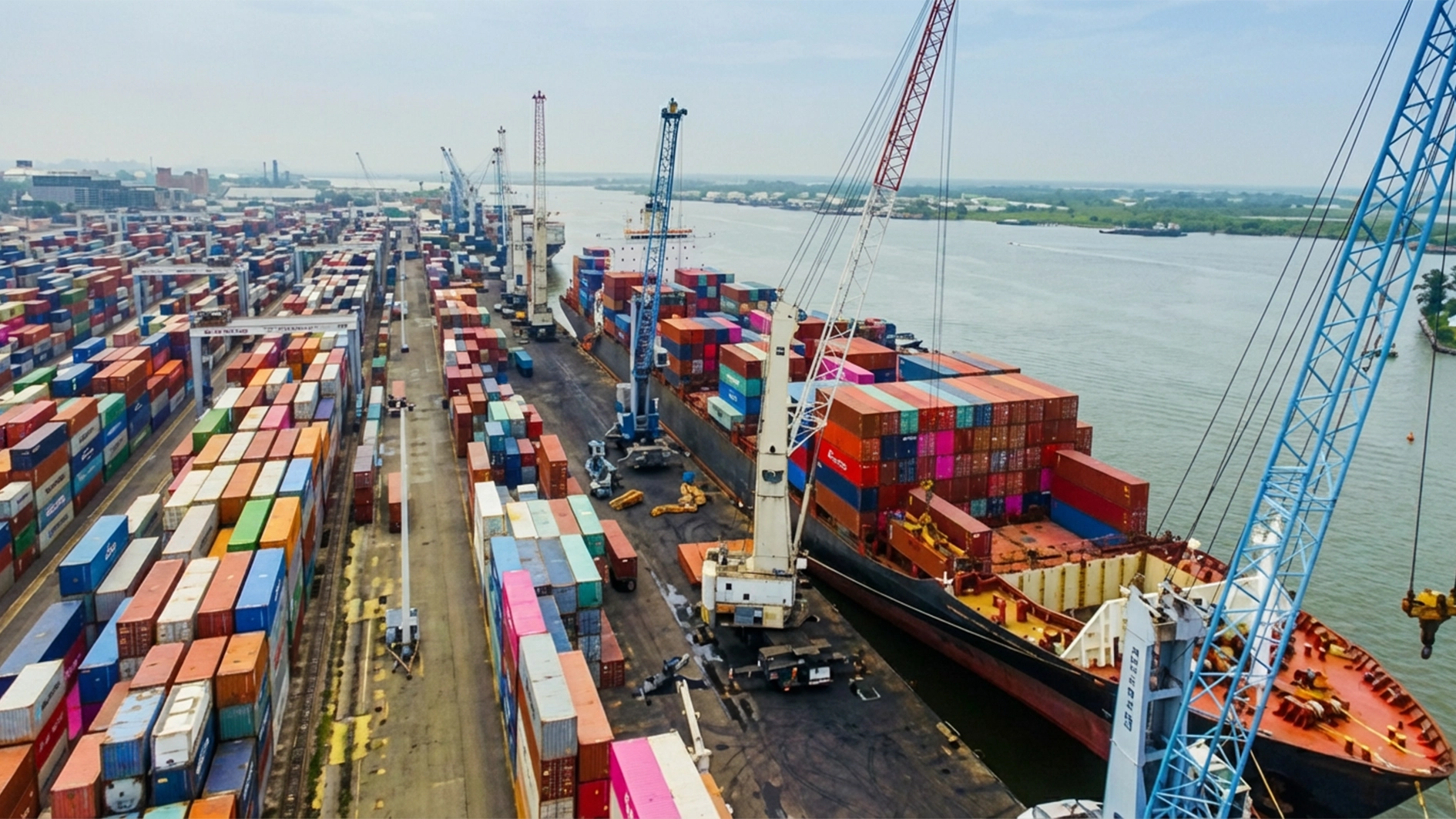
Ojo said delays at seaports often triggered demurrage and additional storage charges, slowed the distribution of imported goods and exposed importers to losses when competing products entered the market at lower prices.
Illustrating the unpredictability of the business environment, he recounted his experience importing a vehicle, explaining that an initial clearing estimate of N30 million on December 28 rose to N52 million by January 2 following changes involving officers of the Nigeria Customs Service.
The Autogig chief executive said the experience reflected the wider uncertainty confronting businesses, urging entrepreneurs to understand Nigeria’s operating environment as a complex adaptive system.