 Follow Us on Google News



 Follow Us on Google Discover
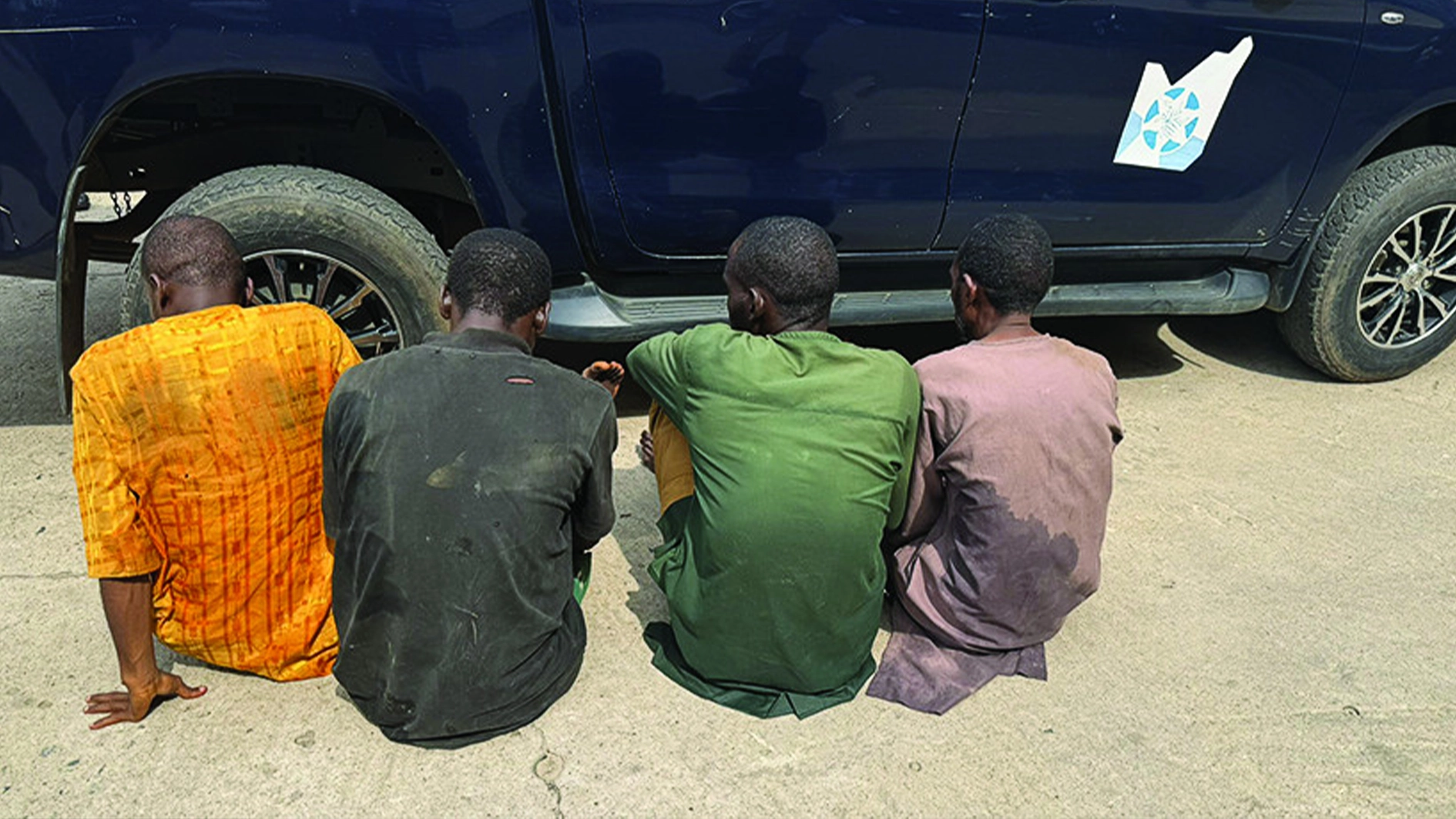
Leaving home in Abuja to earn a living has become a gamble for many residents. A journey on what appears to be an ordinary commercial vehicle could end in robbery, abduction, serious injury or even death. In this report, AZIMAZI MOMOH JIMOH and TINA ABEKU examine how the growing menace is eroding public confidence despite renewed security measures.
Grace Godwin, a 23-year-old petrol station attendant, left home for work in July 2025 like thousands of young Abuja residents seeking an honest living. She never returned.
Her body was later discovered along the Jabi axis, with relatives alleging she was murdered by suspected “one chance” robbers, who disguise as commercial transport operators to rob unsuspecting passengers.
Weeks later, another tragedy unfolded. Freda Arnong, a Ghanaian national, died at the National Hospital, Abuja, after she was allegedly assaulted and pushed from a moving vehicle by suspected “one chance” operators.
Witnesses said she boarded what appeared to be a legitimate commercial vehicle, unaware she had entered a deadly trap.
According to a police record released by the FCT Police Command’s spokesperson, Josephine Adeh, on January 5, 2026, at about 5:50 p.m., a legal practitioner, Mediatrix Chigbo, was killed after she “unknowingly boarded a black Volkswagen Golf 3 vehicle along the Kubwa Expressway, unaware that the occupants were criminals”.

Although Police had tracked the victim’s mobile phone and conducted follow-up operations at Dei-Dei, Dakwa, and Dan-Tata communities within Kubwa Area of the FCT while arresting three suspects, it was only medicine after death for the family of Chigbo.
For survivors, however, the statistics represent deeply personal experiences, as Umar Musa, who lives in Mararaba, Nasarawa State, recalled how he was attacked after boarding what appeared to be an ordinary commercial vehicle while travelling from the Zuba area of the capital city.
He said: “There was a driver, one passenger in front with bags and another sitting beside me at the back. Nothing looked suspicious until the vehicle started moving.”
Moments later, he realised his mobile phone had disappeared.
“The man beside me suddenly attacked me. They slapped and beat me before pointing a gun at my head,” Musa said.
The attackers restrained him and forced him to transfer N500,000 from his bank account before using his ATM card to withdraw additional funds.
“They dumped me by the roadside and threatened to kill me if I looked back,” he recalled.
The experience changed his perception of safety, stressing, “I never believed this could happen until it happened to me. They looked completely normal.”
Three days later, Musa said his brother was robbed by another criminal gang posing as security personnel along the Gwarinpa-Zuba Road.
“They wore camouflage uniforms and carried identification cards. They stole phones, a laptop and about N3.5 million that had just been withdrawn from the bank.”
Security experts attribute the persistence of “one chance” crime to a combination of factors, including weak regulation of commercial transport, rapid urban expansion, unemployment, and inadequate surveillance of informal transport routes.
Designed as a planned city with wide roads, organised districts and modern infrastructure, Abuja was expected to offer residents a sense of safety befitting Nigeria’s capital. Instead, fear shadows routine journeys, and residents are not returning to their loved ones.
From Jabi to Kubwa, Lugbe to Wuye, commuters don’t know whether the vehicle they board will return them home or end their lives. They are vulnerable and traumatised by stories of passengers drugged, assaulted, robbed, or abandoned by the roadside, especially as what used to be an occasional incident becomes normalised.
In 2024, the Federal Capital Territory Police Command said that it arrested 71 suspects in connection with “one-chance” robbery.
In 2025, the command did not give a single, specific number of “one-chance” robbers arrested, but it typically parades suspects in batches after specific raids. The command in May 2025 intercepted a major syndicate planning an operation around the Maitama area, resulting in eight suspects being arrested and one neutralised during a gun duel.
In October 2025, police operatives from the Life Camp Division launched a tactical operation in Dape Village, resulting in the arrest of four “one-chance” robbers and the rescue of two victims who were being held for a N1,000,000 ransom.
This year, the FCT Police Command has arrested dozens of individuals suspected of “one-chance” robbery in separate operations across its jurisdiction, even though a cumulative annual total has not been officially released.
From the specific announcements made so far this year, over 20 suspects have been arrested by the police. The command has equally recorded a high number of kidnapping cases, while fraud remained the most frequently reported offence.
All these incidents hint at entrenched crime on the nation’s roads and how unregulated public transportation has left Abuja residents, especially vulnerable children, exposed.
Security experts at Human Rights Writers Association of Nigeria (HURIWA) believe the true scale may be considerably higher because many victims never report their experiences.
“If the police recorded 268 cases in 2024, the actual figure is likely much higher,” an Abuja-based security analyst, who pleaded anonymity, said.
“One-chance syndicates have become more organised and increasingly violent, targeting everyone from students and young professionals to lawyers and civil servants,” he added.
For many commuters, like Aisha Mohammed, a civil servant living in Kubwa, the fear has become part of everyday life.
“Once it gets late and buses become scarce, you begin calculating your risks. You know you shouldn’t enter just any vehicle, but when you’ve been stranded for hours and need to get home, desperation can make you vulnerable. That is when they strike,” she said.
As police investigate one incident, another will happen, and the last will be overtaken.
The spokesperson for the FCT Police Command, Josephine Adeh, confirmed that investigations into the deaths of a school nurse, Patricia Chinyere Anaele and lawyer Princess Mediatrix Nwamaka Chigbo were ongoing, showing the complexity of the investigations, which may never bring good news to the victims and their loved ones.
According to Abuja-based security consultant, Patrick Agbambu, the growing menace exposes significant weaknesses in the capital’s internal security architecture.
“Abuja should be among the safest cities in Nigeria, yet this problem has persisted for years.
“More recently, reports of bandits operating around satellite communities have compounded existing security concerns. Now, one-chance operators appear to be becoming even more active,” he said.
Agbambu argued that intelligence-led policing, undercover operations and a stronger presence of plain-clothes officers along identified flashpoints would be more effective than reactive policing alone
“Closing the gaps within the transport system will significantly improve security across the FCT.”
HURIWA, led by Emmanuel Onwubiko, said when citizens cannot commute safely, confidence in government inevitably suffers.
Onwubiko said: “Insecurity affects livelihoods, increases anxiety and compounds the economic difficulties many families are already facing.”
The body proposed several measures to curb the growing menace, including stronger regulation of commercial transport and the digital profiling of drivers, adding that it endorsed the FCT Administration’s vehicle profiling initiative, describing it as an important step towards identifying criminals who operate under the guise of commercial drivers.
According to the organisation, the profiling exercise should also cover taxi and bus operators entering Abuja from neighbouring states to close existing security gaps.
It argued that combining vehicle profiling, digital monitoring, inter-agency collaboration, and a comprehensive driver database could significantly reduce “one chance” operations while restoring public confidence in the capital’s transport system.
The Federal Capital Territory Administration (FCTA) insists it is responding with a comprehensive strategy that extends beyond conventional policing. Under the leadership of the FCT Minister, Nyesom Wike, the administration has introduced reforms aimed at sanitising the transport system and closing the loopholes exploited by criminal gangs.
Wike has repeatedly argued that an unregulated transport sector provides cover for criminals masquerading as commercial drivers.
To address this, the FCTA has commenced reforms requiring commercial taxis and buses to operate in approved colours and undergo proper registration to improve identification and traceability. Ride-hailing operators have also been directed to ensure their drivers are duly registered with the relevant authorities.
As part of the reforms, illegal motor parks identified as hotspots for criminal activity are being dismantled, while shanties and abandoned structures believed to harbour criminal gangs have been demolished.
The administration has also established joint security task forces comprising the police, military, Department of State Services (DSS), Nigeria Security and Civil Defence Corps (NSCDC), Federal Road Safety Corps (FRSC), Nigeria Immigration Service and Nigerian Correctional Service to combat “one-chance” operations and other violent crimes, particularly in boundary communities such as Karu, Mararaba and Karshi.
Infrastructure is another pillar of the strategy. Modern bus terminals have been completed in Mabushi, Kugbo, the Central Business District, Bwari and Gwagwalada to formalise public transport and reduce reliance on informal loading points where criminals often operate.
Beyond infrastructure, the administration has supplied motorcycles and other equipment to security agencies, while special operations have targeted suspected criminal hideouts and vehicles linked to robbery syndicates.
The recently launched “Transport for All” initiative, featuring high-capacity buses and digital payment systems, is also expected to improve commuter safety by making public transport more organised and accountable.
The Director of the TFA project, Yakubu Terry, said the programme would leverage technology to improve efficiency and passenger experience in Abuja’s transport system.
“Our strategy is not just about the number of buses on the road; it’s about creating a comprehensive and accessible network that serves the diverse needs of our community,” Terry said.
According to him, the project will prioritise high-demand routes and use technology to optimise scheduling, reduce waiting times and enhance overall service delivery.
Security operations have been reinforced through the relaunch of Operation Sweep, an inter-agency task force deployed across the city centre, satellite towns and boundary communities. Surveillance around schools, places of worship and other public locations has also been intensified.
Despite these interventions, many residents remain sceptical, as a student who identified himself as Emmanuel Okeke said: “Sometimes, especially in the morning hours, you notice more security personnel, but after some time their presence reduces. The criminals simply adjust their routes and continue operating.”
Transport unions have called for closer collaboration with security agencies to identify legitimate drivers and remove impostors from the system, while residents increasingly rely on neighbourhood WhatsApp groups and social media platforms to share alerts about suspicious vehicles.
The FCT Police Command has urged residents to remain vigilant, avoid boarding suspicious vehicles and promptly report suspicious movements, while assuring the public that investigations and targeted operations will continue.
As Abuja continues to expand and attract people from across Nigeria, ensuring safe movement within the city remains one of the greatest tests of urban governance.
While the government insists it is investing in security and transport reforms, residents believe the real measure of success will not be the number of announcements or patrol vehicles on the roads, but whether they can once again board a bus without fear.
Until that confidence is restored, every unfamiliar vehicle will remain a potential threat, and every journey home a calculated risk.

