
 Get Guardian on Google
By Kabir Alabi Garba
“And say, Do deeds! Allah will see your deeds, and His Messenger and the believers. And you will be brought back to the All-Knower of the unseen and the seen, and He will inform you of what you used to do.” Qur’an 9 verse 105.
Brethren, the focus of our sermon today may appear unusual, but the event on November 1, 2026 at the Sultan’s palace in Sokoto has many lessons that should be analysed deeply. When a scholar from Egbaland is celebrated by the Sultanate of Sokoto, the significance goes beyond the individual. It speaks to the Nigeria we ought to build: a country where merit transcends ethnicity, knowledge commands respect and contributions to society matter more than the circumstances of one’s birth.
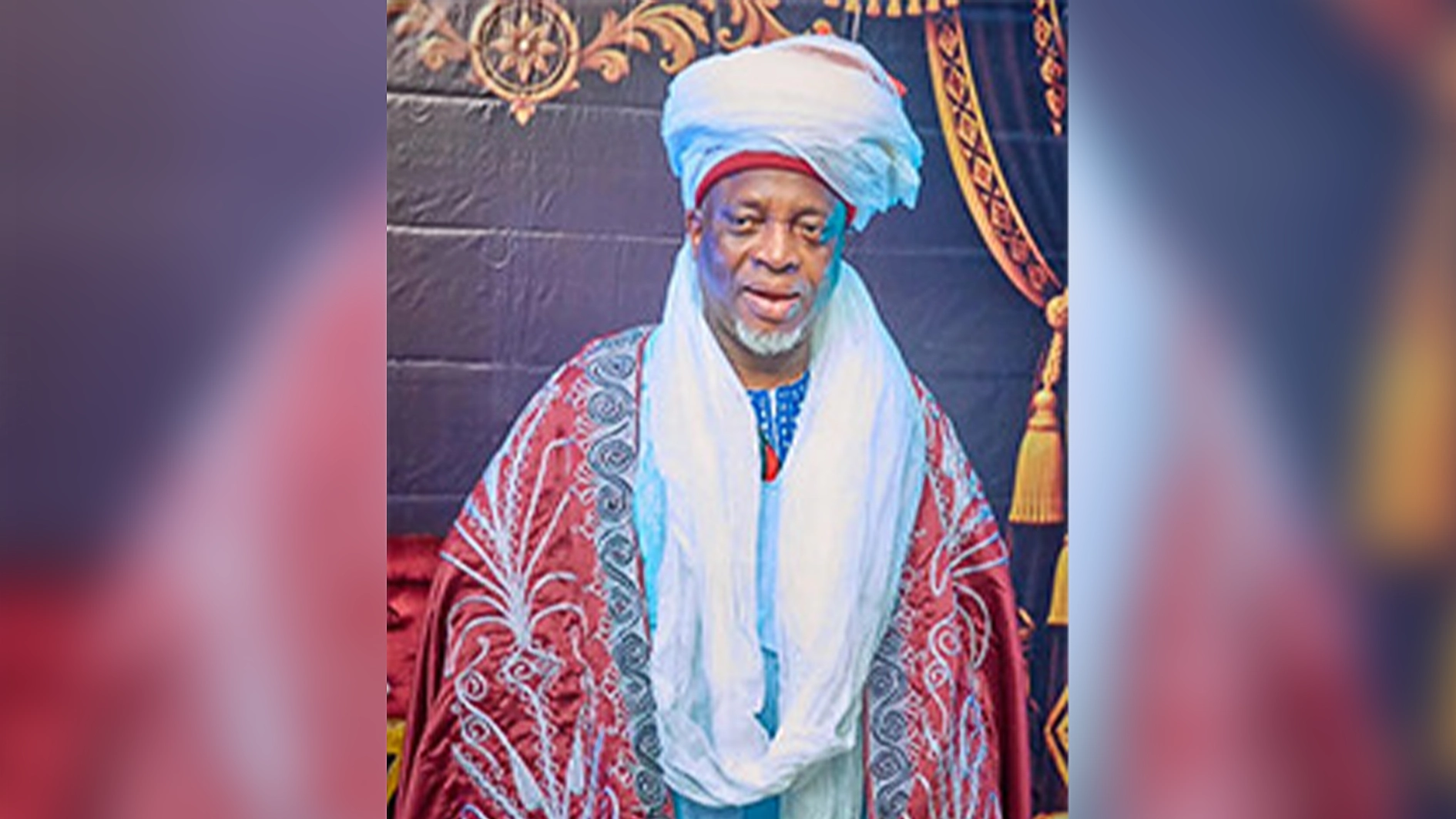
This is the larger message behind the conferment of the traditional title of Kuliyan Sokoto on Professor Is-haq Oloyede, former Registrar of the Joint Admissions and Matriculation Board (JAMB).
At a time when ethnic loyalties increasingly compete with national identity, and when public recognition is sometimes divorced from demonstrable achievement, the Sultan of Sokoto, His Eminence, Alhaji Muhammad Sa’ad Abubakar III, has offered a compelling example of the unifying possibilities of traditional institutions.
By recognising Oloyede, the Sultanate has drawn attention to a distinguished record in education, Islamic affairs and public administration, while affirming that excellence and integrity know no geographical or ethnic boundaries.

Kuliyan Sokoto is therefore more than an addition to Oloyede’s collection of traditional distinctions. It is a symbolic embrace by one of Nigeria’s most respected traditional institutions, carrying the weight of the Sokoto Sultanate’s historical, religious and intellectual heritage. It also provides an opportunity to reflect on the values that should define public life in a country searching for credible institutions and responsible citizenship.
There is perhaps no more appropriate Qur’anic injunction for appreciating the significance of this recognition than Surah At-Tawbah (Chapter 9), verse 105 referenced above.
This verse offers a profound reminder that the ultimate measure of an individual lies not in the titles acquired or positions occupied, but in the quality of deeds and their consequences. It provides a fitting spiritual perspective for examining Oloyede’s career, particularly his contribution to strengthening public institutions.
His decade-long stewardship of JAMB remains perhaps the most visible demonstration of his administrative impact. When he assumed office as Registrar in 2016, the examination body faced longstanding challenges involving operational inefficiency, examination integrity, public confidence and financial management. His administration embarked on reforms centred on technology, transparency, financial discipline and institutional efficiency.
Under his watch, JAMB strengthened its technology-driven examination processes, improved operational efficiency, tackled financial leakages and recorded significant surpluses while contributing to government revenue. These developments challenged the familiar assumption that government institutions must necessarily be inefficient, wasteful and financially dependent.
More importantly, the reforms demonstrated that public agencies could discharge their statutory responsibilities effectively while maintaining financial discipline and public confidence. In a country where many government institutions continue to struggle with weak management and operational inefficiency, the JAMB experience offers an important lesson about the possibilities of institutional reform.
His administration also reinforced the importance of fairness and credibility in the admission process, helping to protect opportunities for millions of young Nigerians seeking access to higher education. This contribution is particularly relevant in a country where education remains one of the most important pathways to social mobility and economic advancement.
Oloyede’s credentials, however, extend well beyond JAMB. As Vice-Chancellor of the University of Ilorin between 2007 and 2012, he provided leadership during a period of institutional consolidation, strengthening the university’s reputation for academic discipline and administrative stability. His scholarship in Islamic jurisprudence and his engagement with the Nigerian Supreme Council for Islamic Affairs, where he serves as Secretary-General, further reflect his contributions to education, Islamic scholarship and national development.
His professional journey illustrates the importance of translating knowledge into practical solutions. In Islam, knowledge is not merely an ornament of personal prestige; it is a trust that should benefit humanity. The message in Qur’an 17: 36 is instructive: “And do not pursue that of which you have no knowledge.”
This injunction underscores the importance of informed judgment and responsible decision-making. Nigeria’s development challenges, from unemployment and insecurity to poverty and weaknesses in the educational system, require the application of knowledge, competence and integrity to public affairs.
The Qur’an also provides a clear foundation for the ethical management of public responsibilities. In Surah An-Nisa (Chapter 4), verse 58, Allah (SWT) declares: “Indeed, Allah commands you to render trusts to whom they are due and when you judge between people to judge with justice.”
This is one of the fundamental principles of Islamic governance. Public office is an amanah, a trust that must be discharged with fairness, competence and sincerity. The holy Prophet (peace be upon him) reinforced this principle when he said: “Each of you is a shepherd, and each of you is responsible for his flock.”
This Hadith establishes that responsibility accompanies every position of authority, whether in government, religious institutions, professional organisations or the family.
Beyond his professional accomplishments, Oloyede’s humility offers another dimension to his public profile. In an environment where recognition can sometimes encourage arrogance and the pursuit of social status, humility remains an important virtue. Prophet Muhammad (peace be upon him) said: “No one humbles himself for the sake of Allah except that Allah raises him.”
The Hadith captures the relationship between humility and greatness. True distinction does not require constant self-celebration. It is reflected in respect for others, appreciation of one’s limitations and an understanding that personal accomplishments should create opportunities to contribute further to society.
The significance of Kuliyan Sokoto becomes even clearer when viewed against Nigeria’s continuing struggle for national integration. The Sokoto Sultanate occupies an important place in the country’s religious, intellectual and traditional history. Its recognition of a Yoruba scholar and administrator reinforces the possibility of building bridges across ethnic and regional differences.
At a time when ethnic and religious identities are too frequently exploited to create divisions, the conferment sends a valuable message: Nigerians can recognise and celebrate one another’s achievements without being constrained by regional or cultural affiliations. It demonstrates how traditional institutions can use their moral influence to promote mutual respect, peaceful coexistence and national unity.
The title also brings with it the expectation that its recipient will remain connected to the values and responsibilities associated with the institution that confers it. Traditional honours are most meaningful when they encourage greater commitment to community development, intellectual advancement and the welfare of society.
For Nigeria, the broader lesson is that the credibility of public institutions depends on the quality of people entrusted with their management. Government resources must be treated as public assets, appointments should reflect competence, and the welfare of citizens must remain central to public administration. Moreover, citizens must reject corruption, respect the rule of law and demand good governance without ethnic, religious or political prejudice.
In Surah Al-Zalzalah (Chapter 99), verses 7 and 8, Allah (SWT) provides a final reminder of the consequences of human conduct: “So whoever does an atom’s weight of good will see it, and whoever does an atom’s weight of evil will see it.” It is a sobering reminder that every action carries consequences and that no individual is beyond divine reckoning.
Ultimately, the conferment of Kuliyan Sokoto on Professor Is-haq Oloyede is significant at three levels: as recognition of his contributions to education and public administration; as an affirmation of the Sultanate’s appreciation of scholarship and service; and as a powerful expression of national integration across ethnic and regional boundaries.
His career demonstrates that intellectual excellence can be translated into institutional progress, that public agencies can deliver measurable results and that humility can accompany considerable professional achievement.
The Qur’anic injunction to “Do deeds!” (Q9:105) therefore provides an appropriate conclusion to this reflection. It challenges Nigerians, particularly those entrusted with public responsibilities, to measure their accomplishments by the benefits they bring to society.