
 Get Guardian on Google
Determined to maximise its agricultural potential and strengthen food security, the Kano State Government has extended investments beyond large-scale production to the development of food processing and other value chains.
With an approximate 1.8 million hectares of abundant arable land suitable for the production of crops and grain, the state government is already shifting attention to food processing and packaging for export.
Besides, the state government has reclaimed about 2,450 hectares for irrigation with the provision of solar pumping equipment to sustain year-round production while relieving the cost farmers spend on fuel for machines.
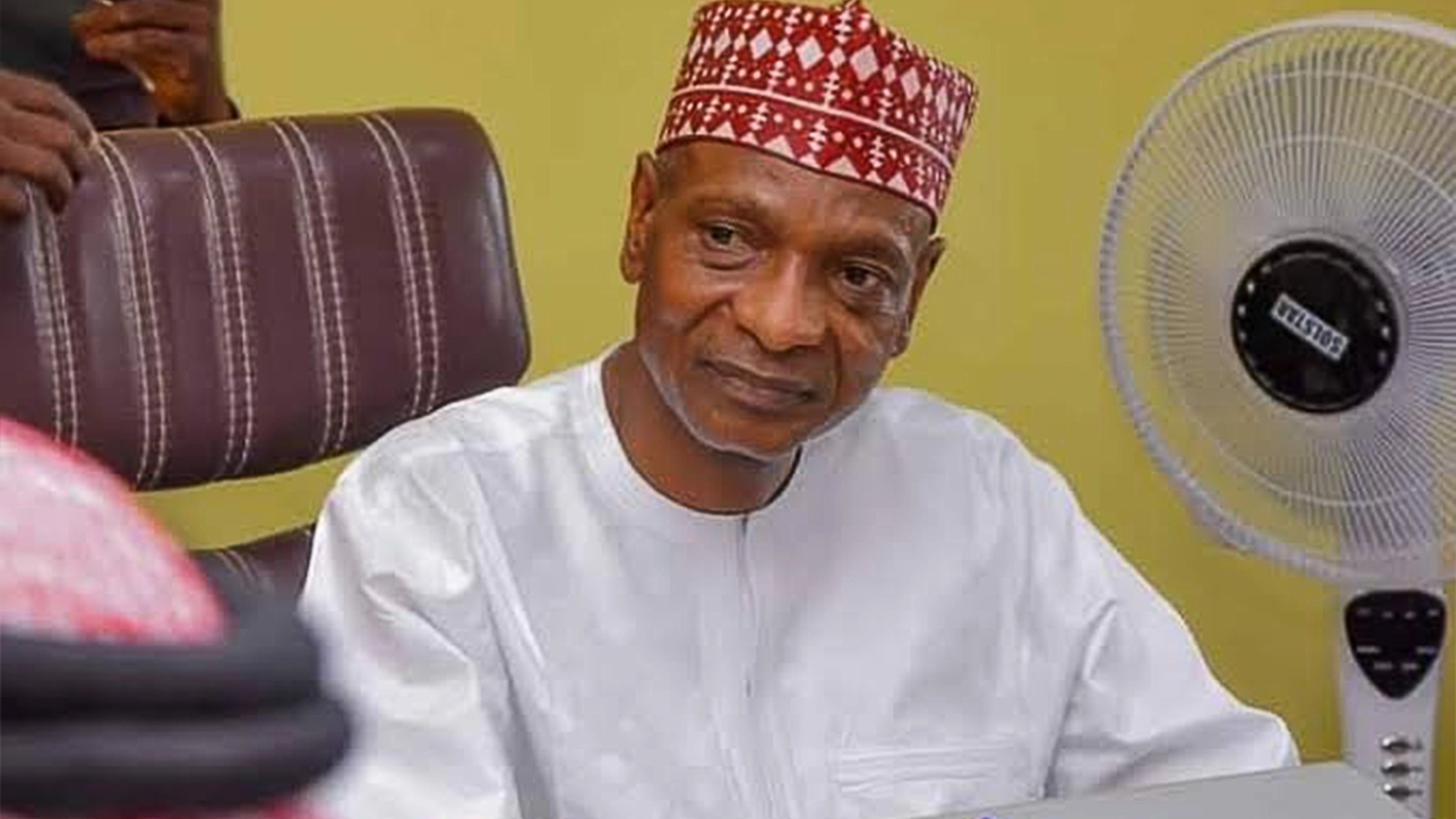
The Commissioner for Agriculture and Natural Resources, Dr. Danjuma Mahmoud, of the Kano State Government is transforming the agricultural sector with the establishment of a processing and packaging hub to add value to the production surplus.
Dr. Mahmoud explained that the new agro investment frontier being anchored under the State Special Agri-Industrial Processing Zone (SAPZ) with support from Islamic Development Bank (IsDB) and National Fund for Agricultural Development (IFAD) is advancing about $131.78 million to boost food processing in Kano.
Briefing journalists on the development of the Ministry of Food Security in Kano, Dr. Mahmoud said the project, which already started with clearing of mass land for cultivation and provision of farm inputs to farmers for sufficient production for processing. He also disclosed that it had completed several agricultural storage and aggregation facilities across almost all the local government areas to enable farmers to store their produce and facilitate its movement to markets.

“The government had also upgraded several cattle markets, including those in Dambatta, Falgore, Gwarzo, Udil and Lambata, with modern facilities to improve livestock trading and transportation.
“The upgraded markets have been provided with water supply systems, loading and offloading facilities, veterinary clinics, solar-powered lighting, drainage systems and ramps to facilitate the safe loading of livestock into trailers.
Similarly, the government had upgraded the Dawanau grain market through the provision of drainage systems, access roads, a police station, solar-powered facilities and improved water supply.
“ The interventions were part of a broader strategy to address challenges across the agricultural value chain, particularly the movement, storage, preservation and marketing of farm produce”. Dr. Mahmoud emphasized.
To address transportation challenges faced by farmers, the government disclosed that it had also provided approximately 72 kilometres of tarred rural roads in collaboration with the Islamic Development Bank.
He said the roads were designed to improve access to farmlands and facilitate the evacuation of agricultural produce to aggregation centres, storage facilities and markets.
The government maintained that most of the projects had been completed, describing them as critical investments towards maximising Kano’s agricultural potential, improving farmers’ livelihoods and strengthening the state’s food security drive.
The Commissioner disclosed that the project cited at the Agric Transformation Centre at Baguada will process rice, groundnuts, Sesame, and tomatoes, with additional processing centers in Kura, Bagwai, Dawanau, and Kakara in Gezawa.
Apart from processing, Dr. Mahmoud emphasized government investment in all-season production with recovery of 1,200 acres of irrigated land from the existing irrigation facilities left abandoned by successive governments.
He added that the present administration has also embarked on an additional brand-new irrigation site at Dansoshiya with a capacity of 1,250 acres and small earth dams with irrigation infrastructure in 11 Local Government areas making the entire irrigation intervention a combined capacity of 2,400 acreas.
Away from irrigation, the Commissioner hinted that Kano State Government has completed more than 70 milk collection centres and provided 1,270 kilometres of demarcated cattle routes across the state as part of efforts to boost livestock production, improve food security and reduce farmer-herder conflicts.
The interventions, according to the Commissioner, implemented in collaboration with the Islamic Development Bank (IsDB), were designed to improve agricultural value chains and provide better infrastructure for livestock farmers and other agricultural stakeholders.
He said the establishment of the milk collection centres would help Fulani communities and dairy producers preserve milk under hygienic conditions before taking it to the market.
Each centre, according to the Agric Commissioner, is equipped with modern storage facilities, cooling systems and solar power installations to ensure that fresh milk is properly preserved and protected from premature fermentation.
He added that it was preparing to distribute milk transportation cans to the collection centres to facilitate the hygienic conveyance of milk to markets and processing facilities.
On efforts to address farmer-herder conflicts, Dr. Mahmoud pointed out that the provision of approximately 1,270 kilometres of demarcated cattle routes had contributed significantly to reducing clashes between farmers and herders across the state.